Category: Special Features

  • Paper: Growth with Sustainability

    Paper: Growth with Sustainability

    Paper is an integral part of the daily lives of people. Paper is one of the most environmentally sustainable products as it is biodegradable, recyclable and is produced from sources which are renewable and sustainable. Paper can be recycled up to 6-7 times, making it one of the most recycled products in the world.

    Paperboard / packaging is crucial for almost all goods, especially all kinds of essential goods, FMCG, pharmaceuticals, food products, soaps, milk cartons, hygiene products, textiles, etc. Tissue paper helps in improving the hygienic conditions and is used in all health-conscious institutions / areas like hospitals, hospitality, etc. Similarly, writing & printing paper is essential not only for education and offices, but also for labels, pharmaceutical inserts, etc. Newsprint is required for printing newspapers.

    The key drivers for growth in paper consumption in India are many. Greater emphasis on education and literacy by the government coupled with growth in organised retail and demand for better quality paper are the major drivers for writing and printing paper. Demand for better quality and environment-friendly packaging of FMCG products marketed through organised retail, booming e-commerce, rising healthcare spends, over-the-counter medicines and increasing preference for ready-to-eat foods are the key demand drivers for paperboard / packaging paper.

    India’s Paper Industry has been closely associated with the national objectives of literacy, greening India, rural employment, and usage of sustainable resources, besides meeting paper needs of the Indian consumers.

    Around 75% of the total paper produced in India is from recovered fibre, that is paper recovered post-consumer use. The rest 25% is from virgin fibre, primarily wood which is grown by farmers as any other crop and sold to paper mills after harvesting it. India’s Paper Industry is agro / farm forestry based and substantial amounts have been spent by the Paper Industry on plantation R&D, production of high-quality clonal saplings with lesser rotation period, technical extension services to improve agro / farm forestry services, hand holding of marginal farmers over a gestation period of 4-5 years. This has generated significant employment opportunities for the local community, especially in the rural areas, with more than 5 lakh farmers engaged in raising plantations.

    The industry has been encouraging the growing of trees at a faster pace by the farmers for sourcing wood. Paper Industry’s plantation promoting activity has led to more than 12 lakh hectares of mainly marginal land in the country coming under green cover. This, apart from supplementing farm incomes and promoting rural employment, has helped significantly in carbon sequestration and other environmental benefits, and improved the sustainability of the industry.

    Contrary to the perception, paper is green, and it is never too early to switch to paper-based alternatives for the larger good of the environment. Two of the foremost global environmental issues are the disposal of single-use plastic and e-waste. Both these issues are addressed to a large extent by the use of paper as an alternative.

    Paper mills in India have been working towards better energy efficiency, green energy, employing a range of innovations and technologies, and thereby moving up the sustainability curve by reducing resource intensity and curbing its environmental footprint. Paper mills have also undertaken significant upgradation of process technology to comply with stringent environmental norms / standards to reduce freshwater consumption and effluent and emission generation. Specific water and energy consumption is being reduced continuously to lessen the carbon footprint. The industry is moving rapidly up the technology and sustainability curves matching with the world’s best.

    The Paper Industry in the last 15 years has taken some landmark initiatives. Be it creation of a robust and renewable raw material sourcing base, offering innovative, eco-friendly alternatives to single-use plastic or incorporation of process technologies with least environmental footprint, Paper Industry has come a long way.

    The industry has taken significant leaps in the last few years in technological upgradation, process-optimisation and introduction of best practices. The industry has worked hard on reducing specific energy consumption. Under the PAT (Perform Achieve Trade) scheme of the Government for promoting energy efficiency, the Paper Industry has been one of the top performing sectors and has over-exceeded the mandated stiff targets.

    In fact, the industry has managed to bring down its energy consumption by about 20% in the last five years. Integrated paper mills in India generate over 40% of the power they use by utilising the biomass (renewable energy) from the pulping process.

    Till a few years ago, the industry used to consume 200 cubic metres of water to produce a tonne of paper. Now, the integrated mills have reduced that to under 50 cubic metres.

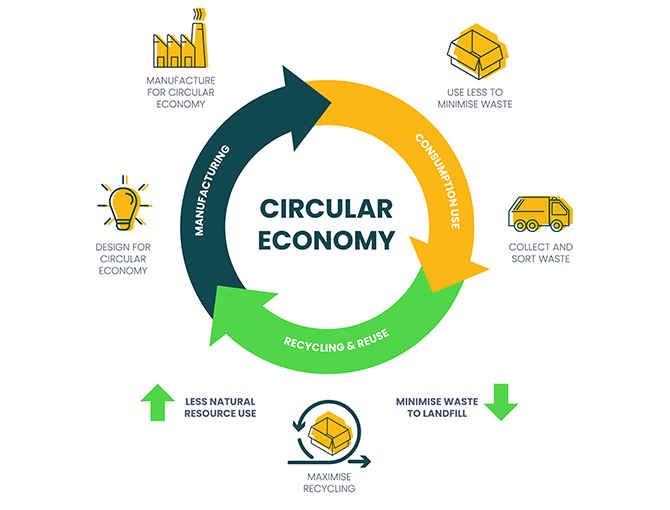
    Paper is being recognised globally as an environmentally friendly product promoting circular economy and not as an environment harming one as has been wrongly projected and propagated for years by vested interests.

    The negativities attached to the Paper Industry have been giving way to better appreciation of the industry’ efforts towards sustainability in government and policy making circles.

    All stakeholders need to support the industry that has strong backward linkages with the farming community, generates employment in rural areas, and significantly contributes to the national objective of bringing 33% of land mass in India under tree cover, apart from also significantly contributing towards the national objectives of education and literacy. Use more paper to save the environment!

    Article by Mr.Rohit Pandit, Secretary General, Indian Paper Manufacturers Association (IPMA)
  • South Africans are urged to improve their recycling habits ahead of Global Recycling Day

    South Africans are urged to improve their recycling habits ahead of Global Recycling Day

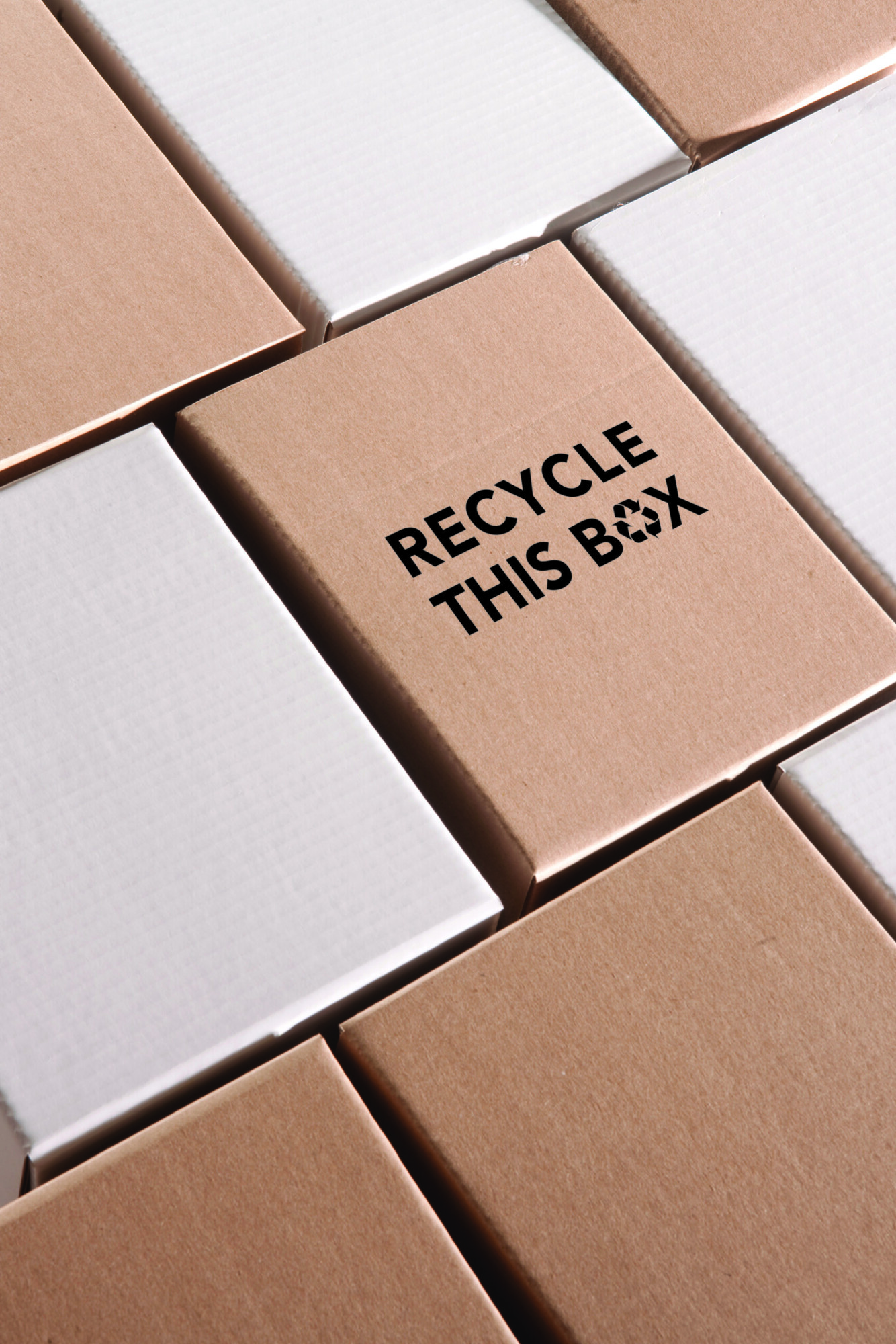
    Global Recycling Day takes place annually on 18 March. While South Africa recycles an average 1.1 million tonnes of paper and paper packaging each year, a significant amount is lost when it is discarded with wet waste, lost to the environment as litter or stored up in homes and businesses as documents and paper packaging.

    Available statistics[i] indicate that South Africans generate roughly 122 million tonnes of waste per year of which 90% is landfilled or dumped illegally. Around 10% is recycled or recovered for other uses.

    “Recycling or separation-at-source is one of the simplest ways to commence a waste reduction journey,” says Samantha Choles, communications manager for Paper Manufacturers Association of South Africa (PAMSA), advising that paper recycling is a good place to start.

    “By putting certain items aside for recycling collectors and participating in dedicated recycling programmes, we can all make a big difference to our planet, another person’s livelihood and our personal waste footprint.”

    Recycling saves landfill space

    It is estimated that one tonne of paper products collected for recycling saves around three cubic metres of landfill space. This means that 3.3 million cubic metres of space is not filled with the very useful commodity of paper and paper packaging but goes back into the manufacturing loop.

    For South African paper packaging and tissue producers, recycled paper is an alternative fibre and key raw material for corrugated boxes and paper bags, newspapers, tissue products, kitchen and industrial paper toweling, cereal boxes, and moulded paper products like egg boxes and cup carriers.

    But it doesn’t save trees

    Recycling paper is often coupled with the rationale of “saving trees”, but this notion is misguided as the trees used in papermaking are farmed sustainably.

    Trees are planted, and the wood is harvested and converted to pulp, paper, or timber products. Only 10% of the total plantation area is harvested over a course of a year, and this same area is replanted within 12 months. This makes paper and wood a renewable resource.

    Although paper fibres can be recycled anywhere between 6-25 times[ii], they are not infinitely recyclable. Virgin or fresh fibre will always be required to keep the paper cycle going.

    Recycling reduces emissions

    When paper is mixed with wet waste, it becomes contaminated and starts to degrade, adding to greenhouse gas emissions. When we keep paper clean and dry for recycling, we ensure that the carbon that is stored in paper stays locked up for longer.

    Recycling supports the economy

    On any given day, recycling collectors weave through cities and suburbs for recyclable items that they can resell at a buy-back centre.

    “Collectors are a vital cog in the recycling system, especially where mandatory separation and recycling programmes do not exist,” says Choles.

    Larger recycling businesses and paper mills also contribute to society and the economy by providing employment – from sorting and baling, managing recycling processes, all the way through converting paper into new products. “Let’s not forget the people in the background such as finance, human resources, engineers, maintenance crews and everyone who keeps the process flowing,” notes Choles.

    Recycling has that feel-good factor

    Every person uses paper in one way or another every day, from cereal boxes to milk cartons, from documents to school reports, and the ever-essential toilet roll core and common cardboard box.

    Separate your paper recycling into a dedicated bag or box for collectors to keep it clean and save them time and from digging through your rotting, smelly waste. Recyclable paper products should be kept clean and dry to ensure that the collector earns maximum value.

    Some items are still recyclable even if they are not taken by a recycling collector who prefers higher value items that are neither too light (polystyrene) or too heavy (glass).

    Know your paper recyclables – from the bathroom to the kitchen sink

    It’s not just white paper and cardboard boxes that are recyclable, says Choles adding that there are several products that can be recycled.

    “We suggest placing paper recycling bins in common areas of your home or where you have the space. This makes recycling a lot easier.”

     Kitchen:

    • Grocery delivery bags and takeaway bags
    • Paper packaging from cereal, tea, sugar, pasta, doggy treats and other dry goods
    • Milk or juice cartons* – no liquids please.
    • Pizza boxes – no leftover pizza please!
    • Egg cartons and take-away cup holders
    • Tubing from kitchen towel rolls
    • Paper cups* (minus the lid – this made of polystyrene but can be recycled via other means)

    Bathroom and bedroom:

    • Cardboard tubes from toilet paper rolls
    • Boxes galore from shoes, facial tissue, toothpaste, soap, cosmetics and medicine, etc.

    Office/study:

    • Copy and printing paper, notebooks (minus wire binding and non-recyclable covers)
    • Paperback books – donate old books to a library or community centre but for those that are well-worn, a new life awaits through recycling.

    Front door:

    • Post – if you still get any, including envelopes, postcards and advertising mail
    • Magazines
    • Newspapers
    • Cardboard boxes from your online shopping

    Separation of the different waste streams – paper, cardboard, glass, tin, plastic, and e-waste – is critical to ensure that we reduce recyclables going to landfill, reduce pollution and create a culture of ‘green thinking’.

  • Optimisation of paperboard can cut the carbon footprint of pharmaceutical packaging by 60%, based on life cycle assessment

    Optimisation of paperboard can cut the carbon footprint of pharmaceutical packaging by 60%, based on life cycle assessment

    Pharmaceutical product packaging accounts for a large part of manufacturers’ Scope 3 emissions, which consider, for example raw material production, manufacturing, and end-of-life disposal. According to Metsä Board studies, fresh fibre paperboard can notably reduce the carbon footprint of pharmaceutical packaging by optimising the paperboard in use.  

    Assessments* conducted by Metsä Board demonstrate the significant carbon footprint reductions that pharmaceutical manufacturers can achieve by switching from commonly used grades to Metsä Board fresh fibre paperboards. Switching from a solid bleached board (SBB) to Metsä Board folding boxboard can reduce the carbon footprint of packaging by over 50%, and replacing white lined chipboard (WLC) with Metsä Board folding boxboard can result in a 60% reduction or even higher. These assessments have been verified by IVL Swedish Environmental Research Institute. The technical background report and the verification statement are available on Metsä Board’s website.

    The lower carbon footprint of Metsä Board’s folding boxboards, compared to the above mentioned boards, is due to the use of fossil free energy in their production and their lighter weight. However, despite the lighter weight, Metsä Board’s folding boxboards still retain the durability and functional properties of traditional heavier grades.

    “As a responsible materials supplier it is our job to provide pharma brand owners with transparent, unbiased information that helps them evaluate packaging materials to make better-informed and sustainable choices to reduce their carbon footprint,” says Anne Uusitalo, Product Safety and Sustainability Director at Metsä Board. Metsä Board provides accurate information about the carbon footprint of its paperboard products and can also provide full life cycle assessments to its customers.

    *) Assessments follow procedural and methodological requirements of ISO 14025 and are consistent with ISO 14040 and 14044 standards. The selected system boundary for the study was cradle-to-gate + end-of-life and selected climate change impact methodology was EF3.1 Climate Change – total. Climate change impacts for competing materials utilises data from Sphera LCA for Packaging which seeks to represent general products in the European market. The technical background report and the verification statement are available on Metsä Board’s website.

    About Metsa Board

    Metsä Board is a producer of lightweight and high-quality folding boxboards, food service boards and white kraftliners. The pure fresh fibres we use in our products are a safe, renewable and recyclable resource, that can be traced back to northern forests. We aim to have completely fossil free mills and raw materials by the end of 2030. We promote a culture of diversity, equality and inclusion.

    Metsä Board is listed on the Nasdaq Helsinki. In 2023 our sales totalled EUR 1.9 billion, and we have around 2,300 employees. Metsä Board is part of Metsä Group, whose parent company Metsäliitto Cooperation is owned by over 90,000 Finnish forest owners. The sales of the whole Metsä Group were EUR 6.1 billion.

  • Closing the loop with paper carrier bags

    Closing the loop with paper carrier bags

    Less raw material, less waste, fewer emissions – the circular economy is at the top of the agenda.

    Choosing fibre-based packaging such as paper carrier bags is one piece of the puzzle that retailers and brand owners can complete to take the next step in contributing to the bio-based circular economy. Paper carrier bags are a welcome resource in the paper recycling mix. A member of the initiative “The Paper Bag” explains how paper carrier bags are recycled into new fibre-based products. An infographic shows the cycle of paper carrier bags.

    A study has found that fibre-based packaging can be recycled more than 25 times. It concluded that the number of possible recycling cycles is limited mainly due to losses that occur during the cleaning of the fibre material and the collection rate. In Europe, the recycling rate for paper and cardboard packaging is already very high at 82.5% in 2021. The 4evergreen alliance set thegoal to reach 90% for fibre-based packaging by 2030.

    “Paper carrier bags are a valuable part of the paper recycling mix,” knows Matías Cowper Coles, Business Development Manager at the Spanish paper producer and paper recycler Alier. Alier is one of the members of the initiative “The Paper Bag” that recycles paper carrier bags and produces new fibre-based products from the fibres – among them paper carrier bags. But how does this work in practice?

    Paper collection

    When a paper carrier bag is no longer good for another reuse, it should be placed in the paper and cardboard recycling bin. In Europe, different paper grades are collected in the same container. After being picked up by the designated facilities, the paper is separated into different qualities. This is important because for some products, high-quality fibres must be used. Paper carrier bags, as other kraft paper products, can be sorted into different qualities, depending on the demand and the quality. Usually, they are mixed together with OCC – old corrugated cardboard.

    Recycling paper carrier bags

    When the raw material arrives at the paper factory, samples of the material are tested to classify them according to different parameters that are important for the papermaking process and the qualities that will be produced at the mill. “For each of our paper grades, we need a special material mix. The stronger recycled kraft paper we want to produce, the longer the fibres have to be in the mix,” explains Cowper Coles. “The kraft paper for paper carrier bags is one example where we use material with long, strong fibres.” For the recycling process, the selected paper mix is put into a pulper. The resulting pulp is filtered several times and cleaned of impurities. It is then collected in silos and stocked before it enters the paper machine, where it is manufactured into new paper that can be used in carrier bags, paper sacks, test liners or fluting.

    The paper bag fibre cycle

    The Spanish organisation La Bolsa De Papel has produced an infographic that demonstrates the fibre cycle for paper carrier bags – from the sourcing of the raw materials, the production of the paper and the paper bags via the distribution at retail sites, the use and reuse from consumers to the collection and the recycling process.

    “Reusing and recycling paper carrier bags replaces new raw materials

    This saves natural resources and reduces green-house gas emissions since the CO2 will keep stored in the paper products for a longer period,” explains Elin Gordon, Secretary General of CEPI Eurokraft. “Therefore, we want to encourage retailers to support the circular economy. They can do so by offering paper carrier bags to their customers and motivating them to reuse their bags for as long as possible before placing them in the recycling bins for paper and cardboard to recycle the fibres.”

  • Aiming for Emission-Free Pulping, Forest Industry and Scientific Community Join Forces

    Aiming for Emission-Free Pulping, Forest Industry and Scientific Community Join Forces

    Thanks to the strong support from the forest industry and public funding, 10 research organizations, universities, and companies are establishing a groundbreaking research program with around 20 full-time researchers. The Emission Free Pulping program aims to significantly reduce biomass burning and increase the product yield of wood material used for pulping from approximately 50% to around 70%. The program is projected to have a budget of around 15 million euros over the next five years.

    The forest industry, technology companies, research organizations, and universities have joined forces to revolutionize the traditional pulping processes under the joint leadership of VTT Technical Research Centre of Finland and RISE Research Institutes of Sweden. The Emission Free Pulping research program intends to find ways to improve energy efficiency, enhance the efficiency of wood usage and conversion to products, achieve emission-free pulping (especially carbon dioxide emissions), and significantly reduce water usage in the processes. 

    “Due to the limited nature of forest resources, the growth opportunities for the industry are constrained. Moreover, the burning of biomass in the pulping process results in the emission of biogenic CO2. To significantly enhance resource efficiency and increase the value added from wood, revising the chemical processes and unit operations used in the pulping process is essential,” says Atte Virtanen, Vice President of biomaterial processing and products at VTT.

    So far, five industrial companies have committed to the program, and they will bring in their knowledge about industrial relevance and operations as well as financial contribution. ANDRITZ, Arauco, Metsä Group, Stora Enso, and Valmet have committed to a five-year collaboration with the research organizations and universities for this program. The program has been granted substantial funding from Business Finland, amounting to over 5 million euros over a three-year period.

    “Long-term research cooperation between companies, research organizations, and universities is essential for solving major sustainability challenges. With the financing of this joint project, we want to speed up the renewal of the forest industry, which is of paramount importance for Finland’s competitiveness,” says Executive Director Timo Metsä-Tokila from Business Finland.

    “We are deeply committed to the vision of a thriving forest-based ecosystem that delivers the full value of Nordic wood. The key to achieving this lies in fostering innovation and coming together as an industry and as a research ecosystem. By combining our efforts, we can drive advancements that not only enhance efficiency but also uphold our commitment to environmental stewardship. It’s about creating a future where sustainable wood use and more resource-efficient pulping methods go hand in hand, ensuring the longevity and prosperity of our forests and the industries dependent on them,” says Katariina Kemppainen, SVP Group R&D at Metsä Group.

    The expertise and knowledge being developed will be internationally groundbreaking, and the program’s sought-after results are expected to have wide-ranging effects. 

    “We celebrate that other companies and universities share our view on the necessity to use science and joint research for enabling significant improvement of the material yields from pulping and thereby reducing emissions. Can we reach zero? Let’s see what academia and industry develop together, based on science, knowledge, and inclusion of industrial realities from start to end in the program,” says Mikael Hannus Senior Vice President, Group Innovation R&D, at Stora Enso.

    International collaboration across sectors 

    Strong commitment from leading universities in both Finland and Sweden creates the conditions for the success of the project. The project involves significant contributions from Aalto University, Chalmers University of Technology, KTH Royal Institute of Technology, LUT University, Mid Sweden University, University of Helsinki, University of Oulu, and Åbo Akademi University. 

    The Finnish public funding enables the hiring of the initial group of scientists that will be expanded with further funding from the companies involved. The goal is to form a group of 10-20 researchers focusing full-time on advancing the research agenda collectively agreed upon by the consortium. 

    Public funding is currently being sought also in Sweden, and doors are open to new corporate partners. 

    “The key to success lies in open collaboration. This is why we invite industry leaders and scientists from around the world to join our consortium, participating in spearheading research that aims to transform pulping processes for better energy and material efficiency,” says Per Tomani, Director of Research & Business Development at RISE Research Institutes of Sweden.

    “The challenge is common to the entire industry; no one can solve it alone. Technology plays one key role in the evolution of the pulp and paper industry. This transformation is not just about meeting industry standards; it’s about setting new benchmarks for environmental responsibility and operational excellence. The focus needs to remain on innovation and collaboration to drive this vital change in the industry,” concludes Johan Engström, CTO, ANDRITZ.

    Emission Free Pulping – in a nutshell

    • A 5-year international research program.
    • Consortium coordination VTT, scientific lead RISE.
    • Business Finland granted the program with a 3-year funding of 5.1 million euros.
    • The total budget is expected to exceed 15 million euros.
    • Companies involved: ANDRITZ, Arauco, Metsä Group, Stora Enso, Valmet.
    • Universities and research institutions involved: VTT, RISE, Aalto University, Chalmers University of Technology, KTH Royal Institute of Technology, LUT University, Mid Sweden University, University of Helsinki, University of Oulu, Åbo Akademi University.