Category: Special Features

  • Evonik and Steinbeis Papier join forces to reduce CO2 emissions in recycled paper

    Evonik and Steinbeis Papier join forces to reduce CO2 emissions in recycled paper

    Hanau and Glückstadt, Germany. Evonik and Steinbeis Papier have signed an agreement for the supply of Evonik’s carbon-neutral hydrogen peroxide (H2O2) for recycled paper production. The use of this “Way to GO2”-certified H2O2 will enable Steinbeis Papier to further reduce emissions along its value chain, in accordance with the company’s ambitious sustainability strategy. In return, Evonik’s Active Oxygens business line will use the proceeds of the sale to further invest in ongoing measures to drastically cut carbon emissions from its production footprint.
    • Evonik to supply Steinbeis Papier with eco-friendly hydrogen peroxide for recycled paper production.
    • Use of Evonik’s “Way to GO2”-certified hydrogen peroxide reduces customers’ Scope 3 emissions.
    • Deal represents new milestone in both companies’ ambitious sustainability strategies.

    Steinbeis Papier GmbH is the European market leader in recycled graphical papers made from 100% recovered paper. The company’s focus on environmental responsibility throughout the entire production process – from local procurement to efficient, closed-system production – is captured in its “ReThinking Paper” strategy. One element of the strategy involves limiting carbon emissions along the company’s value chain. Using Evonik’s new carbon-neutral hydrogen peroxide supports this endeavor.

    “This partnership with Steinbeis Papier demonstrates that sustainability and business go hand-in-hand,” said Christoph Batz-Sohn, Director of Sustainable Transformation at Evonik Active Oxygens. “The market wants more environmentally friendly solutions, and we can provide them. And because the Way to GO2 certification is based on carbon-reducing measures within our own production processes, customers can lower their Scope 3 emissions without changing anything else about logistics or formulation: It is the same high-quality H2O2 and commitment to service that has earned us top supplier scores from Steinbeis Papier in the past.”

    “Companies generally have more direct influence on their own Scope 1 or Scope 2 emissions, but reducing Scope 3 emissions can be challenging. It depends on finding the right supplier,” said Steinbeis Papier Sustainability Manager Andreas Steenbock. “Evonik’s commitment to sustainability is what makes them a strategic partner for us. With carbon-neutral hydrogen peroxide, we can meet growing customer demand for bright, clean recycled paper while shrinking our total environmental footprint.”

    “It’s a milestone for us,” added Christoph Batz-Sohn. “Since their launch, we have had customer interest in the Way to GO2 certificates up to now. But the sheer volume of hydrogen peroxide needed to produce recycled paper makes Steinbeis Papier our biggest purchaser yet.”

    Hydrogen peroxide is essential in the production of recycled paper. A powerful bleaching agent, it prevents discoloration and boosts brightness. Because it breaks down into only oxygen and water, it represents a greener alternative to other bleaching chemistries. In fact, the use of hydrogen peroxide fulfills the high environmental standards of the German “Blue Angel” ecolabel. All Steinbeis papers have been awarded the Blue Angel.

    Evonik’s Way to GO2 certification is based on a lifecycle analysis of the Active Oxygens business line’s total production network in Europe. As Active Oxygens continues to implement emissions-slashing measures, like the switch to renewable electricity, across its production sites, a portion of its output can already be considered carbon-neutral. This portion is assigned a certain number of Way to GO2 certificates. The sale of these certificates is then invested back into the business line’s ongoing efforts to achieve full carbon neutrality in its global production network by 2040. The approach and calculation have been externally evaluated and certified by TÜV Rheinland, and are revalidated on a yearly basis.

    Learn more about how Evonik’s Way to GO2-certified hydrogen peroxide and Steinbeis Papier’s ReThinking Paper strategy go hand-in-hand: Full-Circle Sustainability.

    “Way to GO2” refers to Active Oxygens’ roadmap toward carbon neutrality by 2040. Find out more at: evonik.com/way2go2

  • 5 Food Brands Switching To Paper Packaging

    5 Food Brands Switching To Paper Packaging

    The latest food products turning to paper-based packaging to reduce the amount of single-use plastic in the supermarket aisles.

    As supermarkets and food companies seek ways to replace plastic packaging with fibre-based alternatives, we look at five products that have made the switch.

    M&S Garlic Bread

    A staple side dish of home-made pasta meals and Peter Kay live sets, garlic bread is traditionally sold in plastic packaging, largely because of its large butter content. But Marks & Spencer has swapped the plastic for FSC-approved paper which is fully recyclable in consumer waste streams. Since M&S sells 4.3 million packets of garlic bread every year, that represents a huge amount of plastic saved from landfill.

    “We know our customers rank packaging as a top priority and M&S is committed to reducing plastic packaging as a key part of our roadmap to net zero,” says Lucinda Langton, Head of Sustainability at M&S Food. “It’s a good step forward to remove 5.5m units from our supply chain and we continue to work with our suppliers to find innovative new materials, processes and equipment so we can make change at scale.”

    Aldi Butter

    Continuing the butter theme, Aldi has switched the packaging of two of its own-label butters to paper-based packaging, which will help to remove over 10 tonnes of non-recyclable packaging from circulation every year. The move comes after a number of other packaging redesigns from the budget supermarket, including its own-label toothbrushes now being sold in cardboard packaging.

    “We are constantly exploring ways in which we can make a meaningful change to our products,” said Luke Emery, Aldi’s Plastics and Packaging Director. “Through the introduction of these new recyclable packaging innovations, we hope to help customers reduce plastic use when shopping for everyday items at Aldi.”

    Sainsbury’s Fresh Fish And Chicken

    Once upon a time, all meat was packaged in paper, but as soon as plastic was found to offer a longer shelf life, it quickly took over. Now, Sainsbury’s is making a return to fibre-based packaging for its fresh fish and chicken as the first retailer to introduce pulp trays for all of its salmon and trout products, as well as its fresh breaded chicken. These new trays will save 346 tonnes of plastic a year.

    “With salmon being one of our most popular fish, we made it a priority to reduce the plastic on the packaging of this much loved product,” said Claire Hughes, Director of Product and Innovation at Sainsbury’s. “We are now the first retailer to make the move to have recycled pulp card trays across all our by Sainsbury’s and Taste the Difference salmon products, enabling a 70% plastic reduction.”

    Fibre-Based Screw Cap

    Nutritional supplements may point towards a healthier, more sustainable lifestyle, but they still tend to rely on plastic packaging for safe transport and low contamination risk. But a Swedish nutrients company has announced that it will be swapping the plastic screw caps of its bottles for a fibre-based alternative.

    Great Earth has launched the new packaging for its range of vitamin supplements, which the company says will reduce its plastic use by 2.6 tons per year. The supplements brand joins The Absolut Company and Coca-Cola as supporting partners in cap makers Blue Ocean Closures’ fibre-based closures project, with the first batch of products available in several markets during autumn.

    Pizza Hut Table

    OK, this isn’t technically a switch to paper-based packaging (pizzas have been transported and served in carboard boxes for years), but it continues a long line of innovation in pizza packaging. Conscious that takeaway pizza is the go-to meal for people who have just moved house, Pizza Hut has invented the Moving Box Table, a pizza box that turns into a miniature table, which offers a practical solution for pizza lovers who need a quick and easy dining set-up.

    Based on the results of a Pizza Hut survey that found that 79% of house movers admitted to eating their moving day pizza on the floor, the table was designed to be easy to assemble and came complimentary with orders of a large pizza in three of the most popular US cities to move to: Dallas, Charlotte and Orlando.

  • Boise Paper Partners with Reach Out and Read to Help Provide Books to Pediatric Care Providers

    Boise Paper Partners with Reach Out and Read to Help Provide Books to Pediatric Care Providers

    As part of its Paper with Purpose commitment to sustainability, Boise Paper supports the impactful work of Reach Out and Read, a national nonprofit dedicated to promoting early literacy and school readiness. Through its ongoing collaboration, Boise Paper is helping to ensure that books are placed directly into the hands of young children, particularly those in underserved communities, by equipping pediatric care providers with essential reading resources.

    The Mission of Reach Out and Read

    Reach Out and Read is more than just a book-giving program; it’s a comprehensive initiative designed to integrate early literacy into pediatric care. Founded on the belief that reading aloud to children from birth is one of the most powerful ways to shape their futures, Reach Out and Read partners with healthcare providers to make literacy a standard part of pediatric care across the United States.

    The program operates by training doctors and nurses to advise parents about the importance of reading aloud and to provide age-appropriate books to children during well-child visits. Care providers also show parents how to hold books to best engage their children, explain how to interact with the text and images to help them follow along, and share advice for talking about stories with infants, toddlers, and preschoolers. Because families place trust in their healthcare providers, it’s more likely that parents will adopt reading as a regular practice in their homes.

    Why Early Literacy Matters

    The first few years of a child’s life are a critical period for development. Reading aloud together not only strengthens the bond between parent and child but also supports healthy brain growth. Children who are frequently read to demonstrate enhanced language and listening abilities, form deeper emotional connections with their loved ones, and often develop a lifelong passion for reading. However, not all children have access to books at home, and this lack of exposure can lead to developmental disparities that are difficult to overcome.

    Boise Paper’s Role

    Reach Out and Read is the only national pediatric literacy model endorsed by the American Academy of Pediatrics, serving 4.4 million children and families across every state in the country. Through its ongoing support, Boise Paper continues to help expand Reach Out and Read’s reach and build a foundation for lifelong learning, one book at a time.

  • Paper manufacturers investing ₹25,000 crore on capacity, tech’, says IPMA head

    Paper manufacturers investing ₹25,000 crore on capacity, tech’, says IPMA head

    Paper, paperboard makers favour introduction of anti-dumping duty to curb crippling imports from ASEAN countries 

    Paper and paperboard manufacturers in India are implementing capacity expansion, de-bottlenecking as well as technology upgradation projects involving an investment of ₹25,000 crore, a top leader of Indian Paper Manufacturers Association said.

    “A million tonne in capacity will be added. But it’s not as much about capacity as the focus on modernisation, de-bottlenecking and replacing old technology. Around ₹5,000 crore of the investment will be on new technology to help lower carbon footprint,” IPMA president Pawan Agarwal said in a select media interaction on Tuesday.

    His company Naini Papers, of which he is the managing director, is setting up a 1.25 lakh tonne plant with ₹2,000-crore investment in Uttarakhand to make paper pouches that will replace single use plastic used in food packaging.

    Growing at 8.2% CAGR

    Mr. Agarwal, who was in Hyderabad for the two day PaperTech 2024 conference and exhibition, said the investments assume significance amid rising demand for the products, particularly an enhanced offtake from the e-commerce sector, and new avenues opening up by virtue of paper being environment friendly and biodegradable. “There is a lot of expected demand for paper industry and products. E-commerce has driven the demand and we expecting 8.2% CAGR for the next five years, which is almost similar to the GDP growth,” he said.

    To queries on the paper and paperboard industry, he said it consists of both organised and unorganised players with former’s production pegged at nearly 22 million tonne (Mt). The market for the products in India is around 25 Mt.

    Idle capacity

    The installed capacity would be around 30 Mt with a lot of it in the unorganised sector lying idle and plants shut, he said, adding there is little by way data pertaining to the unorganised sector.

    On challenges for the industry, Mr. Agarwal said rising imports from ASEAN countries and China, especially post Covid-19, is one of the biggest. With imports rising 34% in last one year alone, the imported price almost $100 less per tonne and products with quality defects and non-standard sizes are entering, IPMA has represented to the government to introduce an anti-dumping duty. “We want around 20-25% dumping duty,” he said, adding such a measure will help the domestic industry that provides 5 lakh direct employment and 15 lakh indirect employment.

    He told the conference that member mills continue to make sizeable investments to upgrade and implement clean and green technologies, product quality and on farm forestry. Specific water and energy consumption is being reduced continuously so as to lessen the carbon footprint.

    Focus on raw material

    “In terms of sustainability, we need to focus even more on three aspects of raw material procurement, production process and the end-use of paper. Substantial amounts have been spent by the paper industry on plantation R&D, production of high quality clonal saplings with lesser rotation period, technical extension services to improve agro/farm forestry services, hand holding of marginal farmers over a gestation period of 4-5 years,” he said.

    Use of recycled fibre/wastepaper for making paper is growing. Last couple of years, however, were challenging in view of a severe crunch in availability of wastepaper as supply chain disruptions and inadequate availability of containers hampered the arrivals of wastepaper.

    From next financial year around 40 paper mills are expected to come under the ambit of the Carbon Credit Trading Scheme (CCTS). The targets will be in terms of reduction or removal of greenhouse gases emissions.

  • BENEFITS AND TYPES OF PAPER BAGS

    BENEFITS AND TYPES OF PAPER BAGS

    Paper bags have been part of trade and commerce for more than centuries.  In fact, paper bags are still used by food retailers like – sweetshop owners, street food vendors, bakers and by small vegetable sellers.

    On the other hand, a paper bag’s structural firmness and surface feature made it ideal to print high-quality images, logo, designs better as compared to a plastic bag, and that made paper bags a hit for fashion, luxury and premium gift packaging industry.

    Nowadays the paper bag is a new trend. One can witness people carrying paper bags from almost from every place. People carry them to schools, offices and retail stores. Thus, it is very important to go for a creative solution as well. So that it can benefit both the business and most importantly the environment.

    Environmental Benefits of Paper Bags
    1. Bio-degradable
    2. Recyclable
    3. Paper is Energy Saver
    4. Paper Bags Are Quite Helpful In Conserving Natural Resources

    Overall, the demand for paper bags in India is set to continue growing as more people recognize the importance of reducing plastic waste and protecting the environment. As businesses and consumers increasingly seek out eco-friendly alternatives to plastic bags, paper bags are sure to remain a popular choice for years to come.

    There are some types of Paper Bags which are used for many purpose.

    Types of Paper Bags
    Sewn Open Mouth (SOM)

    BENEFITS AND TYPES OF PAPER BAGS


    This bag is made from a flush cut tube, which is closed at one end by sewing and left open at the other end for the customer to pack. The customer will then close this end by sewing, stapling or wire tying. Its characteristics are:

    • Can be made fairly sift resistant
    • Can use a variety of barrier plies
    • It is available in a wide range of sizes
    • Customer must provide closing materials
    • Needle holes preclude good moisture protection
    • Pointed ends stick out when palletized
    • Simplest

    This style bag is used primarly for seed, feed and fertilizer. It represents a market where plastic bags have penetrated very successfully.

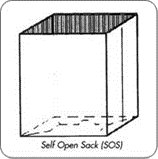
    Self Open Sack (SOS)
    BENEFITS AND TYPES OF PAPER BAGS


    This style bag is gusseted with a square pasted bottom closure. The other end is left open for packing. The customer will close this end by sewing, stapling or taping. Its characteristics are:

    • The square end provides a good shape for palletizing and allows the bag to stand up unsupported for filling.
    • In small consumer size, the bottom provides an area for print identification when the bag is lying on the shelf.
    • Recent developments now allow laminated film plies to be used.
    • Customer must provide his own closing materials.

    All wet strength kraft refuse sacks are finding wide acceptance as opposed to the all plastic refuse sack that does not degrade well in land fill disposal. Ecology minded cities and corporations are finding that this square bottom, 3 cubic foot (16x12x35″), all wet strength kraft bag fits well into their plans for a more responsible America.

    Pasted Open Mouth (POM) Satchel Bottom
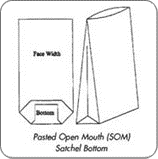
    BENEFITS AND TYPES OF PAPER BAGS


    This style bag is a flat tub with a pasted bottom closure. The other end is left open for packing. The customer will close this end by sewing, stapling, taping or wire tying. Its characteristics are:

    • This style bag is similar when filled to a SOS style bag.
    • The flat tube top, when closed, has a tendency to be pillow shaped thus detracting from the appearance of the package/stacking pattern.

    This style is not called for very often. The most popular use of this bag is a baler bag for sugar or rice, two to ten-pound packages.

    Double Roll Fold Mitered Corner (DRFM)
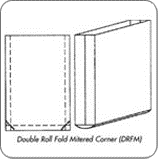
    BENEFITS AND TYPES OF PAPER BAGS


    This style bag is gusseted with a heat sealed and pasted roll over bottom. The essential characteristic is the mitered corners that from a square bottom when the package is filled. Primary markets for this small bag are:

    • Insecticides
    • Herbicides
    • Lawn care products

    This bag has exceptional non-sifting properties.

    Pinch Bottom Open Mouth (PBOM)
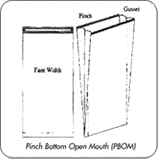
    BENEFITS AND TYPES OF PAPER BAGS


    This style bag is gusseted with a fold over pasted closure on the bottom and a pre-applied thermoplastic adhesive at the top for the customer to reactivate in closing. Its characteristics are:

    • This style bag provides a very sift proof closure, and can employ a variety of barrier plies.
    • This bag can be packed and closed on automated equipment, which can be operated and maintained by unskilled labor.
    • This bag can have an airtight seal on both ends.
    • This style offers a print area on the ends of the bag for product identification while the bags are lying flat.
    • The ends of this style bag will remain pointed when the bag is filled.
    • This style is limited in practical thickness (gusset size) to a maximum of 6 1/2″.

    Pinch bottom bags are generally used to package more expensive or sensitive products than Sewn Open Mouth is. Recently, pinch bags have begun to replace sewn bags in pet food, fertilizer and flour.

    Webb Bottom Pinch Top (SSWBPT)

    BENEFITS AND TYPES OF PAPER BAGS


    This style bag is gusseted with a square pasted bottom (like SOS) and pre-applied thermoplastic adhesive at the top (like PBOM). As the description implies, this style bag incorporates the good palletizing shape of the SOS style and the easy closing feature of the pinch bag.

    Though this style bag is more expensive than pinch it competes by offering more bags per truckable pallet with pallet shapes that can stack three high in a warehouse. This will reduce breakage in the warehouse and during truck loading. In evaluating the webb bag, it is important to remember that the cost of packaging includes more than the cost of the container.

    This special style bag often provides a means of making an effective pallet load pattern and a means of developing an effective truck-loading pattern when other bag styles would not do.

    Pasted Valve Stepped End (PVSE)

    BENEFITS AND TYPES OF PAPER BAGS


    This style bag is a flat tube width a pasted top and bottom. One corner is left open and a sleeve is placed in that corner for filling. this is the most common multi-wall bag style today. It accounts for more than 70% of the multi-wall bag market. Its characteristics are:

    • This style can employ a variety of barrier plies.
    • Filled bag has a good palletizing shape.
    • This style is not completely sift proof.
    • The maximum thickness (bottom size) is 9 inches.
    • This style bag is used for virtually every type product. However, federal rules and National Freight ruling bodies are reviewing its use for hazardous and nuisance products.
    • This style bag allows the use of valve packers (air,augers,impeller and belt) in the packaging of dusty and very difficult products.
    • The valve bag provides a means of packaging without the expense of an additional closing operation.
    Craighead Valve (CV)

    BENEFITS AND TYPES OF PAPER BAGS


    This bag is gusseted tube with square SOS pasted ends. One corner is left open and a sleeve is used for filling. This sleeve offers a thickness up to 9 inches. This bag is flush cut. Characteristics of this sytle are:

    • This style bag is the same size empty as it is filled.
    • This style is ideal for packing fluffy products. An example would be the carbon black industry using this style to pack fluffy blacks.
    • This CV style retangular bag works well on the vacuum packers where special light products are packed; insuring a firmer, more evenly packed pallet load.
    • Only Bancroft offers this special package.
    Webb Valve Pinch Bottom (WVPB)

    BENEFITS AND TYPES OF PAPER BAGS


    This style bag is a gusseted tube with a pinch closed bottom and a square top with one coner open and a sleeve for filling. This special style bag competes with sewn valve and pinch valve bags where pasted valve stepped in bags do not, since they don’t provide the moisture protection certain products require.

    Where this package has been used, it has effectively accomplished the job of improving palletized load shapes. This bag is much easier to spout than the pinch style valve bag offered by others.

    This special package is exclusive to Bancroft Bag, Inc.

    Webb Valve Squares (WVS)

    BENEFITS AND TYPES OF PAPER BAGSThis style bag appears identical to the Craighead Valve Bag, but it uses a stepped end tube thus allowing the use of sophisticated barrier plies in the bag.

    When this bag is used, it provides a very neat package and pallet-stacking pattern. The Webb Valve Square bag provides a means of fitting a very light product onto a pallet thus allowing truck transit, which may not have been an option otherwise. 

    This style is exclusive to Bancroft Bag, Inc.

    Webb Bottom Flush Cut Top (SSWBFC)
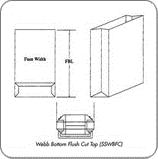
    BENEFITS AND TYPES OF PAPER BAGS

    This style bag is exactly like the Webb Pinch Top bag except that the top is cut off flush. Customers who were using SOS bags but felt it necessary to graduate to more sophisticated barrier plies than the SOS style can provide use this style. 

    This style can also provide protection from adhesive contamination and contact with paper fibers.


    Artcile By: Mr. Krishna Shukla
    Sales region head (West India) at Pakka Ltd
  • In a very difficult context, pulp and paper industry has shown resilience in 2023

    In a very difficult context, pulp and paper industry has shown resilience in 2023

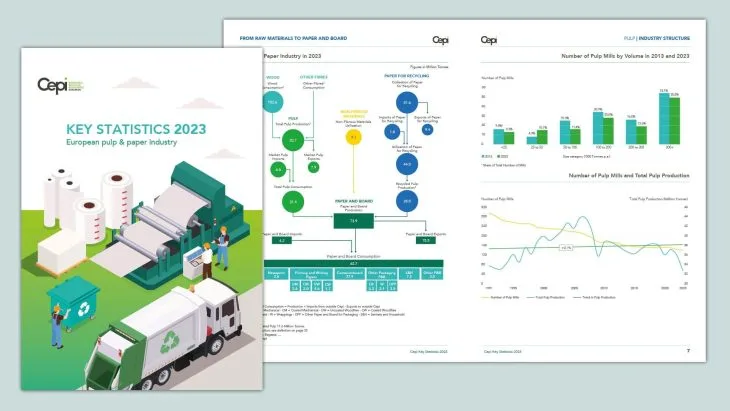
    In an economic context that continues to be exceptionally difficult and marked in 2023 by low consumption linked to massive destocking, many pulp and paper companies have seen a turnover decrease in the past year. A record high annual recycling rate indicates the industry’s autonomy and circularity.

    The decrease in paper and board production in 2023 (-13%) resulting from low demand was far more pronounced even than during the Covid-19 crisis (-4.7% in 2020). This is a trend that is not particular only to Europe, but the global slowdown has been worsened in the EU by comparatively high costs for production inputs, notably energy. The European economy as a whole has lost momentum, against the background of a high cost of living, monetary tightening, and a weak external demand.

    All paper and board grades recorded a sharp decline of production, with a varied situation across grades. The production of packaging grades decreased by 11% in 2023 compared to 2022 while sanitary and household paper registered a decrease by about 4.0%.

    Despite these developments the pulp and paper industry has shown some surprising signs of robustness in 2023, with an exceptional recycling rate of 79,3% – or 74,4% on a three-year rolling average. It remains more than ever a “made-in-Europe” industry with 91% of fibres sourced from within the European Union. Adding to this was a positive trade balance for market pulp, produced to be sold on the market rather than used on-site, for the first time since data is collected by Cepi.

    The trade balance for the sector overall remains high, placing it in the top European manufacturing sectors on that metrics. Still, this second consecutive year of decrease could point towards a loss in global competitiveness for Europe’s pulp and paper industry.

    In another area of high performance amongst industrial sectors, the decoupling of pulp and paper production from CO2 emissions continues on a steady trajectory, decreasing by 5.8% in 2023. The sector has already achieved over 46% reduction of carbon emissions since 2005. Investments remain proportionally high, despite a continuously difficult context, and will need to accelerate in the coming years to reach the decarbonisation objectives set by the European Commission.

    An early sample of company data points towards a rebound in production and profitability across all European pulp and paper sector segments in 2024. But the industry’s position remains far from what it was before the Covid crisis and war in Ukraine.

  • Paper is recycled more than any other material in the US municipal solid waste stream.

    Paper is recycled more than any other material in the US municipal solid waste stream.

    In 2022, 68% of paper and paper-based packaging in the U.S. was recovered for recycling. The recycling rate for cardboard, what the industry calls corrugated, was 93.6%.

    According to the most recent government data available, paper and paper packaging is recycled more than any other material in the U.S. municipal solid waste stream, including plastics (8.7%), glass (25%) and metals (34.1%).

    Paper recycling extends the supply of a valuable natural resource (wood fiber), saves landfill space, and avoids greenhouse gas emissions (methane) that are released when paper decomposes in landfills.

    In 2022, 40.5% of the paper collected for recycling in the United States was used to produce containerboard (i.e. corrugated boxes), 12.7% to produce boxboard (folding boxes like cereal or medicine boxes, and gypsum wallboard, i.e. drywall/ facings.), 7.8% for tissue and 5.3% for other paper grades. Net exports accounted for 33.7%, the same as in 2021.

    61% of U.S. consumers surveyed believe only recycled paper should be used to make new paper products.[4] However, this is not possible because fresh wood fiber from sustainably managed forests is essential to sustain a viable paper industry. Recycled fiber would not exist without harvesting fresh fiber.

    94% of Americans have access to community paper recycling programs, and 79% of Americans have access to residential-curbside recycling programs.

    The U.S. paper industry continues to demonstrate recycling leadership, voluntarily investing nearly $7 billion in projects from 2019 through 2025 to use approximately 9 million additional tons of recovered fiber.


  • VTT launches new initiative to demonstrate energy-efficient manufacturing technologies for fiber-based products

    VTT launches new initiative to demonstrate energy-efficient manufacturing technologies for fiber-based products

    The initiative will pioneer low-carbon, water-efficient technology with the potential to reduce water consumption by up to 90% and overall energy consumption by more than half.

    VTT Technical Research Centre of Finland announces a new initiative to address the challenges of energy and resource consumption in the forestry and textile industry. The goal of the Energy First initiative is to act as a starting point for an entirely new technology, which creates the conditions for the manufacture of low-carbon, energy-efficient, and recyclable fiber-based products.

    With the continued growth of, for example, global e-commerce, the demand for various fiber-based packaging solutions is projected to grow 5–10% annually, according to data from Statista Market Insights and eMarketer. As such, there is a need to develop scalable, high-quality packaging that is easy to recycle while simultaneously significantly reducing carbon footprint. Within non-wovens, used in napkins and wipes for example, VTT expects a strong shift from traditional products that contain plastic to cellulose-based products.

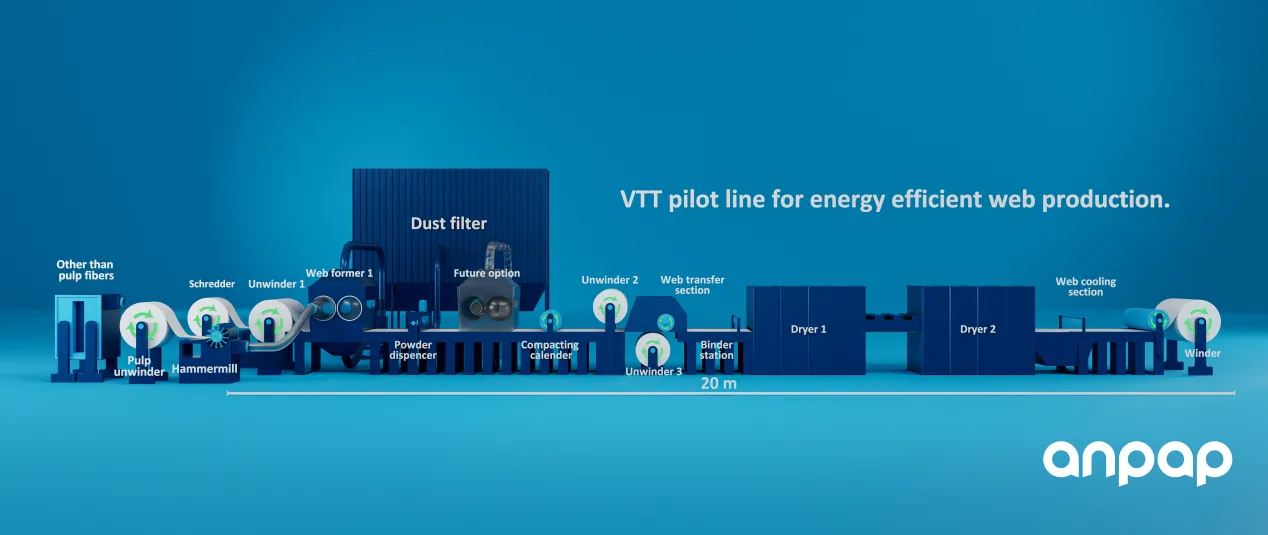
    With a budget of around 20 million euros over the next four years, the initiative consists of several projects and will establish a new innovative open-access pilot line in Jyväskylä, Finland. The collaborative research aims at developing and testing commercially viable, sustainable alternatives for cardboard packaging, hygiene products, and non-woven fabrics.

    “This new initiative is a pivotal step towards more sustainable and competitive fiber-based products, and has the potential for great impact, thanks to more than 50 industrial partners. We are excited about the prospect of 1:1 commercial projects with companies, driving innovation in energy-efficient paper board production. VTT’s purpose is to bring together people, business, science and technology, paving the way to a sustainable future. The Energy First theme aims to do just that,” says Atte Virtanen, Vice President, Biomaterial Processing and Products at VTT.

    The forest industry faces new challenges, including the rising cost of energy and fiberwood scarcity. The Energy First theme seeks to overcome these hindrances to sustainable products by developing a manufacturing process with minimal water and energy usage. Preliminary estimates by VTT’s scientists suggest that the new manufacturing process will provide a potential reduction of up to 90% in water consumption and a significant decrease in carbon emissions. Overall, the goal is to reduce energy consumption by up to 50%.

    Products manufactured with the new process are designed to be compatible with existing recycling methods. Furthermore, fiber-based packaging is produced in a way that makes it a sustainable alternative to reusable packaging. The planned EU packaging and packaging directive requires that both the raw material and the manufacturing process are sustainable, and recyclable bio-based packaging solutions will have to undergo a sustainability assessment.

    In addition to reducing water and energy consumption, the project seeks to redefine the forest industry’s environmental impact and enhance the competitiveness of fiber-based products. For example, by making the products lighter, more products could be produced for consumer use from the same amount of wood, which improves resource efficiency.

    “The Energy First Consortium project has several captivating work packages that align closely with Valmet’s current research and development objectives. Energy efficiency, investing novel 3D fiber-based structures, and the strength of fiber products are closely aligned with Valmet’s current research and development objectives. The program’s global collaboration network ensures that any intriguing project findings can be swiftly implemented in practice,” says Sampo Immonen, R&D Director, Valmet.

    The equipment for the pilot project will be supplied by Anpap Oy. Anpap designs, manufactures and supplies airlaid technology and machinery.

    “We feel that the Energy First project is one of the first steps in unlocking the full potential of airlaid technology in sustainable single-use and durable product categories. Anpap has set the benchmark for the airlaid industry for the past 40 years, and we have a strong commitment to keep developing the technology to enable the transition to next-generation sustainable products. Compared to wetlaid, airlaid web forming is flexible and consumes dramatically less natural resources, such as water, which reduces the environmental impact of manufacturing and while satisfying the needs of consumers,” says Tuukka Vihtakari, CTO, Anpap.

    The initiative is funded by EU, ERDF, VTT and the collaborating companies. The consortium is also actively engaging in EU projects, such as EU SteamDry, with a total budget of 9.84 million euros over 3.5 years. VTT will actively continue developing new projects as a part of the initiative including bilateral cooperation with industrial partners.

  • Maximize energy efficiency and resource savings with advanced inline measurements in chemical recovery and pulping

    Maximize energy efficiency and resource savings with advanced inline measurements in chemical recovery and pulping

    Digitalization, reduced demand for certain paper products and evolving industry challenges force pulp and paper companies globally to focus on innovation, product differentiation and, perhaps most importantly, sustainability.

    Facing competition from other countries with lower production costs and more efficient supply chains, Canadian companies must balance environmental, labor and safety standards with the constant demand for improved efficiency and product quality. Given constant technological advancements and ever-evolving environmental concerns, paper chemical companies, kraft chemical and semi-mechanical pulp mills, and paper and wood mills must embrace smart monitoring for a more sustainable future.

    Pulp production has, unfortunately, historically been a resource-intensive endeavor. But precisely measuring the concentration of total dissolved solids and various liquids at different steps of the process empowers decision-makers to adjust the parameters to optimize resource utilization, minimize environmental impact and enhance operational efficiency — all while maintaining the high production standards that make Canadian pulp and paper products renowned globally.

    Kraft recovery
    The kraft recovery process has three main functions:
    1. Minimizing the environmental impact of water material (black liquor) from the pulping process.
    2. Recycling pulping chemicals, such as sodium hydroxide (NaOH) and hydrogen sulfide (H2S).
    3. Cogenerating steam and power.

    Black liquor, a byproduct of the kraft process, combines removed lignin, hemicelluloses, water and other chemicals used in the extraction process. The feed to the evaporation stage should be as consistent as possible to maximize capacity and stabilize the output concentration. Feed concentration maintains consistency by regulating the mixing liquor with a process refractometer.

    The separated black liquor is then sent to the evaporation stage. Evaporation is critical in chemical recovery, concentrating the black liquor for efficient pulping chemical recovery.

    The concentrated black liquor from evaporation is then sent to a recovery boiler, which burns the remaining organic materials in the black liquor, generating heat to produce steam. Steam is often used to power turbines for electricity generation or heating purposes within pulp mills.

    When the concentration of black liquor is maximized, so is the energy production.

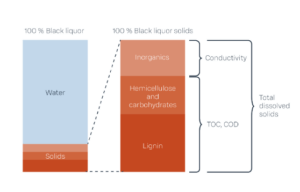
    A higher dry solids content in the black liquor increases the energy and chemical efficiency of the recovery cycle but may also lead to high viscosity plugging the equipment. Consequently, liquor in the recovery boiler should have a high content of combustible dry solids — at least 60 per cent, but preferably more than 65 per cent — to minimize flue gas emissions and maximize boiler efficiency. Plus, if total dissolved solids (TDS) residual alkali is not controlled well, brown stock washing control and bleaching process fiber quality control will be more difficult and black liquor firing can cause efficiency-reducing bottlenecks (Figure 1).
    Maximize energy efficiency and resource savings with advanced inline measurements in chemical recovery and pulping


    Concentrated black liquor is sprayed into the recovery boiler where it’s burned to form sodium sulfide. The inorganic sodium and sulfur are recovered as molten smelt, which is dissolved to form green liquor. The green liquor is then sent to the causticizing plant, where passive chemicals are converted into active cooking chemicals to make white liquor.

    Green liquor density, or total titrable alkali (TTA), must be measured accurately in the dissolving tank and shaker feed to achieve high-quality white liquor. Real-time measurement and control of TTA density during the causticizing process reduces the risk of overliming, increases process efficiency and creates consistent and high green-liquor TTA levels for slaking, boosting white liquor quality while decreasing operating costs.

    Brown stock washing

    Brown stock washing (BSW) significantly impacts pulp mill economics. Aiming to eliminate most of the soluble organic and inorganic impurities in a pulp suspension (brown stock), the BSW process also helps to retrieve cooking chemicals and organics for energy recovery, steam and electricity generation while minimizing wash liquor and water consumption.

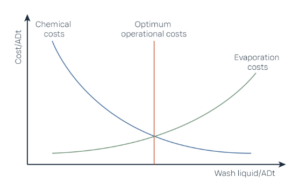
    Recovered organic compounds are used for energy production and directly affect the consumption of bleaching chemicals and, therefore, the mill’s environmental load. Since recovered inorganic compounds are used to regenerate cooking chemicals, the more inorganics lost with the pulp, the greater the requirement for make-up chemicals in the recovery system. Efficient BSW improves oxygen delignification performance and subsequent bleaching stages by reducing reagent consumption (Figure 2). With more spent chemicals recovered, the plant’s effluent load is reduced.

    Maximize energy efficiency and resource savings with advanced inline measurements in chemical recovery and pulping


    The key to BSW is inline, real-time TDS measurements that provide accurate process data and help balance water used in washing and chemicals used in bleaching by driving quick responses to potential process changes or disturbances. Monitoring TDS requires measurements at the digester washing zone and blow line, from the pulp feed to washers, in filtrate lines during the washing stage, during pulp to oxygen delignification and pulp discharge to bleaching to maximize efficiency and quality throughout the washing process.

    The transformative potential of inline monitoring in the kraft chemical recovery and brown stock washing processes is undeniable, setting the stage for reliable measurements to serve as the cornerstone of the Canadian pulp and paper industry’s ongoing commitment to sustainability.

    Reliable measurements for a greener future of pulp and paper

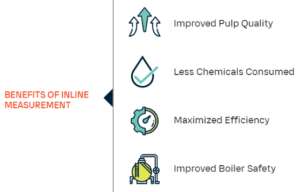
    The Canadian pulp and paper industry faces the multifaceted challenge of reducing its environmental impact while maintaining global competitiveness. Adopting inline measurement technologies throughout these processes supports the sustainability and performance requirements of more sustainable pulp production in the future (Figure 3).

    Maximize energy efficiency and resource savings with advanced inline measurements in chemical recovery and pulping


    Realizing a cleaner, more profitable future for pulp and paper demands collective effort, innovation and a shared vision for environmental stewardship. By fostering collaboration among mills, regulatory bodies, technology providers and academic institutions, the industry can harness the full potential of inline monitoring to drive transformative change. This united front will pave the way for Canadian mills to optimize resource utilization, minimize ecological footprints and unlock new efficiency frontiers at every production stage.

    Position your brand as a champion of sustainable manufacturing with inline measurement and process control to contribute to a greener, more prosperous future for the industry and solidify our national legacy as a global leader in responsible pulp and paper resource management.

    Article by Vaisala

  • SOP and pulp substitute prices rise slightly as AfH shipments increase by 1.7% in 1H

    SOP and pulp substitute prices rise slightly as AfH shipments increase by 1.7% in 1H

    In August, US prices for high deinking grades and pulp substitutes rose due to improved demand and tight supplies, driven by growth in the Away-from-Home tissue sector and increased mill consumption.

    Improved demand met “tight” supplies of high deinking grades and pulp substitutes this month, and prices increased in August for the second time this year. Growth in the Away-from-Home (AfH) tissue sector in the first half of this year helped to bring back buyers that hacked away at premiums and orders for secondary fiber as mills worked through their built-up stock of virgin pulp that last year saw significant price falls.

    Mill contacts told Fastmarkets’ PPI Pulp & Paper Week that their high inventories of raw material stock shied them away from high deinking grades and pulp subs orders for the first half of 2024, yet for July and again in August, buyers sought additional tons. Some buyers increased premiums for August orders, too, contacts said.

    “We were pretty out of the market in the previous months as our inventory was too high,” a mill contact in the East said.

    Consumption up 3.1%, 4.8%

    Both mill consumption and inventories of high deinking grades and pulp subs remain well above year-ago levels. Recent data from the American Forest & Paper Association (AF&PA) report that mill consumption of high deinking grades in the first half of 2024 increased 3.1% to 1.24 million tons vs 1.21 million tons in the first half of 2024. Mills consumed more pulp substitutes from January to June of this year, too, taking in 569,000 tons of pulp subs in the first half of 2024 vs 537,000 tons in the first half of 2023, a rise of 4.8%, or 32,000 tons.

    The AF&PA’s quarterly report also showed that mill stock of raw materials is high – 12 days of supply for pulp subs, and 16 days of supply for high deinking grades, in the second quarter of 2024. Generation typically slows in summer months as office workers vacation and printers slow down production.

    With the 2024 US election ahead, contacts questioned whether Pres. Joe Biden’s dropping out of the race, to be replaced with VP Kamala Harris, would require reprints or more printed publications that could add more generation to the recovered fiber supply in the coming months. However, contacts pointed out that this would most likely occur more so in “blue,” Democrat-led states rather than “red,” Republican-heavy voter states, as well as the focus more on digital advertisements over printed materials that could dent any potential supply pickups through early November.

    Another mill buyer said reduced raw material stock was at play for the higher prices and added demand in August, as well as sluggish generation.

    “People have pushed up premiums … driven by their inventories must be low, and generation has declined, there’s no doubt about that,” the mill buyer said.

    Rising prices for pulp substitutes and HWEC

    Suppliers worked through their stocked-up inventories of pulp substitutes and some high deinking grades, and returned demand for pulp subs bumped up prices by $5/ton for these grades in the Midwest, Southeast, and Southwest regions. Prices for hard white envelope cuttings (HWEC) increased to $280-290 in the Midwest, to $295-305 in the Southeast, and to $305-315/ton in the Southwest.

    The strong demand for tons in the Southwest, partly driven by Mexico’s buying in addition to domestic mills, and met with softer generation during the seasonally slow summer, helped to add another $5/ton at the FOB seller’s dock to sorted office paper (SOP) and high deinking grades’ prices in this region, inching up SOP and coated book stock pricing to $130-140/ton in August.

    “Demand for coated book picked up at some domestic consuming mills and in Mexico as well,” a supplier contact in the Southwest said. “Pricing held in July, but … pricing will increase in August as supply remains tight.”

    SOP’s national US average, at $125/ton in August, is $8/ton below the $133/ton US SOP average in January 2024. Prices declined with demand this year. Recently improved demand and softer supply availability pushed up prices rarely seen so far this year as buyers have had the upper hand. Firm export demand also took more tons in recent months, contacts said.

    AfH shipments ‘surprisingly strong’

    As generation sees seasonality slowdowns, AfH demand hit the fast lane. In the AfH sector, “all main categories recorded positive volume growth, with the strongest relative growth in the small facial tissue category, followed by toweling and napkins,” according to Fastmarkets’ US Tissue Monthly report published on July 31. The report said AfH shipments in June were “surprisingly strong,” up 2.4%. While at-home retail shipments recorded 0.7% decline in the first half of the year, AfH shipments booked growth of 1.7% from January to June.

    News Courtesy : FastMarket’s