Category: Special Features

  • 25-YO Trains 150 Women to Turn a Harmful Lake Weed Into Sustainable Handmade Paper

    25-YO Trains 150 Women to Turn a Harmful Lake Weed Into Sustainable Handmade Paper

    What do you do with a weed that grows back in 14 days and kills everything in its path. In Trichy, 25-year-old ecologist Sushmita Krishnan found an answer — she turned it into handmade paper and trained 150 women to do the same.

    On a sunny afternoon in Trichy, Tamil Nadu, a group of students gathers around a shallow water body, their eyes fixed on a thick green mat floating on the surface. At first glance, it looks serene — glossy leaves, purple flowers, and dragonflies weaving through the stalks. But for 25-year-old ecologist Sushmita Krishnan, this is not a picture of calm. It’s a warning sign.

    “I often hear people say, ‘Oh, what a beautiful plant!’ But water hyacinth is invasive. It chokes lakes, kills biodiversity, and keeps coming back,” she explains. This tension between beauty and destruction is what drew Sushmita to the plant in the first place. Determined to find a sustainable solution, she began experimenting with its fibrous stems — and discovered that they could be transformed into strong, biodegradable, handmade paper.

    What began as an academic curiosity has now grown into something far bigger. Sushmita isn’t just making paper — she’s building a grassroots model that combines science, sustainability, and community training to tackle one of India’s most stubborn aquatic weeds.

    Seeing the problem beneath the surface :

    Sushmita’s interest in ecology began early. Through her life sciences education, she found herself drawn to the complex relationships between species and ecosystems. But it was during her internship at the Indian Institute of Science in 2021 that something shifted.

    “I was working on insect pests and the economic losses they caused. That’s when I first started looking closely at invasive species,” she recalls. One such species was water hyacinth. While some researchers praised its ability to purify water by absorbing heavy metals, others raised concerns about its impact on native biodiversity. The conflicting opinions intrigued her — and left her with more questions than answers.

    “Water hyacinth has two faces, even in research,” she says. “Technologists see it as a boon because it phytoremediates water. But ecologists see it as a threat. It spreads fast and suffocates everything else.”

    In places like Karnataka, it was even introduced deliberately, with the hope that it would help clean polluted water bodies. But its rapid multiplication soon made it unmanageable. Meanwhile, in states like Assam and Tamil Nadu, small communities had begun using water hyacinth to make crafts like baskets and bags. But these efforts, while creative, weren’t easy to scale. “It was time-consuming work, and people weren’t buying those products in large numbers,” Sushmita explains.

    The plant that refuses to die :

    It didn’t take long for Sushmita to realise that water hyacinth wasn’t just a local nuisance — it was a large-scale ecological crisis. What makes it so difficult to control is its extraordinary ability to multiply.

    “One water hyacinth plant can produce around 3,000 seeds in its lifetime,” she explains. “And those seeds can stay dormant for up to 20 years if the conditions aren’t right. Once they find the right conditions, they grow back within 7 to 14 days.”

    The result is a dense, fast-spreading carpet that clogs waterways, depletes oxygen, and threatens aquatic ecosystems. In Trichy alone, the plant covers nearly 21 km of water bodies. Before the monsoon each year, the government attempts to clear some of this biomass — but the efforts barely make a dent.

    “They manage to clear just 2 km before the rains begin,” Sushmita says. “And even that takes a bulldozer, several days, and about 20 lorry loads of hyacinth. It’s expensive, time-consuming, and all of it ends up in landfills.”

    A breakthrough in Germany :

    In 2024, Sushmita’s search for a better solution led her far from Tamil Nadu — to the labs of the University of Hamburg in Germany. She had been selected for the prestigious International Sustainability Academy (ISA) fellowship, which supports young changemakers tackling global environmental challenges.

    Out of hundreds of applicants, she was one of only 12 fellows chosen worldwide — and the only one from India. “At the University of Hamburg, I worked in a wood chemistry lab with Professor Bodosake, who specialises in pulp-making,” she recalls. “That’s where we began experimenting with water hyacinth as a paper raw material.”

    The results surprised even the researchers. “Normally, making paper from wood pulp uses around 60% soda. But we found that with water hyacinth, you only need about 6%. And the quality of the pulp was excellent — strong, clean, and easy to work with.”

    The breakthrough proved what she had long suspected — water hyacinth didn’t need to be a burden. With the right technique, it could become a sustainable, scalable material.

    Back home, but not yet on board :

    Energised by her success in Germany, Sushmita returned to India with a clear goal — to scale up the process and introduce water hyacinth paper into mainstream production.

    “I began reaching out to paper industries,” she says. “This could be a new income source for communities that pulp water hyacinth and supply it to factories.” But she quickly ran into a familiar roadblock: hesitation. Despite her data and lab results, paper manufacturers were reluctant to test alternative raw materials. Adopting a new process meant investment, trial runs, and regulatory approvals — and many didn’t want to take the risk.

    “Even with proper patents and publications, the industry would take at least three years to switch,” she explains. “But in three years, a lot can happen at the grassroots level.” That realisation shifted her focus. If industries weren’t ready to move, she would start with the people.

    Taking the method to the people :

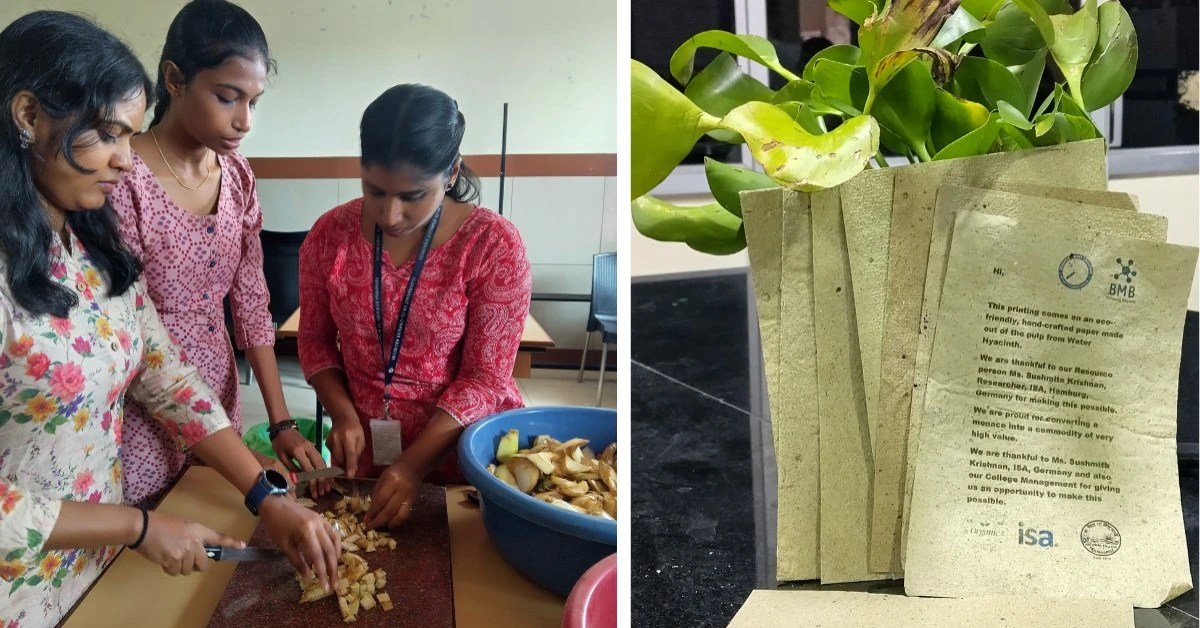
    Sushmita knew the method would only matter if people could use it. So she began conducting hands-on workshops, sharing her process with students, educators, and women from local communities. “Now I’ve started training people to make paper from water hyacinth. Many colleges are interested in adapting it for their own use,” she says.

    At National College, Trichy, she ran a two-day workshop that combined science with skill-building. “We had a theory session on the first day about water hyacinths, but the second day we had hands-on experience in creating the papers from scratch,” shares Ishika, a student who attended.

    Those students are using their own handmade paper for greeting cards and college events. Beyond campuses, she has also trained over 150 women — including a group of middle-aged women in Velachery, Chennai, supported by the Ministry of Environment. “We had two workshops for the Ministry, three for colleges, and a few more are lined up,” she adds.

    For Sushmita, the goal was not just awareness, but adoption. The more people who learned the method, the more likely it was to catch on — especially in places overrun by hyacinth.

    From pond to page : The paper-making process : 

    The process of turning water hyacinth into paper is surprisingly simple — and designed to be both cost-effective and environmentally conscious.

    It begins with harvesting the plant’s stems, which are then sun-dried and boiled in an alkaline solution to break down the fibres. This softened pulp is beaten and mixed with water and a natural plant-based binder to create a slurry. The mixture is poured onto mesh frames, where the water drains out and the thin layer of pulp is left to dry under the sun.

    Unlike many other small-scale paper makers, Sushmita does not rely on newspaper pulp to hold the paper together. Nor does she bleach it to make it look “cleaner”. “I use only natural binders, and the paper retains its natural greenish tint. I believe the quality of paper is defined by how easy it is to write on — not just how white it looks,” she says.

    The entire process is quick and low-cost. “With 1 kg of wet water hyacinth, you can make 30 A4 sheets,” she estimates. “From harvesting to making the pulp, it takes about 25 minutes. The drying takes another 45. With practice, you can do it even faster — maybe in 15 minutes. And the cost per sheet shouldn’t be more than Rs 2.”

    Sustainable change happens from the bottom up : 

    While her workshops have sparked interest and early adoption, Sushmita is clear-eyed about the scale of the challenge. “Just by making handmade paper, we can’t restore an ecosystem,” she says. “Water hyacinth grows at such a rapid pace — one hectare can produce up to 700 tonnes of it in a year. That’s something only large industries can tackle effectively.”

    Still, she believes community-led solutions like hers can nudge the system forward. By building awareness, demonstrating the potential, and training people directly affected by the plant, she hopes to create enough momentum for wider institutional adoption.

    Her long-term plans are rooted in research and impact. She now aims to pursue a PhD that focuses on water hyacinth’s social, economic, and environmental dimensions. She’s also experimenting with new pulp-based alternatives — including biodegradable sanitary pads, in collaboration with a Nepal-based NGO.

    “At a personal level, I’m trying to develop paper plates and cups as well, using thermal press technology,” she shares. These products could provide additional income opportunities for communities while replacing single-use plastic and foam. With each new idea, Sushmita stays grounded in the same belief that sparked it all — that sustainable change grows from the bottom up.

    Turning nuisance into knowledge :

    For decades, water hyacinth has been treated as waste — something to remove, to ignore, or to battle. But Sushmita Krishnan sees it differently. To her, it’s a chance to rethink how we solve ecological problems: not by erasing what’s difficult, but by understanding it, working with it, and turning it into something useful.

    Through workshops, research, and community-led training, she has offered people not just a skill, but a shift in perspective. She’s not selling the paper herself. She’s sharing the method, empowering others to carry it forward in ways that make sense for them — in classrooms, kitchens, and craft groups across Tamil Nadu.

    It’s still early. There’s more to learn, more to build, and more hands needed in the effort. But the impact is already visible — in the sheets made from lake weeds, in the women who now know how to make them, and in the idea that something so destructive can hold the potential to heal.

    News Courtesy : The Better India

  • Kraft Paper Market – Global Industry Analysis and Forecast (2024-2030)

    Kraft Paper Market – Global Industry Analysis and Forecast (2024-2030)

    Kraft Paper Market size was valued at US$ 18.88 Bn. in 2023, and it is expected to grow at CAGR of 3.4 % during the forecast period. It is expected to reach US$ 23.85 Bn. By 2030

    Kraft Paper Market Overview:

    Kraft paper is paper or corrugated board with high tear-resistance and strength. Used primarily in the packaging industry, it adds chemicals to wood pulp and recycled materials to increase fiber strength, thickness, and durability while maintaining lightweight. Chemicals are typically added to kraft paper to increase thickness, strength, and durability while maintaining lightweight. Color Craft, White or Bleach Craft, Black Craft, White or Bleach Craft, Natural Recycled Craft, and Print Craft are some of the most widely used forms of craft.

    Impact of COVID 19:

    The COVID 19 epidemic has hampered the production, supply, and demand of kraft paper and had a negative impact on the market. As the COVID 19 pandemic spread around the world, governments in many countries have imposed a strict curfew to prevent people from going out. Lockdown closed manufacturing plants, lacked staff, and affected kraft paper production.

    Kraft paper sales declined due to supply chain disruptions and the closure of specialty stores and other retailers. The closure of hotels and restaurants has reduced the demand for kraft paper for the food packaging business. The blockage restrictions have been gradually lifted, but the restaurant is gradually reopening for takeaway only. This can help increase kraft paper growth in the short term.

    Kraft Paper Market Dynamics:

    The growing popularity of fast-food restaurants for young people in urban areas and government regulations imposing a ban on plastics has increased the production of bag wrapping paper. Wheat flour, sugar, starch, food additives, processed and dried fruits, eggs, milk, and other foods are typically shipped using kraft paper. Bag fuel for food packaging is usually used in the form of an open sack or valve sack and consists of 2-3 layers of paper, often a polyethylene (PE) -free film tube with liner and/or coated paper. These factors are driving the growth of kraft paper in the market.

    Regulatory authorities are paying more attention to the introduction of paper recycling practices. And due to the packaging properties of various foods such as sandwiches, pizzas, and burgers, the industry has a significant increase in demand for kraft paper from the food and beverage industry. Also, the shift in consumer focus to improving the appearance of end-user products. These factors are driving the demand for the product in the market.

    The surge in the trend towards modern packaging with visual appeal, brand identity, and long shelf life has increased. The main advantage of paper is that it can be blended with a variety of fibers. This improves the characteristics of the paper and expands the range of applications. These kraft papers are environmentally friendly, have improved packaging properties, are easy to stack and recycle. These factors are expected to drive the growth of the kraft paper market through the forecast period.

    Kraft paper is available in a variety of attributes, including sackcloth kraft paper and fame kraft paper. Machine-coated paper is used to bundle consumer items that are in high demand from buyers. Machine-coated papers range from consumer products to fat-free papers, cheap grocery stores, margarine-holding papers, and other dairy bundles. Forte kraft paper is made up of two types of paper. Machine-coated kraft paper and machine-finished kraft paper. Interest in customization is increasing due to the rising purchasing power of buyers and the development of specialized properties. These factors are driving the market growth and are expected to drive through the forecast period.

    Market trends and challenges are analyzed and compiled in the report. The data of 2023 is considered for a better understanding of the client. Moreover, Analytics of the market is based on real numbers of past years from 2018 to 2023 with market forecast until 2030.

    Kraft Paper Market Segment Analysis:

    By Grade, the Unbleached segment dominated the market with a 32 % share in 2023. It is a brown unglazed grade and extremely durable. Mostly used in the production of medium and large-size sacks. It is also utilized as a base for a variety of coatings, laminations, and packaging. These factors are driving the segment growth in the kraft paper market.

    The bleached segment is expected to grow at a CAGR of 4 % through the forecast period. It undergoes a treatment using bleach and other chemicals to whiten and purify the natural Kraft pulp. Through this process, the paper becomes stronger than traditional brown Kraft paper. Due to this added strength, white-bleached Kraft paper is used heavily in wrapping and packaging. Eco-friendly and 100% recyclable, Tasteless and non-toxic, Pollution-free, etc. are the factors expected to drive the segment growth through the forecast period.

    By Packaging Form, Corrugated boxes dominated the market with a 36.4 % share in 2023. They not only protect shipping items from harm but also make them easier to handle. This segment reduces packing waste because they are reusable and recyclable. Food and beverage, building and construction, clothes, freight forwarding, logistics, cosmetics and personal care, and medicines have a huge demand for corrugated boxes. These factors are driving the growth of the segment in the market.

    Industrial Bags are expected to grow at a CAGR of 2.9 % through the forecast period. The surge in demand for industrial bags from the construction industry especially in developing countries has increased the demand for an industrial sack. These factors are expected to drive the demand for industrial sacks and drive the market growth through the forecast period.

    By Application, the Foods and Beverage segment dominated the market with a 35.6 % share in 2023. The rise in the use of kraft paper for bakery products and ingredients, cheese and dairy products, crisps, snacks and nuts, confectionery, coffee, dehydrated and dried food, fresh and chilled food, fresh fruit, and vegetables, frozen food, and ice cream. These factors are driving the growth of the segment in the market.

    The building and Construction segment is expected to grow at a CAGR of 5.4 % through the forecast period. Advantages of kraft packaging include resistance to temperature, water, and chemicals. These packages are lightweight and can be molded in various shapes and rising in the construction industry. These factors are expected to drive the segment growth through the forecast period.

    Regional Insights:

    Asia Pacific region dominated the market with a 40 % share in 2023. Increasing use in the manufacturing of packages for cost savings, sustainability, and packaged product safety, and used in densely populated countries such as India and China. Increasing use of kraft paper in the consumer goods, food, and beverage, construction, and healthcare industries in this region. Also, favorable government initiatives and increased adoption of clean packaged products. These factors are driving the growth of the kraft paper market in this region.

    The objective of the report is to present a comprehensive analysis of the Kraft Paper market to the stakeholders in the industry. The past and current status of the industry with the forecasted market size and trends are presented in the report with the analysis of complicated data in simple language. The report covers all the aspects of the industry with a dedicated study of key players that include market leaders, followers, and new entrants.

    PORTER, PESTEL analysis with the potential impact of micro-economic factors of the market have been presented in the report. External as well as internal factors that are supposed to affect the business positively or negatively have been analyzed, which will give a clear futuristic view of the industry to the decision-makers.

    The report also helps in understanding the Kraft Paper market dynamics, structure by analyzing the market segments and project the Kraft Paper market size. Clear representation of competitive analysis of key players by product, price, financial position, product portfolio, growth strategies, and regional presence in the Kraft Paper market make the report investor’s guide.

    News Courtesy: MMR

  • Why Crown Paper Mill is leading the way in Sustainable tissue paper production

    Why Crown Paper Mill is leading the way in Sustainable tissue paper production

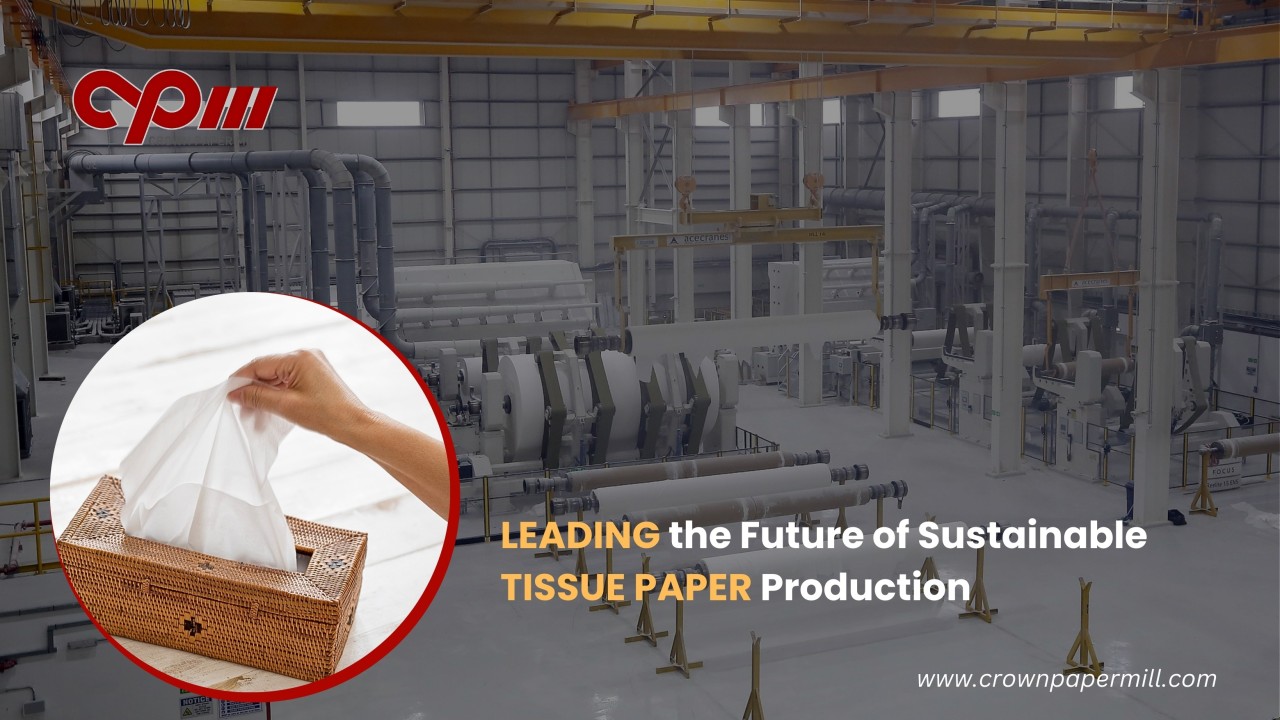
    In a world that is becoming increasingly conscious of environmental impact, the need for sustainable practices has never been greater. The tissue paper industry, while essential for daily life, has traditionally faced challenges around resource consumption and waste generation. However, Crown Paper Mill LLC, based in the UAE, is proving that sustainability and high-quality tissue paper production can go hand in hand.

    Here’s a closer look at how Crown Paper Mill LLC is setting new standards in sustainable tissue paper production.

    Commitment to Sustainable Sourcing

    Crown Paper Mill LLC takes sustainability seriously, starting with the raw materials it uses. The company ensures that the wood pulp sourced for its tissue paper comes from well-managed, sustainable forests. They partner with suppliers who comply with international standards for responsible forestry.

    This helps reduce deforestation, supports biodiversity, and ensures that the natural resources used in their paper production are replenished for future generations.

    Why Crown Paper Mill is leading the way in Sustainable tissue paper production

    By prioritizing sustainable sourcing, Crown Paper Mill is contributing to the protection of, which are crucial for the environment by absorbing carbon dioxide, providing habitats for wildlife, and maintaining ecological balance.

    Brown 100% Recycled Tissue produced by CPM

    A key component of Crown Paper Mill’s sustainability efforts lies in its advanced recycling practices. The company recognizes that recycling is an essential part of reducing its environmental impact. By incorporating a significant amount of recycled paper into the production process, they reduce the need for virgin pulp, conserving both raw materials and energy.

    Brown recycled tissues are highly acceptable in markets, especially for Napkin Grade. Brown tissue paper is more popular choice due to its eco-friendliness, as it is made from recycled materials and is biodegradable.

    It can come in various shades of brown, from light tan to dark chocolate, and can be produced in the range of starting from 15gsm up to 52 GSM.

    Why Crown Paper Mill is leading the way in Sustainable tissue paper production

    Brown Tissue is widely supported in the world because it is sustainable and is used in many restaurants and cafes.

    Energy-Efficient Manufacturing

    Energy consumption is a major contributor to the environmental impact of any manufacturing process. Crown Paper Mill LLC has made considerable investments in energy-efficient technology to minimize energy use in their operations. The company uses state-of-the-art machinery designed to optimize energy efficiency without compromising on the quality of the tissue paper produced.

    In addition to investing in energy-efficient equipment, Crown Paper Mill actively monitors and adjusts its energy consumption to ensure that it is running as efficiently as possible.

    Why Crown Paper Mill is leading the way in Sustainable tissue paper production

    These practices not only help reduce greenhouse gas emissions but also lower operational costs, which in turn allows the company to pass on savings to customers while maintaining the highest standards of product quality.

    Water Conservation Initiatives

    Water is an essential component of tissue paper production, but it can also be a significant environmental concern. Crown Paper Mill LLC addresses this challenge by employing advanced water management systems.

    By minimizing water usage, Crown Paper Mill ensures that its operations don’t place unnecessary strain on local water resources, which is especially important in arid regions like the UAE.

    Why Crown Paper Mill is leading the way in Sustainable tissue paper production

    The company’s commitment to water conservation not only helps preserve a vital resource but also improves the overall efficiency of its operations.

    CPM’s Sustainability

    Crown Paper Mill LLC doesn’t just stop at producing eco-friendly tissue paper, it extends its commitment to sustainability through its range of products.

    Why Crown Paper Mill is leading the way in Sustainable tissue paper production

    1. CPM is committed to protecting and preserving the environment for the next generations and practices these principles through various means in the community we operate in.
    2. CPM sources raw materials from sustainable forests and responsible suppliers.
    3. We keep abreast of the environmental standards and undergo certifications that will help improve every phase of our operations.
    4. CPM is constantly working together with government departments in their sustainability initiatives.
    5. CPM fosters sustainability practices within our facilities and we partner with companies who share similar values.
    6. CPM prioritizes diversity and inclusion in the Company policies and procedures.
    7. We have more than 250 employees from different backgrounds and cultures.
    8. We are continuously collaborating with local universities to support the development of young talent through internship / workshop opportunities to eligible students.

    CPM Health & Safety Standards

    CPM places paramount importance in having well-structured policies and procedures and in continuously updating our manufacturing processes to adhere to global standards.

    Why Crown Paper Mill is leading the way in Sustainable tissue paper production

    1. We have attained certifications in ISO 9001, ISO 14001, ISO 45001, and ISO 50001.
    2. The mill is Sedex Members Ethical Trade Audit (SMETA) certified.
    3. CPM uses the highest-grade virgin pulp sourced from sustainable forests and responsible suppliers.
    4. CPM products are manufactured in line with globally accepted standards mainly set by leading converters.
    5. The mill maintains stringent health, safety, and security systems and regularly conducts training on occupational health and safety.

    Community Engagement and

    Crown Paper Mill’s commitment to sustainability extends beyond its production process. The company is deeply involved in community outreach and environmental initiatives, raising awareness about sustainability and encouraging responsible consumption.

    Why Crown Paper Mill is leading the way in Sustainable tissue paper production

    Through partnerships with local organizations and support for environmental education programs, Crown Paper Mill plays an active role in promoting green practices across the UAE.

    Expansion Plans

    The tissue business is constantly growing in the Middle East and surrounding areas, and we aim to cash in on the demand that the market is offering.

    Why Crown Paper Mill is leading the way in Sustainable tissue paper production

    The wheels are set in motion to launch a new mill in Saudi Arabia and this expansion will be adding another 60,000 tons to our existing capacity, which will make us the largest producer in the Middle East.

    Continuous Improvement and Innovation

    At Crown Paper Mill LLC, sustainability is not a one-time effort, but an ongoing commitment. The company continually seeks new ways to improve its production processes, reduce its environmental impact, and stay at the forefront of innovation in the tissue paper industry. This constant drive for improvement ensures that Crown Paper Mill remains a leader in both quality and sustainability.

    Why Crown Paper Mill is leading the way in Sustainable tissue paper production

    Conclusion

    Crown Paper Mill LLC’s dedication to sustainable tissue paper production sets a high standard for the industry. From responsible sourcing and innovative recycling practices to energy-efficient manufacturing and water conservation, Crown Paper Mill is proving that sustainability and quality can go hand in hand. Their commitment to offering eco-friendly products, along with their certifications and community engagement, further solidifies their role as a trailblazer in the tissue paper industry.

    As consumers continue to demand more environmentally friendly options, Crown Paper Mill LLC stands ready to lead the charge for a greener, more sustainable future.

    Through their innovative practices and commitment to sustainability, they are helping to shape a more eco-conscious world one sheet of tissue at a time.

  • ‘Tis the Season to Be Recycling’ – top tips to reduce festive waste

    ‘Tis the Season to Be Recycling’ – top tips to reduce festive waste

    DS Smith expert shares top tips to recycle commonly used festive items, from crackers to wrapping paper – and even your tree!

    Brits are set to use 300,000 tonnes of card packaging waste this holiday season. Recycling figures from 20231 would suggest that over a quarter of this packaging could end up not being recycled, equivalent to over 515,000 reindeers.2

    With the festive period right around the corner, families are getting ready for turkey roasts, presents and decorations, but many Brits can struggle to cope with the volume of packaging that comes with the festive period. From cards and wrapping paper, to crackers and fairy lights, confusion around the rules is causing many recyclable materials to end up in landfills or incinerators.

    This comes as statistics show that the UK’s paper and cardboard recycling rate is lagging, with Brits ranking 25th out of 30 European nations for recycling rates at just 73%, compared to the European average of 82%3. Similarly, the UK household recycling rate was 44.1% in 2022, down from 44.6% in 2021.

    To help people improve their recycling practices over the festive period, DS Smith’s seasonal sustainability lead, Samantha Upham, shares her top ten tips:

    Ten tips to improve your recycling this festive period

    Wrapping paper – Not all wrapping paper is recyclable, some contain glitter, or have plastic coatings or attached materials which can contaminate the recycling process.

    Samantha’s top tip:“Not sure if your wrapping paper is recyclable? A quick ‘scrunch test’ will tell you: crumple the paper, and if it stays scrunched up, it can be recycled. If it doesn’t stay crumpled it probably has a layer of plastic film so can’t be recycled. If you have doubts about recyclable options, it’s a good start to choose a roll that says it can be recycled.”

    Christmas cards – Much like wrapping paper, not all cards can be recycled. While plain card material is recyclable, cards with glitter, plastic badges, or electronics are not. If you can remove these elements, the rest of the card can be recycled.

    Top tip“If you’re faced with a glitter-covered card, don’t just toss it! Any attached pieces can be removed. Once that’s done, you’ve got a recyclable card ready to go. You can also save glitter-free cards for crafting gift tags next year. And remember when purchasing your cards, try and make sure they are glitter free.”

    Wrapping tape – Despite common beliefs, not all tape needs to be removed from cardboard before recycling. But the less the better.

    Top tip: ” Try switching to paper-based or recyclable tape. It sticks just as well but breaks down far more easily, cutting down your effort and helping to support recycling.”

    Christmas crackers – Christmas crackers are often recyclable if they’re made from cardboard but check for glitter or plastic linings. Use the tear test: if it rips easily, it’s probably free of plastic, if not, it can’t be recycled and may have a thicker plastic coating.

    Top tipTry to choose crackers which don’t have glitter or plastic coatings, there are lots of plastic free options available now. If you’re particularly crafty, you could make your own toys and prizes for family and friends to win.”

    Christmas trees – Whilst many opt for a real one, there are many alternatives that can be reused year after year, such as cardboard trees made from recycled material, DIY trees made from fallen branches and crafted wooden trees made from sustainably sourced wood.

    Top tipIf you do opt for a real tree, local tree recycling schemes turn your holiday centrepiece into other useful products. Look for drop-off points near you or use home pickup services.”

    Fairy lights – If using battery-operated lights, remember to recycle the lights at dedicated points and bring used batteries to collection points.

    Top tip: “Switch to energy-efficient LED lights. They save energy and last longer, reducing waste and cutting your holiday energy bill.”

    Gift boxes/bags – Houses are often flooded with boxes from gift giving so reuse leftover gift boxes and bags for future gifting. If you don’t have the storage space, you can break them down to save space in your bins and make recycling easier.

    Top tip“Keep a special box to store reusable gift bags and boxes. You’ll save money and be ready for birthdays and holidays throughout the year.”

    Food and drink packaging – Food and drink packaging can pile up during the festive period, but not all of it can be recycled as it is.

    Top tip“Always take off plastic films from food or drink cardboard packaging before recycling and rinse containers which have had food and drink on before putting them in the recycling bin. Don’t forget to leave time for the washed containers to dry! This helps to ensure the recycling process doesn’t get contaminated with non-recyclable materials.”

    Advent calendars – Many advent calendars contain a mix of cardboard, plastic, and foil which makes them challenging to recycle. Calendars made entirely of cardboard can usually be recycled, but any plastic windows or glitter should be removed first.

    Top tip: “Go for reusable advent calendars that you can refill each year with treats or small gifts. Not only does it cut down on waste, but it also adds a personal touch to your holiday tradition.”

    Recycling Rules – Whether you’re home or away during the festive period, make sure to check your local recycling rules and bin collection schedules as they can differ across different regions in the UK.

    Top tip“Check the local council’s website for recycling guidelines and revised bin collection dates over Christmas. Don’t forget to locate the nearest drop-off points as a back-up or if you need more space in your bin for recycling.”

  • INCAPE holds Women’s Forum and celebrates graduation of class from Women Papermakers project in Brazil

    INCAPE holds Women’s Forum and celebrates graduation of class from Women Papermakers project in Brazil

    The initiative reinforces the company’s commitment to female empowerment and the UN’s Sustainable Development Goals (SDGs) 5 (Gender Equality) and 10 (Reducing Inequalities)

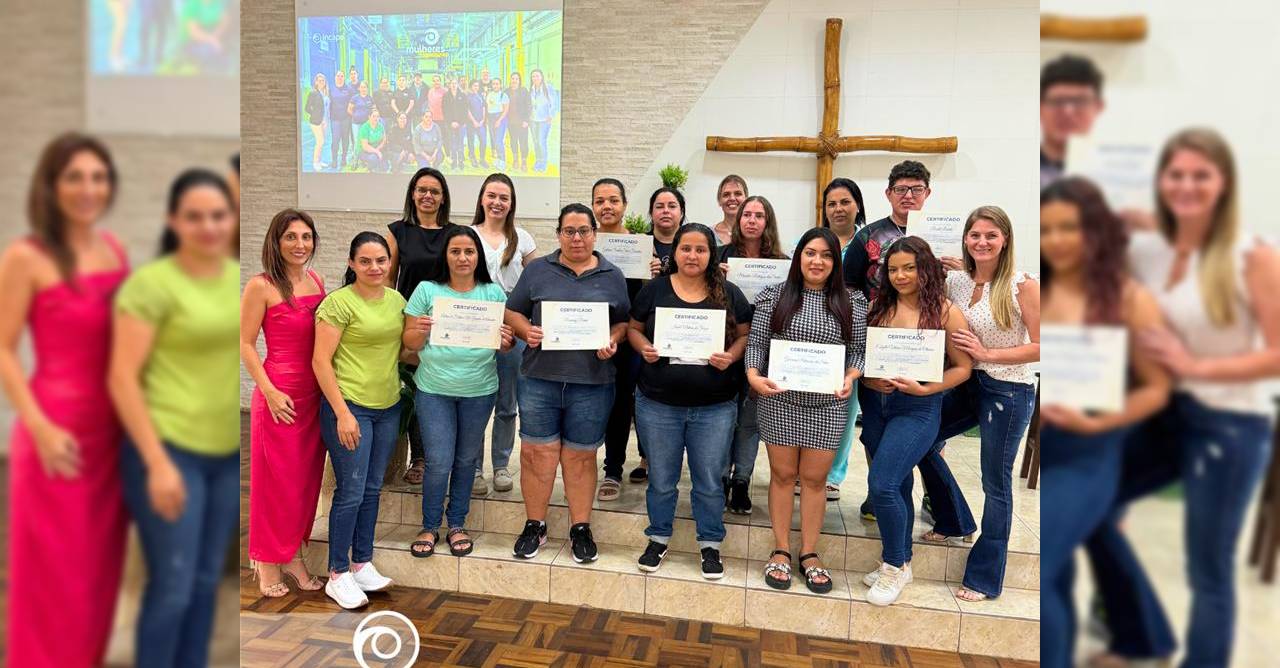
    This month, INCAPE hosted its first Women’s Forum in Benedito Novo, Santa Catarina, Brazil, reinforcing its commitment to women’s empowerment and the UN Sustainable Development Goals (SDGs) 5 (Gender Equality) and 10 (Reduced Inequalities). 

    The event, held on November 9, also celebrated the graduation of the second class of the Papermaker Women course, a company initiative that trains women for the industrial sector in areas such as forklift, rewinder and boiler operation.   

    The 15 honored graduates were: Andressa Carolina Beyer de Menezes, Andressa Toniolli, Angela Maria Vieira da Silva, Arlene de Fátima Machado Gracias de Almeida, Eshylla Vitória Marques de Oliveira, Geovanna Patrocínio da Silva, Gislaine Santos Silva Faustino, Isabel Natana de Souza, Jaqueline Luz, Joselaine Santos, Josi Soraia Kurtz, Maristela Rodrigues dos Santos, Roseli Rabelo, Rosmary Pereira, and Valderesa Cardoso Koaski. 

    A FUTURE OF OPPORTUNITIES 

    Administrative Manager Joleide Maus highlighted the impact of this journey. “The Forum and the Papermaker Wome project were born with a clear purpose: to pave the way and inspire. Today, we celebrate more than just a graduation; we celebrate the Unity, Strength, and Action of these women, who, together, transform the sector. INCAPE believes in women’s potential and the importance of opening doors to a more inclusive and equal future”, she said. 

    Joele Daiane de Aquino, HR Supervisor, also emphasized INCAPE’s role as an agent of transformation. “The industrial sector is still predominantly male, but it is INCAPE’s role to provide a safe and welcoming environment so that every woman can build her career with security and respect”, she highlighted. 

    “Today is a day of celebration and unity. When we connect and grow together, there are no limits to what we can achieve”, added Vanessa Loppnow, HR Analyst. 

    DIVERSITY THAT ENRICHES AND STRENGTHENS 

    Through initiatives like the Women’s Forum and the Papermaker Women course, INCAPE stands out as an active partner in transforming the pulp sector, creating opportunities for more women to occupy and shine in spaces previously limited, reaffirming its commitment to diversity and inclusion. 

    “People outside will know our names and hear our voices, which resonate even stronger today. For the WOMEN OF INCAPE, no challenge is intimidating. INCAPE is your partner in building a better, more equal, and inclusive tomorrow”, praised Joseidy Gomes de Oliveira, INCAPE’s Administrative and Financial Director. 

    Closing the lecture, consultant Júlia Graziela shared a powerful message on self-responsibility. “Empowerment means looking within and recognizing our own abilities, breaking barriers, and breaking cycles that limit women’s potential. It takes courage and self-confidence to build a future full of opportunities”, she said. 

    By investing in the future of women and the local economy, INCAPE solidifies itself as a company that values diversity, human potential, and sustainability in its practices, impacting the community and inspiring the tissue market. 


  • Three ways to re-purpose waste from the pulp and paper-making process

    Three ways to re-purpose waste from the pulp and paper-making process

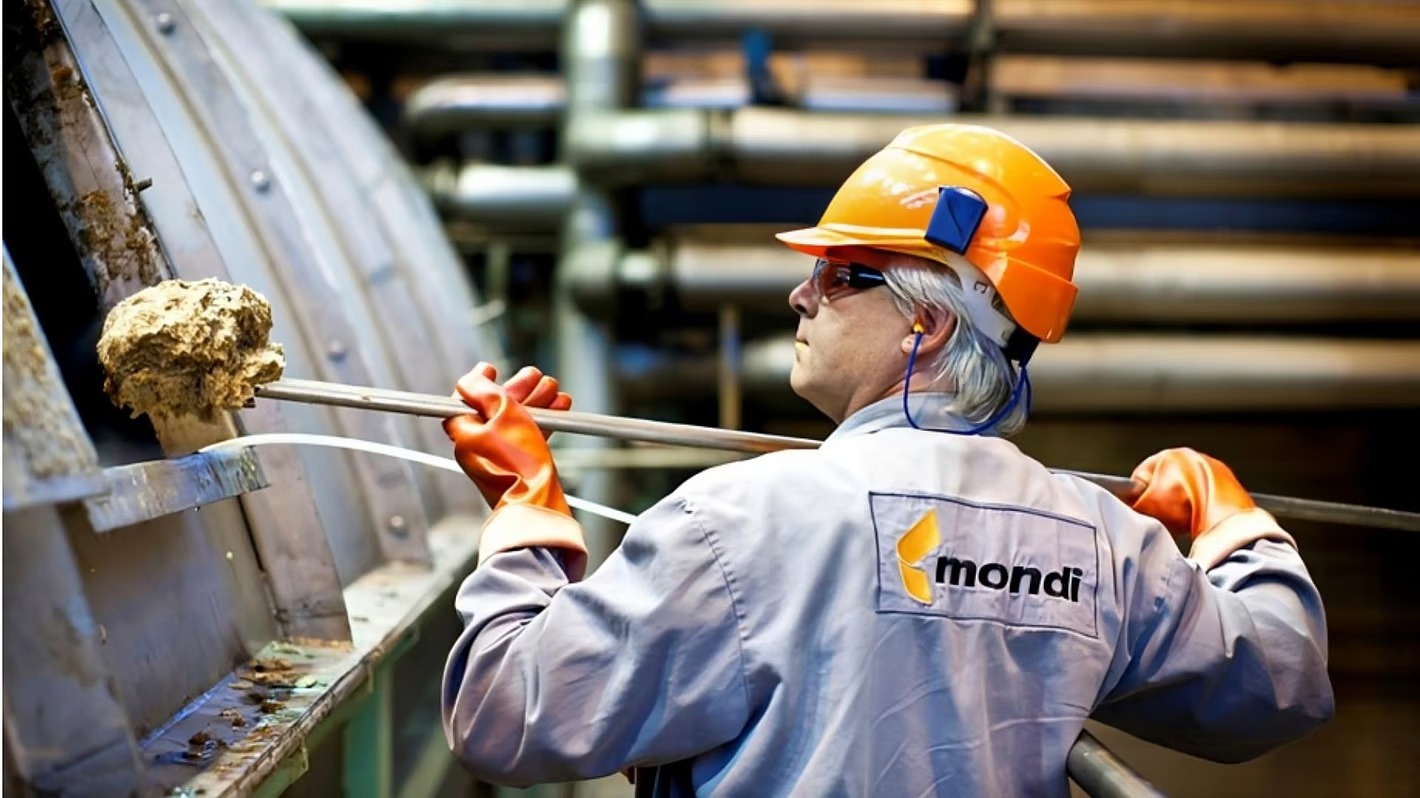
    Innovation at our mills helps Mondi to avoid waste when it comes to the by-products of sustainable pulp and paper making.

    At Mondi, we prevent waste wherever possible. But as with all major manufacturing processes, some by-products are unavoidable. When this happens, we look at waste as a resource out of place. And rather than disposing these materials, we find new uses for them across our business and in entirely different industries.

    This is central to our efforts to achieve zero waste to landfill, which is good for the environment, good for our business, and helps our customers to meet their own sustainability requirements with a more circular supply chain.

    Since 2020, we have achieved a 44% reduction in specific waste to landfill. Let’s look at three of the innovations that make this possible:

    Soil improvement from fibre residues :

    Water is a critical resource for our pulp and paper mills, from debarking logs to cooking pulp and beyond. As part of these processes, it picks up residues from wood fibres, chemicals and other substances, which we remove and treat so the water can be safely returned after use. 

    Fibre residues, sometimes called sludge, is what’s left behind after this treatment. It’s a mix of organic and inorganic components and chemicals from the treatment process that would otherwise be disposed of without further use. 

    But at our containerboard mill in Kuopio, Finland, we have collaborated with Soilfood to unlock the rich organic matter and nutrients in this by-product and re-use it as a valuable soil improvement resource. 

    This is utilised in agricultural fields to improve soil structure, enhance water retention and increase microbial activity, all supporting healthier crop growth. As well as re-purposing waste, this helps to reduce chemical fertilizer use and the risk of runoff into local waterways. 

    Tall oil as a bio-based fuel :

    In the kraft pulping process, wood chips are cooked using chemicals to break down the organic substance which binds their fibres together, known as lignin. A by-product of this process is tall oil.

    We refine this tall oil for use as a valuable bio-based fuel, both for our own energy requirements and for other industries as a substitute for fossil fuels, supporting our focus on increasing the use of renewable energy. It can also be extracted, purified and re-purposed as a secondary raw material to the chemical industry, going into products like adhesives, rubbers and inks.

    Cement from lime mud :

    After the lignin in wood chips is removed in the kraft pulping process, we send the remains to a recovery boiler in order to turn the mix back into usable cooking liquor which can be used to produce pulp once again. But as a by-product of this recovery process, a substance known as lime mud is produced. This is primarily made up of calcium carbonate.

    At our Ružomberok containerboard mill, we adjusted our process to avoid landfilling this lime mud and instead enable it to be utilised as a secondary raw material in the cement industry, where its high calcium carbonate content makes it a valuable substitute for quarried limestone.

  • Billerud expands medical paper portfolio with the launch of a new high-quality surface treated medical paper MediKraft SealBase

    Billerud expands medical paper portfolio with the launch of a new high-quality surface treated medical paper MediKraft SealBase

    “MediKraft SealBase demonstrates our commitment to the medical segment and providing innovative solutions to our customers. This is a strategic step in broadening Billerud’s product portfolio in medical paper, allowing us to cater to a wider range of medical applications and customers seeking alternatives to traditional latex-based cold seal products,” says Robert Torstensson, Vice President, Business Area Paper at Billerud.

    Produced at Billerud’s Skärblacka mill in Sweden and made of pure virgin fiber, the 38 gsm grade MediKraft SealBase is the first product being released in this range. It is tailored to be a base paper for medical synthetic cold seal coatings, offering an innovative solution for medical applications where a sterile barrier system is not required – ideally suited for applications such as plaster and it also holds potential for use with latex-based cold seal coatings.

    “An integrated pulp production ensures complete control of the manufacturing process, supported by comprehensive quality control systems. MediKraft SealBase also offers a competitive edge through our advanced sustainability credentials, solidifying our reputation as a trusted partner in providing high-quality, environmentally responsible medical paper products,” says Robert Torstensson.

    Billerud has over 50 years of expertise in producing world-class medical papers, supplying their two main categories of medical paper globally – SteriKraft and MediKraft. Billerud SteriKraft is a range of clean and safe microbial barrier medical paper – suitable for various sterilization methods – ensuring sterility and purity until the point of use. Billerud MediKraft is a range of strong, high-purity papers for applications that don’t require microbial barrier properties such as inner wrapping of single-use gloves, plaster packaging and examination table covers.

    MediKraft SealBase key facts and information:

    • Safe: With integrated pulp production, Billerud ensures complete control of the manufacturing process, supported by comprehensive quality control systems. No Optical Brightening Agents (OBA) are used in the production, and quality is monitored with advanced tools like Web Inspection Systems (WIS) and in-house bioburden labs. Full traceability further ensures product safety. It is tested for various sterilization methods, including E-Beam, gamma, EO, and steam, ensuring broad compatibility with industry requirements.
    • Pure: Made from 100 percent virgin fiber, MediKraft SealBase maintains high purity through controlled bioburden and cytotoxicity testing. The absence of OBA, latex, and recycled fibers enhances the product’s suitability for medical applications.
    • High performing: MediKraft SealBase is strong and thereby offers excellent runnability enabling efficient conversion processes. The smooth MG (machine-glazed) side improves printability.
    • Sustainability: As a recyclable product, MediKraft SealBase supports Billerud’s commitment to reducing environmental impact. With low CO2 emissions in production, Billerud is among the leaders in sustainable practices within the medical packaging industry. Moreover, Billerud is currently the only company in the market that consistently produces and discloses Environmental Product Declarations (EPDs) for nearly all its medical paper products with the aim of extending this transparency to cover 100 percent of the product line in the near future.
  • Pakka Ltd: How 1 Son Took His Father’s Dream to a Rs 400 Crore Sustainable Packaging Success

    Pakka Ltd: How 1 Son Took His Father’s Dream to a Rs 400 Crore Sustainable Packaging Success

    Pakka Limited, started by K K Jhunjhunwala in Ayodhya in 1981, has transformed into a compostable packaging business, with a yearly production capacity of 50,000 tonnes. Their factory is powered by rice husk where they recover 95 percent of chemicals used!

    In 1981, K K Jhunjhunwala wanted to set up a paper mill with a twist — using sugarcane waste or bagasse. Having seen his father’s sugarcane mill, he was well aware of the waste generated and its possible usage. He was determined to create paper sustainably, but there was a slight problem — he lacked the funds required for the machinery. His wife stepped in and sold her jewellery to fund his entrepreneurial dreams, leading to the birth of Yash Papers.

    Starting as a small paper mill, K K carved a niche in the low-grammage (GSM) kraft market over the next 15 to 20 years. After undergoing heart surgery in the mid-90s due to a congenital condition, his perspective shifted. He aspired to travel the world on his motorbike and hand over the business to his sons — though, at the time, neither was interested.

    Ved Krishna, the elder son, had no interest in joining the family business, having witnessed his father’s entrepreneurial struggles. At the time, he was studying sports management in London. Faced with his children’s disinterest and the challenges of running the business, K K attempted to sell it in 1998-99 but was unsuccessful. This led to Ved’s return to India, where he took over the reins.

    Despite early struggles, from union issues to financial losses, Ved steadily grew the company. Today, 43 years after its humble beginnings under a tree, Pakka Limited is a listed company with a turnover of Rs 414 crore in 2023-24.

    From paper to purpose: A company’s shift toward sustainable packaging

    When Ved returned in 1999, the organisation wasn’t in great shape. The company wasn’t growing, revenues were falling, operations were chaotic, and workers weren’t happy — leading to a tumultuous transition phase. There was a constant fear that the business would collapse.

    “It took me about two to three years to put things back in order. As things started getting better, I looked at opportunities for expansion by manufacturing more specialised grades of paper using sugarcane waste,” Ved tells The Better India.

    The company pivoted to producing specialty-grade paper for the food and pharmaceutical industries, from sugar sachets to McDonald’s wrappers.

    However, just as they secured a major project, Ved lost his father and made what he calls “fatal mistakes” that nearly led to the company’s closure in 2010. Ved reflects that they managed to pull through this period thanks to the goodwill his father had built over the years; suppliers and buyers continued to support them.

    This challenging time prompted Ved to step back and reconsider his path, realising that he had been following closely in his father’s footsteps, including his leadership style. “I was trying to be like my father, which he never wanted. We were very different people in many ways. I then sat down to really think about what I wanted to do. I wanted to do something aligned to the ecology and in service of the planet,” says Ved.

    And then he found the pot of gold right in front of his eyes! While they were in the packaging business, supplying wrapping and bag paper, they weren’t creating impact. To leave behind a cleaner planet for the future, Ved decided to work on compostable packaging solutions.

    “In 2014, we took a decision to work in the food packaging and food service segments. We moved the company into the realm of sustainability to reduce the environmental impact of packaging,” says Ved.

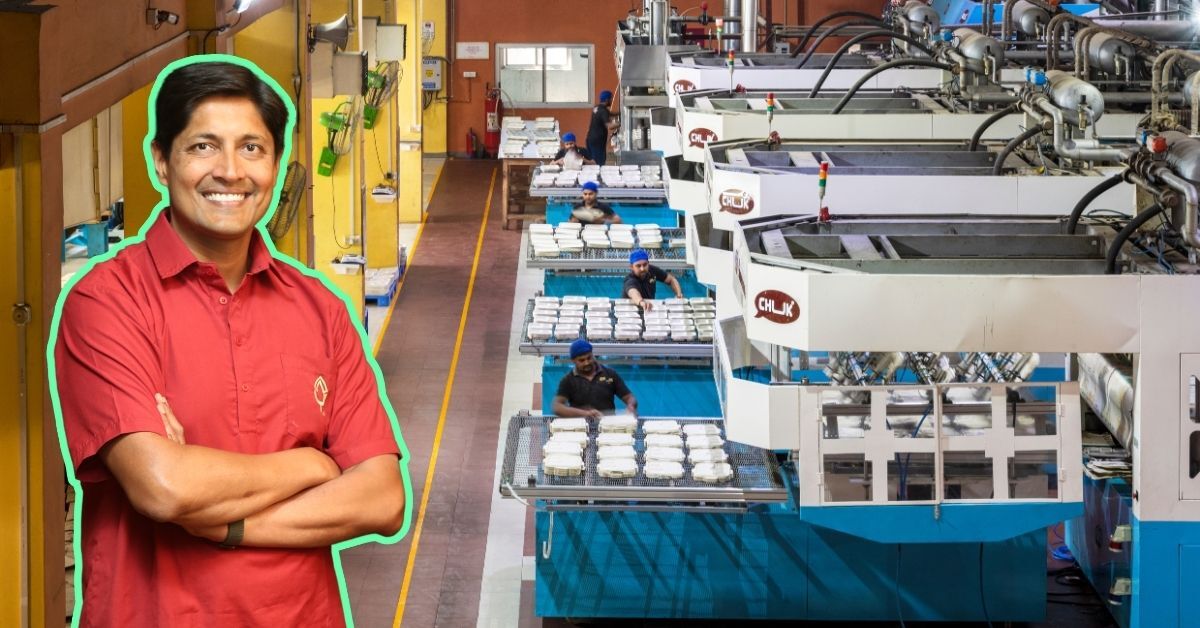
    The company started producing biodegradable packaging products and also launched a brand CHUK, producing compostable and biodegradable tableware made from sugarcane residue (bagasse). Brands like Haldiram’s, Rebel Foods, and Café Coffee Day are their customers today.

    “We use sugarcane pulp to make moulded fibre. We also worked towards flexible packaging using natural products for items like potato chip bags, chocolate wrappers, cookies, and biscuits. This was quite challenging as these products need longer shelf lives,” he explains.

    By investing in R&D, the company achieved scalability, a critical factor that helped it stabilise and emerge from uncertainty. This focus, along with Ved finding his purpose, led to a turnover increase to Rs 200 crore in FY 2018.

    In 2019, the company rebranded from Yash Papers to Pakka Limited, meaning ‘packaging with a soul’. Ved stepped down as CEO and MD, transitioning to a strategy lead role, allowing him to focus on what he truly valued. In this new position, he prioritised strategic initiatives, innovation, and new business opportunities, while delegating day-to-day operations to others.

    “We moved from being a pulp and paper company to being a sustainable packaging company,” says Ved. The company diversified its offerings into three main categories: paper, moulded products, and flexible packaging. All products are primarily made from sugarcane bagasse.

    Building a sustainable future: Commitment to green operations and innovation

    Beyond creating sustainable packaging, the company is committed to operating sustainably — a legacy started by K K Jhunjhunwala in 1995, when he established a power plant powered by rice husks, enabling the company to generate its own energy and go off-grid.

    Ved has continued this legacy, now producing electricity with an 8.5 MW plant that operates entirely on biomass-based energy. He shares that both raw materials and fuel are sourced locally, within 200 km of their factory in Ayodhya. While focusing on sustainable inputs, Ved also aimed to minimise the company’s effluent output.

    “Today, we recover 95 percent of the cooking chemicals used in manufacturing. We invested in chemical recovery equipment in 2005 to achieve this. We also use our solid waste and recycle it,” he adds.

    They also set up a modern pulp mill to produce pulp to produce compostable tableware.

    Today, Pakka’s Ayodhya factory has a production capacity of 50,000 tonnes per year, with plans underway to expand this to 80,000 tonnes. The company is also broadening its global reach by establishing a new factory in Guatemala, which will have a production capacity of 1,30,000 tonnes.

    With a strong emphasis on R&D and innovation, Ved has ambitious goals for the future, aiming to achieve a revenue of Rs 1,400 crore by 2025.

    “We are investing heavily in finding ways to create products for the future. We are constantly looking at alternative nature-based materials to use,” he adds.

    What helped Ved turn the company from loss-making to one of the biggest manufacturers of compostable packaging was finding his purpose.

    “The most important thing in life is to really know what we are here for. We have a 40 to 50-year work span and an 80-year lifespan. What helped me was really trying to make each day count. I’m clear that I’m here to create and scale products to make a significant impact towards a cleaner planet,” he reiterates.

    News Courtesy by : Sowmya Mani from the better india

  • NATIONAL RECYCLING DAY – Three things you can do to reduce your waste footprint

    NATIONAL RECYCLING DAY – Three things you can do to reduce your waste footprint

    In a world that seems to be drowning in waste, one of the best things we can do is instil a culture of separation-at-source and recycling.

    Separation-at-source is a simple practice of sorting our waste in our home, schools, or businesses before it gets collected and recycled. Instead of throwing everything into one bin, you should separate items into different categories, such as:

    • Recyclables (paper, plastic, glass, metal, e-waste)
    • Organic waste (food scraps, garden waste) if you have a composting system
    • Non-recyclable waste (things that can’t be reused or recycled, like certain plastics or dirty packaging)

    “There are approximately 18.5 million households in South Africa. Imagine the difference that we could make if every home separated rubbish from recyclables. Every small action adds up,” says Samantha Choles, communication manager at the Paper Manufacturers Association of South Africa (PAMSA), the industry body that oversees the pulp and paper manufacturing sector, as well as the interests of paper recycling mills. 

    According the latest paper recycling statistics gathered by PAMSA, around 1.3 million tonnes of paper and paper packaging were collected from a pool of 1.8 million tonnes that is deemed recoverable for recycling. This includes printing paper and various forms of paper packaging, but excludes items such as toilet and tissue paper, and packaging that is exported.

    “To borrow from Mahatma Gandhi’s words, ‘Be the change you want to see in the world,’ the reduction of humanity’s impact on this planet comes down to the power of one,” adds Choles, noting that each and every person can play a vital role in reducing the impact of waste in our communities and country.

    Here are some tips from PAMSA on how homes, schools and businesses can enhance their paper recycling habits:

    KNOW YOUR RECYCLABLES

    Educate yourself on the types of paper that can and cannot be recycled. Here are some examples.

    YES

    • Office/copy paper
    • Brown cardboard boxes
    • Grocery and takeaway bags
    • Cereal boxes, medicine boxes
    • Pizza boxes
    • Magazines and newspaper
    • Egg boxes and moulded fibre cup holders
    • Cores from toilet rolls and kitchen towel
    • Used beverage cartons e.g. milk and juice cartons*

    NO

    • Tissue and toilet paper
    • Kitchen towel and paper handtowels
    • Laminated paper
    • Very dirty paper plates
    • Plastic coated or waxed paper
    • Nappies and feminine hygiene products

    You can also find information here.

    CREATE SPACE FOR YOUR RECYCLING

    Invest in a sturdy container to keep your paper recycling separate from wet, organic and non-recyclable waste.

    Keep your container in the kitchen or outside the back door, depending on the space you have. If it’s going to be placed outside, it should be covered.

    It’s also a good idea to keep smaller recycling bins around your home, such as in the bathroom, for toilet roll cores and other paper packaging, or in your home office if you print documents from time to time.

    SUPPORT INFORMAL RECYCLING COLLECTORS OR LOCAL RECYCLING INITIATIVES

    Put your recyclables in a box or bag on your pavement for easy access for recycling collectors. They sell these items at buy-back centres. This means you are not only reducing your waste footprint, you are also supporting the livelihoods of others.

    You could also take your recycling to local collection points.

    Other things you can do

    • Recycle other items too such as plastic, cans and glass.
    • Compost your organic or food waste
    • Collect bottle tops and bread tags
    • Recycle your polystyrene – it is mixed with cement to make light bricks
  • Zero Sludge Throgh Biological Wasewater Treatment  By Nanozyme Culture

    Zero Sludge Throgh Biological Wasewater Treatment By Nanozyme Culture

    Water pollution control is one of the major thrust areas of present scientific research.

    The effluents generated from industries create major environmental problems and issues both in public and Environment. Industrial wastewater treatment is one of the major problems in the present scenario. Domestic and industrial wastewater detoxification is of vital importance for the protection of natural ecosystems and human health. Wastewater processing is usually performed in several steps, including physical, chemical and biological treatment. Biological treatment using aerobic activated sludge process has been in practice for well over a century. Increasing pressure to meet more stringent discharge standards or not being allowed to discharge treated effluent has led to implementation of a variety of advanced biological treatment processes in recent years. The use of microorganisms for the biodegradation of pollutant is an attractive alternative to the development of bioremediation processes for the treatment of wastewater. Biological methods are environmentally friendly, produce zero sludge than physical and chemical systems, and are relatively inexpensive, as the running cost is low.

    Biological Wastewater Treatment

    Microorganisms play a major role in decomposing waste organic matter, removing carbonaceous BOD, coagulating non settable colloidal solids, and stabilizing organic matter. These microorganisms convert colloidal and dissolved carbonaceous organic matter into various gases and cell tissue. The cell tissue, having a specific gravity greater than water, can then be removed from treated water through gravity settling.

    Activated Sludge Process is the most common and oldest treatment process used to treat municipal and industrial wastewater. Typically wastewater after primary treatment i.e. suspended impurities removal is treated in an activated sludge process based biological treatment system comprising aeration tank followed by secondary clarifier. The aeration tank is a completely mixed or a plug flow (in some cases) bioreactor where specific concentration of biomass (measured as mixed liquor suspended solids (MLSS) or mixed liquor volatile suspended solids (MLVSS)) is maintained along with sufficient dissolved oxygen (DO) concentration (typically 2 mg/l) to effect biodegradation of soluble organic impurities measured as biochemical oxygen demand (BOD5) or chemical oxygen demand (COD).

    Aerobic, as the title suggests, means in the presence of air (oxygen); while anaerobic means in the absence of air (oxygen). These two terms are directly related to the type of bacteria or microorganisms that are involved in the degradation of organic impurities in a given wastewater and the operating conditions of the bioreactor. Therefore, aerobic treatment processes take place in the presence of air and utilize those microorganisms (also called aerobes), which use molecular/free oxygen to assimilate organic impurities i.e. convert them in to carbon dioxide, water and biomass. The anaerobic treatment processes, on other hand take place in the absence of air (and thus molecular/free oxygen) by those microorganisms (also called anaerobes) which do not require air (molecular/free oxygen) to assimilate organic impurities. The final products of organic assimilation in anaerobic treatment are methane and carbon dioxide gas and biomass.

    Bionics Enviro Tech, Tamil Nadu, India is a scientific manufacturer of microbial bacterial bio culture –NANOZYME to achieve Zero sludge and Zero pollutant in effluent treatment plant (ETP), Sewage treatment plant (STP), Anaerobic digester (AD), solid waste management (SWM), agriculture biofertilizers, lake bioremediation and aquaculture. Microbial NANOZYME are innovated by intensive research and development which suit specific needs of various industries.

    What Is Nanozyme?

    “NANO-ZYME” which are Effective Microbes (EM) contain multiple strains of aerobic anaerobic and facultative anaerobic microbes, which are selected for their compatible, symbiotic metabolic pathways based on different industrial effluent characteristics. Based on extensive R&D. Our bacteria and enzyme products are developed using bacterial strains which are very efficient for improving the purification process of industrial, municipal & residential wastewater. Each gram of product contains up to 62 different strains of bacteria. All the bacteria present in NANOZYME are highly stable. Nanozyme Products are manufactured with stringent laboratory standards incorporating modern equipment’s using scientific innovative formulas with ISO 9001-2015 standards and NABL accreditations for laboratories.

    NANZOYME products are based on the latest advanced biotechnology designed to meet the requirements of specific waste water treatment problems. Bacteria break down organic matter into simple compounds like carbon dioxide and water, and they cycle important nutrients such as nitrogen, sulfur, and phosphorus. The enzymes enable the microbes to use the organic contaminants as sources of energy and/or as reproductive building blocks.

    The Nanozyme products are using Dye Industries, Leather & Tannery, Paper and Pulp Mills, Chemical Industries, Pharmaceutical Units, Sugar And Distilleries, Food & Beverage, Breweries, Wine And Alcohol Plants, Automobile, Petro-Chemical, Pharmaceuticals, ETPs, STPs Common Effluent Treatment Plants (CETP), Common Sewage treatment Plants (CSTP) with separate formula. BIONICS products NANOZYME are very useful to help industrial community, municipal authorities, commercial and public properties. We carry out a vast amount of R&D work. Current focal points include zero sludge, COD, BOD, TDS, TSS, heavy metals reduction with low cost treatment of biological high-performance systems.

    Merits Of Advanced Biological Treatment Technologies By Using Nanozyme

    Biological wastewater treatment is often the most economical and eco-friendly alternative, relative to other physical and chemical processes.

    • Zero sludge Process.
    • Low Cost Treatment and Increases efficiency of the Effluent/ Sewage treatment plant and saves energy costs.
    • Non-corrosive, non-pathogenic and low quantity use, making it safe and easy to handle and store.
    • Results meet criteria for new Pollution Control norms.
    • Seeding a new treatment plant with NANOZYME, to ETPs and STPs reduces the commissioning time to a great extent.
    • No design or process modifications required.
    • NANOZYME effectively treats the suspended and floatable organic debris.
    • Reduction of Up to 95% in BOD & 90% reduction in COD load, TSS, TDS, Inorganic, organics and heavy metals.
    • Reduction in chemical usage.
    • Reduces the energy consumption especially reduce the aeration time and number of aerator (blower).
    • Reduction in Color and odor of the effluent.
    • Improved Anaerobic digester efficiency .
    • Biomass performance even under high TDS.
    • Combination of various strains will successively promotes the growth of bacterial population, break down and digest the waste in both aerobic and anaerobic conditions to a far greater degree than single microbial strain.
    • Bacteria break down organic matter into simple compounds like carbon dioxide and water, and they cycle important nutrients such as nitrogen, sulfur, and phosphorus.
    • The enzymes enable the microbes to use the organic contaminants as sources of energy and/or as reproductive building blocks.
    • Bacteria can migrate to areas that are rich in specific nutrients that they require for growth. Bacteria can also attach themselves to surfaces and form communities known as biofilms.
    • Biological treatment method is only real treatment method that can degrade the organic and inorganic pollutant/ waste present in the waste water.
    • Bacteria’s are living organisms that continually adapt and grow in the system. They consume the waste, chemicals, medicals; they do not move it from one place to another.
    • Our products are based on the latest advanced technology in biotechnology designed to meet the requirements of specific waste water treatment problems.
    • Specially selected and acclimated strains of microorganisms supplied in NANOZYME microbial enzyme products produce millions of times the levels of organic digesting catalysts produced by wild type of microorganisms found naturally in various waste. With the bacterial product the content of the waste stream determines how many enzymes are produced, in what sequence, at what oncentration, and for what duration. The bacteria function as millions of tiny enzyme factories to produce the correct balance of degradative power.

    How do bacteria break down any molecule?

    Bacteria have the capability of producing many different types of enzymes that degrade a wide variety of organic materials such as fats, oils, cellulose, xylan, proteins starches and all chemicals. The polymers that must be reacted with more than one type of enzyme in order to be efficiently degraded to their basic building blocks. Bacteria can produce the complete “team” of enzymes that are necessary to degrade and consume the organic materials present in their environment at any given time. Bacteria can adapt to a range of conditions and food supplies. They can change the type of enzymes that they produce if the food source changes. They can protect themselves from changes in environmental conditions by forming colonies, biofilms, or spores.

    How quickly do high enzyme producing bacteria and in what quantities?

    Bacteria have the capability of producing many different types of enzymes. They are living organisms that respond to their environment. Nature provides a specific “team” of enzymes to attack each type of polymer. Production of enzymes begins as soon as the bacteria begin to grow. The cells must obtain nutrients from their surroundings, so they secrete enzymes to degrade the available food. The quantities of enzymes produced vary depending on the bacterial species and the culture conditions (e.g., nutrients, temperature, and pH) and growth rate. Hydrolytic enzymes such as proteases, amylases, and cellulases, etc. are produced in the range of milligrams per liter to grams per liter. Bacteria can grow very quickly, doubling their populations in as little as 20-40 minutes. In some applications, it is common to “boost” bacterial colonization. Bacteria’s can adapt and grow in various extreme conditions of pH, temperature and availability of nutrients as well as high concentrations of pollutant because of the high CFU counts (colony forming units)

    Advantages of Microbial Nanozyme Product

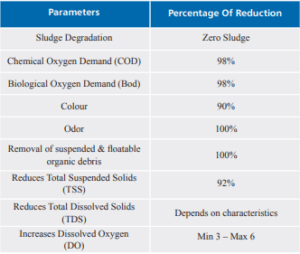
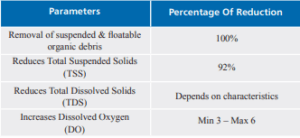
    This microbial NANOZYME effectively treats the suspended and floatable organic debris. Reduces COD (Chemical Oxygen Demand), Reduces BOD (Biological Oxygen Demand), Reduces TDS – Total Suspended solids, TSS (Total Suspended Solids) Combination of various strains will successively promotes the 130 Water Today – The Magazine l May 2018 growth of bacterial population, break down and digest the waste in both aerobic and anaerobic conditions to a far greater degree

    Microbial Nanozyme on Wastewater Treatment Plants

    Microbial Nanozyme on Wastewater Treatment Plants

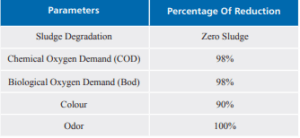
    Bacteria can migrate to areas that are rich in specific nutrients that they require for growth. Bacteria can also attach themselvesto surfaces and form communities known as biofilms. Reduction of Up to 98% reduction in BOD & 95% reduction in COD load, TDS, Inorganic, organics and heavy metals. The quantities of enzymes produced vary depending on the bacterial species and the culture conditions (e.g., nutrients, temperature, and pH) and growth rate. Hydrolytic enzymes such as proteases, amylases, and celluloses, etc. are produced in the range of milligrams per liter to grams per liter. Bacteria can grow very quickly, doubling their populations in as little as 20-40 minutes. In some applications, it is common to “boost” bacterial colonization.

    Microbial Nanozyme On Wastewater Treatment Plants

    Microbial Nanozyme On Wastewater Treatment PlantsMicrobial Nanozyme On Wastewater Treatment Plants second table

    Dosage Details:

    Dosage: 10kgs/ 100 KLD Effluent/ 2-3 Months. It will vary depends on COD, BOD and other parameters.

    Important About Nanozyme

    NANOZYME, when added helps to


    • Population “ > 17 Million per milli gram” (17 x 10 -9).
    • Sludge volume will be reduced more > 90 – 98%, as more solids are degraded.
    • Fast Start-ups & Bacterial Oxidation of the phase will be faster and more complete.
    • Effluent water standards will be met more consistently, helping to maintain a clean environment.

    Article written by Dr. M. Parameswari Sasikumar Ph.D. , AGRI , ENVIRO , Executive Director, Bioncis Enviro Tech, India.