Category: New Launch

  • JK Paper Undertakes Corporate Restructuring with Amalgamation and Demerger Plan

    JK Paper Undertakes Corporate Restructuring with Amalgamation and Demerger Plan

    JK Paper Undertakes Corporate Restructuring with Amalgamation and Demerger Plan


    JK Paper Limited has embarked on a major corporate restructuring initiative involving the amalgamation of subsidiaries and demerger-related operations, in a move aimed at simplifying its organisational structure and enhancing operational efficiency.

    The restructuring follows the approval of a composite scheme of arrangement by the National Company Law Tribunal, allowing the company to proceed with a comprehensive reorganisation of its group entities.

    As part of the scheme, multiple wholly owned subsidiaries—primarily engaged in the packaging segment—will be merged into the parent entity. This consolidation is expected to streamline operations, reduce administrative complexities, and create stronger integration across business verticals.

    The restructuring plan also includes elements of demerger and internal realignment, designed to optimise the company’s paper and packaging businesses. By bringing related operations under a unified structure, JK Paper aims to improve efficiency, strengthen synergies, and better position itself in the fast-growing packaging market.

    Company officials indicated that the initiative is focused on enhancing value for stakeholders through improved resource allocation and sharper business focus. The move is also expected to support long-term growth by enabling quicker decision-making and improved cost management.

    The scheme has received the necessary approvals from shareholders and creditors and has now entered the implementation phase. With this restructuring, JK Paper is expected to emerge as a more agile and integrated enterprise, aligned with evolving industry dynamics.

    The development reflects a broader trend among Indian manufacturing companies to consolidate operations and restructure business portfolios in order to remain competitive in an increasingly dynamic market environment.


  • Fastmarkets, NOREXECO launch Europe’s first pulp futures

    Fastmarkets, NOREXECO launch Europe’s first pulp futures

    Fastmarkets, an industry-leading cross-commodity price reporting agency, and NOREXECO, a leading commodity exchange for the pulp and paper industry, announces the launch of two industry-first spot futures contracts for the Northern Bleached Softwood Kraft (NBSK) and Bleached Eucalyptus Kraft (BEK) markets.

    These new contracts will address significant shifts in pulp market pricing and the growing need for more transparent and efficient tools for managing price risk. This launch marks a major milestone in the evolution of the European pulp market.

    While previous European futures contracts settled against Fastmarkets’ benchmark PIX indices, which reflect the gross contract price, these new contracts display spot price levels demonstrating their increasing importance as a key reference for industry participants. They provide a new and effective way for the management of price exposure with greater accuracy. 

    “These new European futures contracts are a game-changer for the industry,” said Matt Graves, Fastmarkets’ Senior Vice President. “By aligning closely with the dynamics of net price levels, we are providing market participants with a powerful tool to manage risk more effectively and adapt to evolving pricing trends.” 

    “The introduction of these European spot prices expands Fastmarkets’ extensive global coverage of net prices for pulp, complementing existing price assessments for North America and China. This gives the industry a more complete and transparent view of the global market, empowering better decision-making,” he added. 

    “The two new contracts will supply the industry with an important tool for managing price risk. Settling on spot price also opens up opportunities for traders and arbitrators, bringing necessary liquidity into the market. With experience from other commodity markets, we see that having relevant tools for managing price risk is embraced by the industry,” said Stein Ole Larsen, NOREXECO CEO. 

    “We are incredibly excited to partner with NOREXECO to bring these innovative futures contracts to the European market,” said Przemek Koralewski, Global Head of Market Development at Fastmarkets. “This launch is a direct response to the market’s need for more sophisticated risk-management tools and underscores our commitment to deliver solutions, together with our commodity exchange partner, that meet the changing needs of the market. This is a significant step forward for the industry.” 

    This initiative is a continuation of the successful partnership between Fastmarkets and NOREXECO, which already includes contracts for net prices of NBSK and BHKP in China and recycled containerboard, all underpinned by Fastmarkets’ industry-leading price assessments. 

  • Sabert leads the way with high-performing no intentionally added PFAS pulp packaging

    Sabert leads the way with high-performing no intentionally added PFAS pulp packaging

    Sabert Corporation Europe is proud to launch its new fully home compostable and recyclable foodservice packaging range. Made from renewable plant-based resources, the range is free from intentionally added PFAS and fully compliant.

    Reflecting Sabert’s ongoing commitment to innovation, the new ranges have been developed and validated over time to deliver the performance customers expect. “We chose to take our time rather than rush to market,” explains Alex Noake, Senior Vice President and Managing Director for Sabert Europe. “Most ‘PFAS free’ solutions we’ve tested simply haven’t performed and we have been inundated with requests from customers who continue to see Sabert as credible pulp innovators. We confidently offer pulp packaging that’s food safe, home compostable, recyclable and reliable in demanding foodservice and retail environments.”

    “In the foodservice market, pulp packaging with no added PFAS options have faced performance challenges, a gap Sabert’s new ranges are designed to close,” Noake adds: “Just recently I was served an Asian-fusion meal in a pulp tray lined with greaseproof paper, a clear sign the bagasse tray itself wasn’t up to the job. The result was predictable. the paper became soggy, tore apart, and mixed with the food, undermining both the dining experience and the environmental intent. Worse still, many of those greaseproof liners still contain PFAS, completely defeating the purpose of using a ‘PFAS free’ base in the first place. Our goal was to avoid those compromises entirely by developing solutions that perform flawlessly without needing additional packaging or shortcuts.”

    To align with new regulatory requirements, Sabert has evolved its entire pulp portfolio into the HC (home compostable) range. Building on this foundation, Sabert introduced Pulp Ultra, a next-generation, no-intentionally-added-PFAS formulation that meets both legislative standards and customers’ expectations for superior strength and heat resistance. This will be available early next year. Together, these ranges give customers a choice between a standard home-compostable option and an ‘Ultra’ high performance solution, both of which meet Sabert’s rigorous quality standards.

    Be ready for upcoming European regulation

    “At Sabert, we take food safety to heart,” says Sabert Quality Environment, Health & Safety Manager Isabelle Ernotte. “Every product we make is rigorously tested to comply with food safety standards. Our commitment is to help customers transition responsibly and confidently as new legislation comes into effect.”

    Sabert’s existing pulp ranges containing PFAS substances remain fully compliant and safe for use, meeting all current UK, European and national food-contact regulations. From 12 August 2026, Regulation (EU) No 40/2025 on packaging and packaging waste (PPWR) introduces new measures, including Article 5(5) paragraph 5, of Regulation (EU) No 40/2025 which restricts and introduces limits on the presence of per- and polyfluoroalkyl substances (PFAS), often referred to as ‘forever chemicals’ due to their persistence in the environment and the human body. Sabert’s new solutions help customers to stay ahead of these changes with products that already meet the next generation of sustainability standards.

    Sabert has over 40 years’ experience in providing innovative, value-added products to the highest quality standards, supported by outstanding customer service,” concludes Noake. ”Our mission is to offer our clients the best guarantees in terms of quality, safety and service, so talk to us to ensure you are choosing the most appropriate foodservice packaging or if you would like to better understand the potential impact of upcoming legislation.”

  • Absolut unveils industry-first paper-based cap and bottle duo

    Absolut unveils industry-first paper-based cap and bottle duo

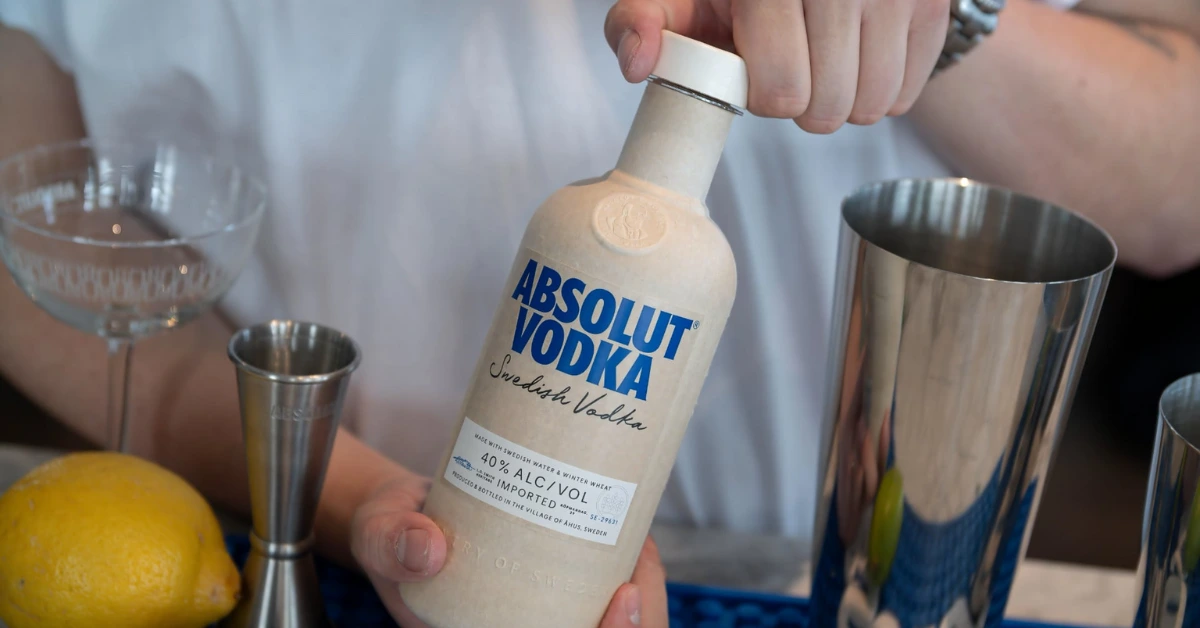
    Absolut has successfully trialled an industry-first paper-based cap and bottle duo as part of the company’s ongoing vision to create a fully biobased bottle. The cap is a collaboration with Blue Ocean Closures (BOC), a Swedish start-up that has formed a pioneer community to reduce plastics through fibre packaging innovation.

    The bottle and cap completed its first trial at an event in May, being put to the test by a community of bartenders. Absolut has a history of working towards long-term environmental goals and pushing boundaries with its packaging. In 2023, the brand made waves with the launch of “Absolut Paper” in collaboration with Paboco (Paper Bottle Company). Absolut successfully trialled the single-mould paper-based bottles at select Tesco stores in the UK.

    Absolut’s commitment to generating change led to the exploration of the final element – a paper-based cap. With no viable options available in the market, Absolut teamed up with BOC to develop one. The cap’s pioneering design will in the first generation combine a body made of more than 95% FSC* certified fibres with a thin top-seal barrier made of plastic. The long-term ambition is to replace the plastic with a biobased material so the entire cap will be made of renewable materials.

    Already now a cap made primarily from renewable material opens the potential for reductions of carbon footprint compared to conventional materials such as aluminium. The cap will be recyclable as paper in markets that have recycling systems in place that can separate paper from other materials. The paper-based cap is part of Pernod Ricard’s Future of Packaging initiative, which seeks to empower consumers and brands to commit to more conscious choices around the packaging of their spirits.

    The paper-based cap and bottle combination was trialled for the first time at the “Absolut The Map” event in May, where bartenders were able to put the new innovation to the test. The focus of the test was to evaluate functionality, handling and overall impression of the cap in “real-life” situations. The next steps on the development journey involve further quality testing, followed by a limited in-market trial.

    Commenting on the launch, Louise Werner, Director Future Packaging at Absolut says: “2023 saw the development of the Absolut paper-based bottle, a pioneering initiative that helped us push boundaries towards our fully biobased bottle. However, the final piece of the puzzle remained. Creating real impact is hard and change can only come about as a collective endeavour so we are thrilled to partner with Blue Ocean Closures to help us on the journey.”

    Noémie Bauer, Chief Sustainability Officer at Pernod Ricard says: “We remain committed to challenging ourselves to drive innovation in sustainability. This new step into the future of packaging highlights our ongoing commitment to shifting the dial towards minimizing the impact of our products and being transparent about this process – the trials and the achievements.

    We are hoping to inspire progress across the wider drinks ecosystem, pushing us further towards a more sustainable future.” Lars Sandberg, CEO at Blue Ocean Closures commented, “We are proud to partner with Absolut Vodka, a leader when it comes to packaging innovation, in bringing the paper-based cap to life. Real change must be a collective effort, and we are excited to learn from the feedback received by bartenders attending this trial.”

  • Parason’s Next Leap in Automation: Transforming Semi-Automatic to Fully Robotic Forming Lines

    Parason’s Next Leap in Automation: Transforming Semi-Automatic to Fully Robotic Forming Lines

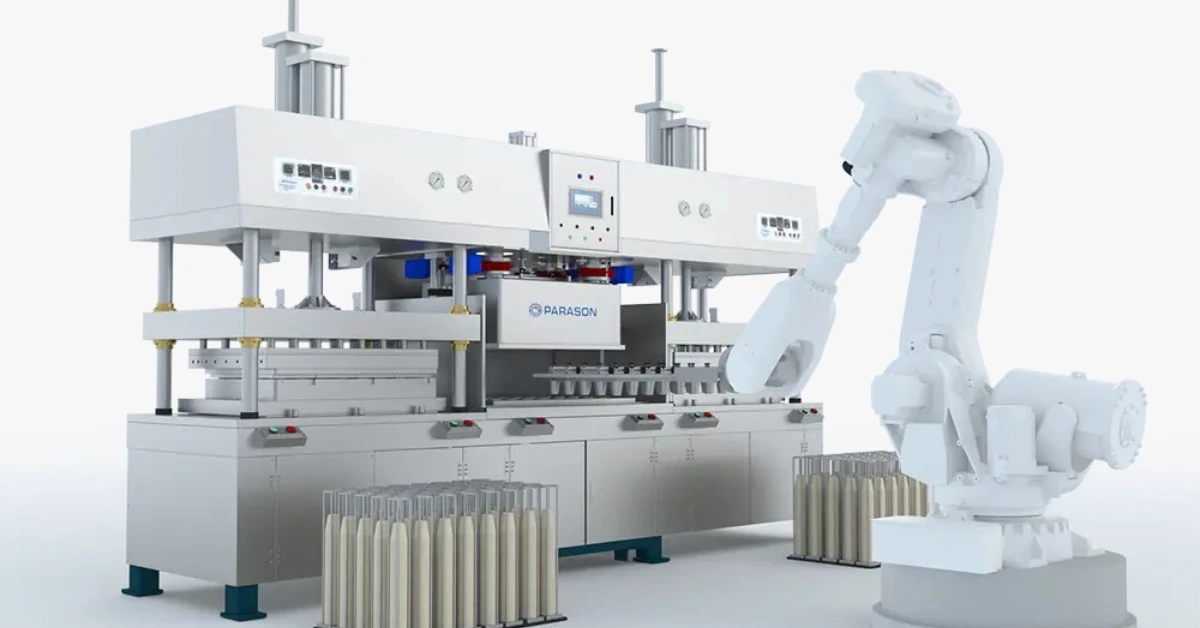
    Parason introduces a game-changing upgrade for the molded fiber packaging industry, a complete Robotic Retrofit solution that transforms your Semi-automatic Forming machine (Manual operation) into a Fully Robotic system.
    • 30% More Production Output
    • Low Production Cost
    • Zero Manpower Dependency
    • Rejection Less Than 3-5%
    • Rejection Control and High-quality Products
    • One-third of Wire Mesh Consumption From Semi-Automatic Machine
    • Consistent Operation
    • Vision-based Sensors for Operation Control
    • Field Safety Sensor
    • Online Trimming Integration
    • Wrinkle-free Products

    Whether manufacturing eco-friendly tableware or sustainable molded fiber packaging, this automation upgrade boosts your production speed, quality, and reliability while reducing operational costs and product rejections. Already using a semi-automatic machine? It’s time to upgrade.

  • ABB launches Industrial Knowledge Vault to safeguard expertise and empower workforces

    ABB launches Industrial Knowledge Vault to safeguard expertise and empower workforces

    ABB launches ABB Ability™ Industrial Knowledge Vault, a generative AI solution to safeguard expertise and empower workforces
    • ABB Ability™ Industrial Knowledge Vault uses generative AI to transform how information is retained and shared, enabling smarter, faster, and more sustainable decision-making
    • Natural language queries and enhanced human-machine collaboration transform knowledge into action
    • Developed by ABB industrial AI experts in collaboration with Microsoft, the solution brings together two industry leaders to enhance workforce productivity and efficiency

    ABB announced the introduction of ABB Ability™ Industrial Knowledge Vault, a generative AI-driven solution designed to solve the growing challenge of knowledge loss in industrial environments. Industrial Knowledge Vault, using Microsoft Azure OpenAI Service, can store, retain and safeguard critical expertise while actively transforming that knowledge into step-by-step workflows.

    This enables workers to quickly access and apply best practices, empowering businesses to run leaner while preserving safe operations. As experienced employees retire, the loss of decades of collective knowledge threatens operational continuity, efficiency and innovation if not properly addressed.

    Traditional documentation methods are often fragmented, requiring significant manual effort to compile, interpret and apply. Industrial Knowledge Vault addresses this challenge by capturing and structuring expertise in a centralized, secure repository that is easily accessible through natural language conversations, enabling engineers and operators to perform tasks more efficiently.

    Developed in collaboration with Microsoft, Industrial Knowledge Vault uses ABB Genix™ CoPilot and Microsoft Azure OpenAI Service to analyze and synthesize information into actionable procedures, allowing workers to retrieve insights effortlessly through an intuitive, conversational interface.

    The solution enables effortless workflow generation using natural language input to create structured procedures in seconds, eliminating the need for manual document parsing. Additionally, its policy and procedure management capabilities ensure up-to-date, role-based access to critical operational knowledge, streamlining compliance and version control.

    It also provides real-time guidance and decision support, empowering workers with in-the-moment insights, reducing the learning curve, and enhancing operational performance. The solution can be deployed across cloud, on premise or ABB SaaS. “Industries everywhere are facing a critical knowledge gap as a generation of experienced workers retire and take their invaluable expertise with them,” said Sanjit Shewale, Global Head of Digital, Process Industries, ABB.

    “Our Industrial Knowledge Vault tackles this challenge head-on by providing a secure and accessible platform to enable businesses to do more with digital. By capturing, preserving, and sharing this vital knowledge, businesses can ensure operational continuity and empower workforces with in-the-moment information to perform their jobs smarter, faster, and more sustainable.”

    Industrial Knowledge Vault continuously learns from real-world operations, refining workflows and best practices to drive continuous improvement. By integrating with existing industrial systems, it enhances collaboration between field workers and control rooms, providing real-time visibility into job status and operational procedures which can reduce bottlenecks and improve overall process function.

    “Our collaboration with ABB enables industrial organizations to unlock the full potential of AI-driven knowledge management,” said Sonja Meindl, Enterprise Commercial Director, Microsoft Switzerland. “By combining AI with deep industrial expertise, we are helping businesses bridge the knowledge gap and build more resilient, efficient operations.”

  • Amcor launches recycle-ready AmFiber™ paper refill pack for instant coffee and dry beverages

    Amcor launches recycle-ready AmFiber™ paper refill pack for instant coffee and dry beverages

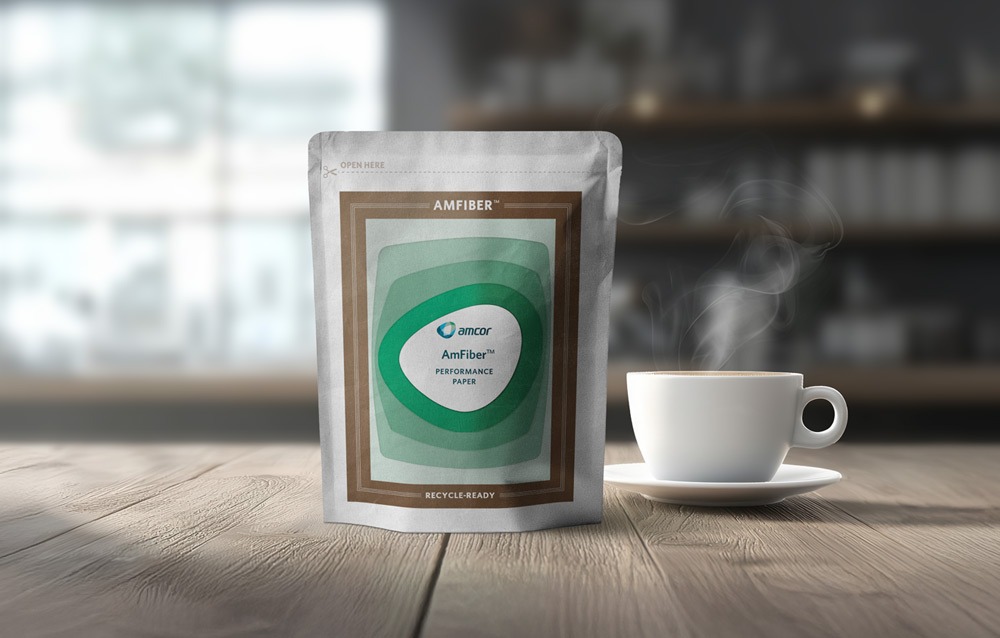
    Amcor a global leader in developing and producing responsible packaging solutions, has announced the launch of its new AmFiber™ Performance Paper stand-up pouch, a paper-based refill pack for instant coffee and dry beverage products.

    This innovation – launching first across the Europe, Middle East and Africa region – is part of Amcor’s AmFiber™ Performance Paper portfolio, and delivers recycle-ready paper packaging that has been designed specifically for dry beverages.

    Preserving the aroma and taste of coffee products requires strong product protection. Amcor’s new AmFiber™ Performance Paper stand-up pouch provides excellent seal integrity and barrier that makes it an ideal solution for soluble coffee products. The new refill pack offers curb-side recyclability in several European countries, thanks to its 85% fiber content, and is certified for recyclability by CEPI and Aticelca.

    For all-round sustainability benefits, the AmFiber™ refill pouch enables brands to reduce the carbon footprint of their dry beverage packaging by up to 73%, including reductions to non-renewable energy use (71%) and water consumption (41%) (1). These enhancements allow brands to bolster their sustainability efforts and align with the preference among consumers for attractive, paper-based packaging.

    The recycle-ready structure of Amcor’s AmFiber™ stand-up pouch enables brands to cut down on EPR fees, with potential savings of up to 70-90% compared to non-recycle-ready solutions (depending on the country) (2) . This expansion of the AmFiber™ Performance Paper range aligns with growing consumer demand for more sustainable refill packaging.

    Research reveals that 89% of shoppers see the recyclability of refill packs as either ‘quite important’ or ‘very important’ (3) . The new AmFiber™ Performance Paper stand-up pouch has been designed to be recyclable in most European countries.

    Designed as the ultimate retail solution with strong consumer appeal, the AmFiber™ Performance Paper stand-up pouch features a robust bottom gusset for optimum presentation and functionality. It runs effectively on coffee brands’ packing machinery and is efficient in distribution due to its compact and lightweight design.

    Giorgio Dini, Marketing Manager for Coffee at Amcor says: “This newest addition to the AmFiber™ family offers coffee and dry beverage brands a more attractive packaging solution that has a natural, paper-based appeal and is recycle-ready. Helping to advance more circular refill packaging, we are proud to announce the AmFiber™ Performance Paper stand-up pouch, as we continue to innovate in paper-based solutions.”

  • Revolutionizing Paper Machine Performance : PermflowDuo .

    Revolutionizing Paper Machine Performance : PermflowDuo .

    The World’s First Portable Moisture and Permeability Meter. In today’s fast-paced industrial landscape, efficiency, precision, and cost-saving are key drivers of success.

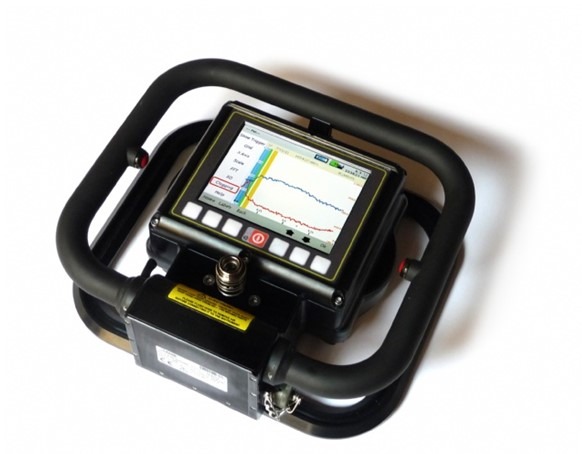
    The latest innovation in paper machine technology brings a significant breakthrough by combining multiple functionalities into a single, portable instrument. This world’s first portable device incorporates a moisture and permeability meter, designed to offer unprecedented benefits in terms of performance, safety, and cost reduction.

    A Leap Forward in Efficiency

    One of the standout features of this portable instrument is its dual functionality : it not only measures moisture levels but also evaluates permeability in real-time. The combination of these critical metrics allows operators to monitor paper machine processes more effectively, improving operational efficiency.

    What makes this device even more remarkable is its ability to measure these two parameters in half the time typically required by traditional methods, effectively reducing production downtime and increasing throughput.

    The device is built with safety in mind. Featuring double safety mechanisms, it ensures secure operation in a variety of industrial environments. Additionally, it significantly lowers both investment costs and maintenance needs—two factors that can often be barriers to innovation in the industry.

    Exclusive Software for Precision Monitoring

    This portable instrument doesn’t just collect data—it interprets it in real-time. With its exclusive on-board FFT (Fast Fourier Transform) and felt 3D mapping software, the device eliminates the need for external position detecting systems. The software offers precise monitoring of the felt’s condition, allowing for immediate adjustments in production processes.

    Additionally, the device incorporates a unique “clogging” algorithm to detect felt wear and clogging, helping operators maintain peak performance. This feature makes it an invaluable tool for proactive maintenance, ensuring paper machines are always operating at optimal levels.

    The device is also equipped with personalized and accurate calibration curves, allowing users to compare readings with other standard instruments. This ensures consistency and reliability in measurements, further enhancing the instrument’s value across different operations.

    Cost-Saving Opportunities

    The real economic advantage of this portable moisture and permeability meter is its potential for cost savings. For paper machines, the majority of costs in the press section are linked to the operation of vacuum pumps, sealing water, press roll drives, and felt cleaning systems. Optimizing the uhle boxes, which play a crucial role in maintaining vacuum levels, can yield significant savings by reducing unnecessary power consumption and improving operational efficiency.

    Maintaining the proper levels of moisture and permeability is key to ensuring optimal dewatering efficiency. By accurately monitoring these parameters, the device helps to extend the lifetime of the felt and provides operators with the data needed to schedule replacements effectively, preventing premature wear and minimizing downtime. In addition to its technological capabilities, the instrument adheres to strict health and safety

    Cost Saving Case Study

    Monitoring machine clothing allows dewatering optimization. Nip dewatering in favor of Uhle box dewatering, leads to considerable savings on energy in drives and vacuum systems. Diagnostic tools play a key role in defining the correct level of saturation of the felt and therefore the machine process parameter can be adjusted accordingly , in order to reproduce the optimal conditions.

    PermFlowDUO was used to determine the water removal at each of the two uhle boxes. It was found that, while the first uhle box removed between 700 l/min to 1400 l/min of water in the ranges of vacuums normally encountered, the 2nd uhle box was removing only 20-30 additional water. This is shown in Figure 4.

    Surprisingly to the mill, the 2nd uhle box was generating similar rates of drag load, but was accomplishing very little. It was determined that we could likely run without the 2nd uhle box and achieve identical results. Similarly, measurements at the high end of the range of vacuum on uhle box 1 were beginning to show that they were asymptotic, showing little additional gain from higher levels of vacuum.

    Moisture Profiles at High and Moderate Vacuum Levels

    Figure 5 uses the 3D mapping software to compare moisture profiles of the felt when the uhle box was set at 33Kpa (top), vs. at 18Kpa (bottom). There was a significant increase in felt water content at the lower level, but felt uniformity was positively impacted. The vertical axis is gsm of water, the y axis is felt width in meters, and the x axis is felt length.

    Case Study 1, Summary of Results:

    Through the trial work it was determined that the blowers could run to the uhle box at 50% of capacity without affecting the sheet moisture. This reduction in vacuum results in a 2% reduction in drive load, or 45 KW/hr. The extra vacuum from the blower was then able to be diverted to the vacuum pick-up roll and the liquid ring pump was shut down completely. The elimination of the liquid ring pump contributes an additional 190 KW/hr., for a total annual savings of 1900 MW hrs. /year! Torque (Drive) Reduction as a Function of Blower Amperage

    Conclusion

    Felt monitoring through the measurement of water content and permeability is a powerful tool in optimizing paper machine operations. From ensuring optimal dewatering in the press section to extending felt life and enabling energy-saving measures, this approach leads to more efficient, sustainable, and cost-effective production processes. By leveraging these insights, manufacturers can achieve greater overall performance, lower operating costs, and enhanced product quality—ensuring that their operations remain competitive in a demanding industry
  • Huhtamaki launches recyclable single coated paper cups for yogurt and dairy

    Huhtamaki launches recyclable single coated paper cups for yogurt and dairy

    Huhtamaki, a global leader in sustainable food packaging solutions, is proud to announce the development of the recyclable single coated paper cups ProDairy, specifically designed for yogurt and dairy products.

    Yogurt is a product with high food safety requirements. This highly functional and innovative packaging solution meets all the requirements and delivers a lower polymer content than traditional alternative products. With less than 10% plastic content across its full product range, it is fully recyclable in Europe.

    Dairy products are an important part of our daily life and creating recyclable packaging for something as important as your morning yogurt has been a challenge, especially while maintaining the high-performance standards required for dairy products. I am proud of our team and excited that we can now offer this solution to our customers at scale. Our solution is highly functional in terms of product performance and barrier properties, and it is a cost-efficient solution which meets customer and consumer expectations regarding our innovation in food packaging. These recyclable single coated paper cups help our customers address consumer demands for reduced plastic in packaging”, says Fredrik Davidsson, President of Fiber Foodservice Europe-Asia-Oceania at Huhtamaki.

    One of the significant challenges in reducing polymer content in dairy packaging is ensuring a perfect seal and lid fit to the flat rim. Huhtamaki has effectively addressed this challenge by developing a unique rim design and rim forming process, ensuring excellent top rim sealing. Strong side seam sealing is also essential for high quality cup performance, and ProDairy benefits from a unique and proprietary sealing varnish technology developed at Huhtamaki. The new product has been stringently and comprehensively tested.

    ProDairy is manufactured in Europe using paperboard made with renewable wood fibers sourced from sustainably managed forests. The new product is ready for deployment with customers.

    About Huhtamaki
    Huhtamaki is a leading global provider of sustainable packaging solutions for consumers around the world. Our innovative products protect on-the-go and on-the-shelf food and beverages, and personal care products, ensuring hygiene and safety, driving accessibility and affordability, and helping prevent food waste. We embed sustainability in everything we do.

    Huhtamaki has over 100 years of history and a strong Nordic heritage. Our around 18 000 professionals are operating in 36 countries and 101 locations around the world. Our values are Care Dare Deliver. In 2024 Huhtamaki’s net sales totaled EUR 4.1 billion.

  • ABB launches new industry paper series showcasing real progress in the pulp and paper industry

    ABB launches new industry paper series showcasing real progress in the pulp and paper industry

    ABB has today launched a series of industry papers as part of its global Real Progress sustainability program for the process industries, highlighting innovation in pulp and paper. Each report in the three-part series will have a dedicated focus on how the industry is evolving for a more sustainable future. Recognizing the significant progress that has already been made, the papers shine a light on customers’ impacts in the value chain and how they are enabling a more sustainable and resource-efficient future with technology leadership in electrification and automation.
    • Customers set to gain further technology insights and industry perspectives from the sustainability-focused reports
    • The white papers explore strategies to enable mills to reduce carbon emissions and become more resource efficient
    • Industry leaders from influential pulp and paper industry companies have contributed by sharing best practices

    The first paper, titled “Innovating for tomorrow: How the pulp and paper industry will be turning the page for a sustainable future”, examines the industry’s crucial role in building a more sustainable world. The next two papers will be released in early 2025.

    The inaugural paper features in-depth interviews and contributions from industry leaders in businesses including Metsä Group, Metsäteollisuus, Modellfabrik Papier, Sappi, Smurfit Westrock, Södra and UPM China. These organizations have shared their specific initiatives that are reshaping the industry’s approach to sustainability, such as Smurfit Westrock’s development of paper-based packaging alternatives to plastic, and Södra’s production of renewable textile fibers from recycled clothing and materials.

    As the world grapples with the issues of climate change, resource scarcity and the overproduction and overconsumption of plastic, the pulp and paper industry is increasingly recognized as a key player in the global transition to a circular economy and net-zero future. Innovations across the pulp and paper value chain are proving instrumental as alternatives to fossil-fuel-based products and solutions for industrial decarbonization.

    “The pulp and paper industry is uniquely positioned to lead the way in sustainable industrial transformation,” said Stefano Cinquina, Global Business Line Manager for Pulp and Paper, ABB Process Indus-tries. “With this series of industry papers, we’re not only celebrating the significant strides of our customers and partners but also aiming to inspire others by showcasing the progress and real-world solutions driving us toward a sustainable future.”

    Tracy Wessels, Group Head of Sustainability and Investor Relations at Sappi, emphasized the company’s commitment to sustainable practices: “We have integrated sustainability into all parts of our business – it’s part of our value proposition. Sustainable packaging is not only a huge opportunity for us as a business – as consumers are becoming more conscious of the environmental concerns of using plastic – but we know we can create products that will benefit the world. Plastic is extensively used as the primary barrier in food packaging. We are innovating through our value chains, and with our customers and research institutes as to how we can develop paper-based solutions that offer the same barrier technology or protection.”

    Jurgita Girzadiene, Sustainability and Better Planet Packaging Director at Smurfit Westrock, shared her perspective on why collaboration is so important for the industry at large: “In paper-based packaging we must keep finding innovative ways to reuse our resources. Sometimes, you need to go outside your own mill, your own company, and your own community to find synergies. At Smurfit Westrock we are a largely decentralized organization, with an approach of ‘think global, act local’ – so we believe in empowering our people at the local level to harness opportunities in innovation where they can.”

    For more than 70 years, ABB has supported the pulp and paper industry with solutions that drive operational excellence. By deploying advanced automation, digitalization, and electrification solutions, ABB helps its customers to enhance productivity, optimize energy use, and significantly reduce waste. From streamlined process control to predictive maintenance and resource-efficient operations, ABB’s technologies enable pulp and paper companies to make measurable progress toward a more sustainable and productive future.