Category: Default

  • ProAmpac to acquire TC Transcontinental Packaging for $1.5B

    ProAmpac to acquire TC Transcontinental Packaging for $1.5B

    The deal continues an M&A streak for ProAmpac as it plans to grow even bigger in flexible packaging.

    Dive Brief:

    • Cincinnati-based flexible packaging specialist ProAmpac agreed to acquire Chicago-based TC Transcontinental Packaging from parent company TC Transcontinental for approximately $1.51 billion, the companies announced Monday.
    • ProAmpac says the acquisition will help it grow in dairy, meat, medical and pharmaceutical end markets, in addition to advancing the development of barrier films, monomaterial structures and fiber-based solutions.
    • The deal is expected to close in the first quarter of 2026, subject to customary conditions.

    Dive Insight:


    ProAmpac is a company built through acquisitions, and its latest announcement is perhaps the most significant in its recent streak.

    In October, ProAmpac acquired International Paper’s bag converting operations. In August, the company announced its acquisition of Pacific Northwest-based e-commerce packaging specialist PAC Worldwide. And in 2024, it acquired recycled kraft paper producer UP Paper as well as multiwall paper and poly-woven packaging maker Gelpac.

    “We have maintained a consistent, long-term commitment to building ProAmpac into a leading packaging provider, supporting both organic and acquisition growth to meet customer demand for more sustainable packaging solutions,” said Michael Nelson, managing partner and head of investing at Pritzker Private Capital, which acquired ProAmpac in 2016. “The acquisition of TCP continues this strategy by adding a highly respected provider of innovative solutions in complementary markets and expanding ProAmpac’s presence geographically.”

    ProAmpac and TCP are two of the biggest North American flexible packaging businesses. ProAmpac said this year it’s a $3 billion company, evenly split between plastic- and paper-based packaging, Plastics News reported.

    TCP reportedly generated approximately $1.2 billion in revenue during the 12 months that ended July 27. TCP currently has approximately 3,500 employees and operates 25 production plants across North America, Latin America, the U.K. and New Zealand. Its offerings include shrink films, plastic bags and pouches, labels and more.

    Last October, TC Transcontinental also sold its industrial packaging operations to Hood Packaging for $95 million.

    TCP’s parent company, Montreal-based TC Transcontinental, is publicly traded on the Toronto Stock Exchange and also specializes in commercial printing and specialty media.
  • GST Reforms May Trigger Surge in Paper Imports, Warns Industry

    GST Reforms May Trigger Surge in Paper Imports, Warns Industry

    Indian Paper Industry has raised serious concern over the potential surge in paper imports following the recent GST reforms, warning that the move could erode domestic competitiveness and undermine the government’s flagship “Make in India” initiative.

    Paper imports into India have already doubled in the last four years, growing at a CAGR of over 17% in volume terms — one of the steepest among major commodities. According to data from the Department of Commerce, imports of paper and paperboard rose from 1.08 million tonnes in FY21 to 2.06 million tonnes in FY25, touching nearly ₹15,000 crore in value terms. The industry now fears that this rising trend could turn into a deluge because of the GST changes.

    “With the recent GST changes, India risks becoming a further dumping ground for cheaper paper from abroad,” said Mr. Pawan Agarwal, President, Indian Paper Manufacturers Association (IPMA). “While domestic manufacturers are being burdened with higher input costs, imported paper used for exercise books and notebooks will now enter the country completely tax-free. This will distort market dynamics and deal a blow to Indian producers.”

    Under the revised GST structure, uncoated paper used for exercise books and notebooks has been exempted from GST, and consequently, the Integrated GST (IGST) on imports of such paper has also been reduced to nil. As a result, foreign exporters will pay no IGST, while Indian manufacturers, now ineligible for input tax credit (ITC) due to exempted GST on the final product, will have to absorb the embedded input tax in their cost structure. This, according to IPMA, creates a sharp price differential that will make imported paper substantially cheaper than domestic production.

    The association added that domestic manufacturers of notebooks and textbooks, who can no longer avail ITC, will see production costs rise by 3–5% for notebooks and over 6% for printed and textbooks, ultimately burdening school children and the education sector.

    China and ASEAN countries are already major sources of paper imports into India. In FY25 alone, imports from China surged by 33%, accounting for 27% of India’s total paper and paperboard imports, while ASEAN nations contributed another 20%. IPMA warned that under the new GST regime, these volumes are likely to rise sharply as foreign suppliers exploit the tax advantage to flood the Indian market.

    “The Indian Paper Industry is already under pressure from predatory imports arriving at preferential or zero import duty,” said Mr. Agarwal. “The latest GST changes will worsen this imbalance, hurt domestic producers and run counter to the government’s objectives of Aatmanirbhar Bharat and Make in India. We urge the government to urgently review the policy before irreversible damage is done to this vital sector.”

     
  • Runtech delivers ropeless tail threading to Munksjo Caieiras Ltda, Brazil

    Runtech delivers ropeless tail threading to Munksjo Caieiras Ltda, Brazil

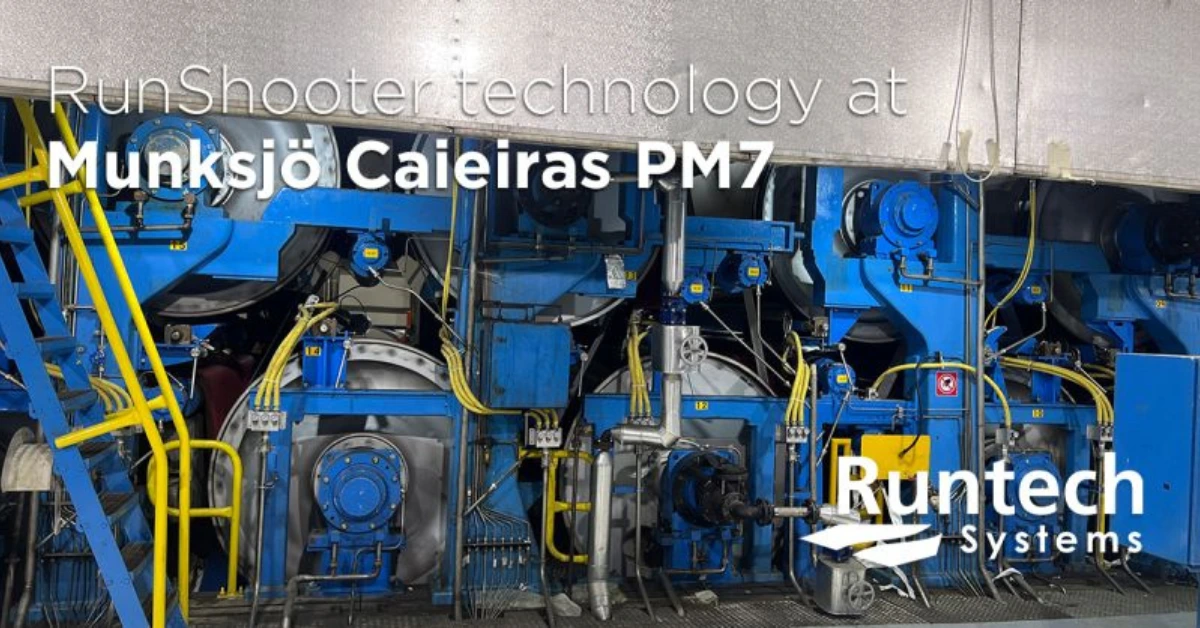
    Runtech delivers a ropeless tail threading systems to Munksjo Caieiras Ltda, Brazil. The delivery includes Runshooter technology with detailed engineering and startup support. With the upgrade Caieiras targets more fluent and faster tail threading and improved operator safety.

    “Safety issues are getting more and more important in Brazilian markets as well as everywhere else. With our ropeless tail threading system Munksjo is not only lowering significantly risk of injuries, but at the same time increasing efficiency on paper machine by reduced downtime,” says Lari Lampila, Sales and Aftermarket Manager, Runtech Systems.

    Runtech Systems’ ropeless tail threading technology provides numerous benefits. It improves operator safety significantly while also shortening tail threading time during web breaks by up to 80% to increase production. In many cases, the technology enables mills to increase machine speed, which would not be possible with manual tail threading without risking operator safety. Also, thanks to the automated process, operators can focus on other tasks. All these benefits are reflected in a short payback time.

  • Hood Container Joins Box to Nature Residential Recycling Program to Boost Fiber Recapture

    Hood Container Joins Box to Nature Residential Recycling Program to Boost Fiber Recapture

    Hood Container Joins Box to Nature Residential Box Recycling Program Aiming to Recapture More Fiber for Industry

    Hood Container has joined Box to Nature program – Paper and Packaging Board’s (P+PB) residential recycling program, developed by P+PB in collaboration with participating paper and corrugated manufacturing companies and industry partners, Box to Nature is an initiative where box manufacturers work with e-commerce brands to print a graphic on their boxes that encourages consumers to recycle.

    The Box to Nature graphic provides specific instructions on how to easily recycle (empty, flatten, recycle), and features a QR code that directs them to Box2Nature.org where they will find memorable, easy-to-recall messages to encourage recycling habits. When the message was tested before launching the program, 75% of consumers indicated they would be more likely to recycle their e-commerce box after exposure to the graphic.

    The goal is to increase the estimated 40% residential box recycling rate 1 (The Recycling Partnership) and recapture more fiber to make new paper-based products. Brands also get a positive lift in perception among consumers due to the association with their choice to use sustainable, recyclable paper-based packaging.

    “Putting the Box to Nature graphic on every box, not only helps your customers understand how easy it is to recycle properly and thanks them for doing so, but it also shows them that the brand is taking a positive step towards sustainability,” said Mary Anne Hansan, president of P+PB. Increasing e-commerce deliveries have made residential recycling more important than ever for the industry at large. However, research found that two out of three consumers confess to not always recycling. We want to change that and make recycling a habit. Our partnership with Box to Nature is a big step in the right direction.

  • Bio Delivers the Long-Sought Recyclable and Compostable Barrier Coating Solution for Paper Cups

    Bio Delivers the Long-Sought Recyclable and Compostable Barrier Coating Solution for Paper Cups

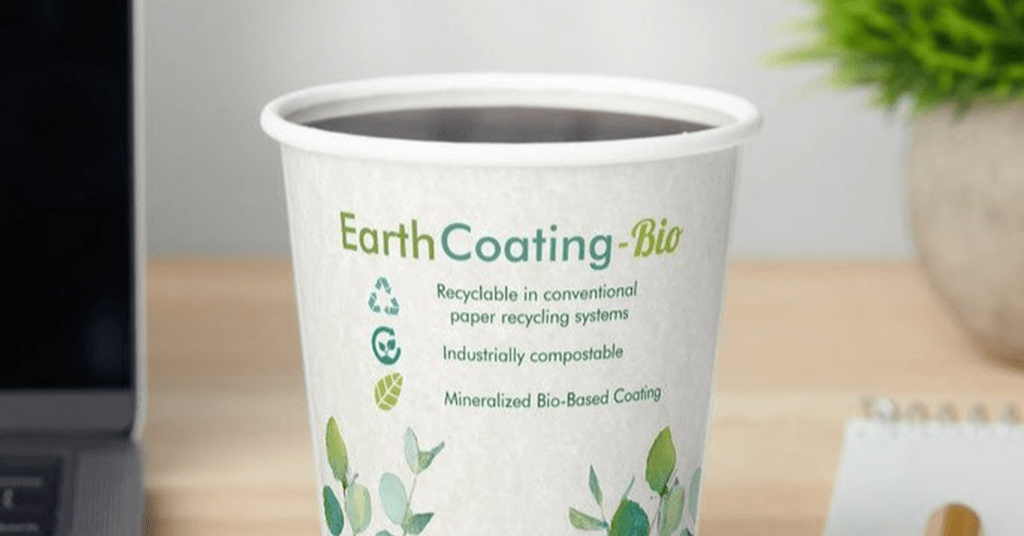
    Smart Planet Technologies, a pioneer in sustainable barrier coating technologies, is proud to announce another breakthrough innovation in the packaging industry with the commercial release of EarthCoating-Bio, a new biopolymer version of its renowned EarthCoating barrier coating.

    This cutting-edge development incorporates polylactic acid (PLA), a biobased resin, with a specialized mineral blend, to produce a barrier coating providing both compostability and recyclability to paper cups and other barrier-coated paper packaging.

    Paper cups with polyethylene coatings have long been known to be challenging to recycle, and considered a contaminant to paper recycling systems.  For that reason, many paper cups wind up in landfills.  However, by mineralizing the resin, EarthCoating-Bio has been proven to produce barrier paper packaging that is fully compatible with conventional paper recycling systems and qualified for recycling in premium recovered paper categories.

    Conventional PLA coatings are qualified as industrially compostable but as a 100% plastic coating, create the same challenges for recycling as 100% polyethylene coatings. 

    The new EarthCoating-Bio breaks new ground by mineralizing the plant-based PLA polymer to produce a coating that is universally recyclable, industrially compostable, bio-based, with less plastic. 

    • Recyclable: EarthCoating-Bio maintains the proven recyclability established with mineralized resins, consistent with the family of EarthCoating formulations, ensuring that the packaging can be recycled in standard paper recycling streams, and classified as uncoated paper.  With its mineral content, EarthCoating-Bio is removed in the same method as clay fillers which are part of the composition of paperboards and are designed to be removed in conventional paper recycling.
    • Industrially Compostable: This innovative coating meets industrial composting standards, providing an additional end-of-life solution that complements its recyclability.
    •  Biobased Composition: The use of PLA, derived from renewable resources, enhances the sustainability profile of packaging materials,
    •   Reduced Plastic Use: The mineralization of resin in a barrier coating reduces the plastic content by 35-51% over conventional 100% plastic coatings
    •  Affordability:  The mineralization process reduces PLA by introducing inexpensive minerals, providing a more affordable solution with a better sustainability footprint

    Seamless Integration: As with previous EarthCoating products, the new biopolymer version is designed to be a drop-in solution over 100% plastic coatings, requiring no changes to existing manufacturing processes.  EarthCoating formulations provide improved barrier and heat seal performance over conventional 100% plastic coatings. 

    Chris Tilton, co-founder and Chief Technology Officer at Smart Planet Technologies, commented on the breakthrough, “Regulations for sustainable packaging have been challenged with the concern whether to support recycling or composting of packaging. 

    The commingling of packaging that may be compatible with one process can be incompatible with the other.  With the introduction of EarthCoating-Bio, we are providing a solution that is compatible with both efforts, while reducing plastic content.  This is a more sustainable PLA-based solution that 100% PLA coatings”.

  • Mondi completes €95 million investment to boost efficiency and sustainability at Świecie containerboard mill

    Mondi completes €95 million investment to boost efficiency and sustainability at Świecie containerboard mill

    Mondi completes €95 million investment to boost efficiency and sustainability at Świecie containerboard mill

    Improvements in product quality and environmental performance strengthen the mill’s sustainability profile 14 October 2024.  Mondi, a global leader in sustainable packaging and paper, has recently completed a €95 million investment at its Świecie containerboard mill, which will increase kraftliner capacity by 55,000 tonnes. The upgrade comprises an extensive rebuild of paper machines PM2 and PM5, a new anaerobic treatment plant including an integrated cooling system, and upgrades to the pulp mill, the recycled fibre line and the energy recovery system.

    These improvements will allow the mill to meet growing customer demand for heavy-duty packaging for large and heavy products, enhance product quality, and bolster its environmental performance by decreasing water consumption and wastewater emissions and increasing energy efficiency.

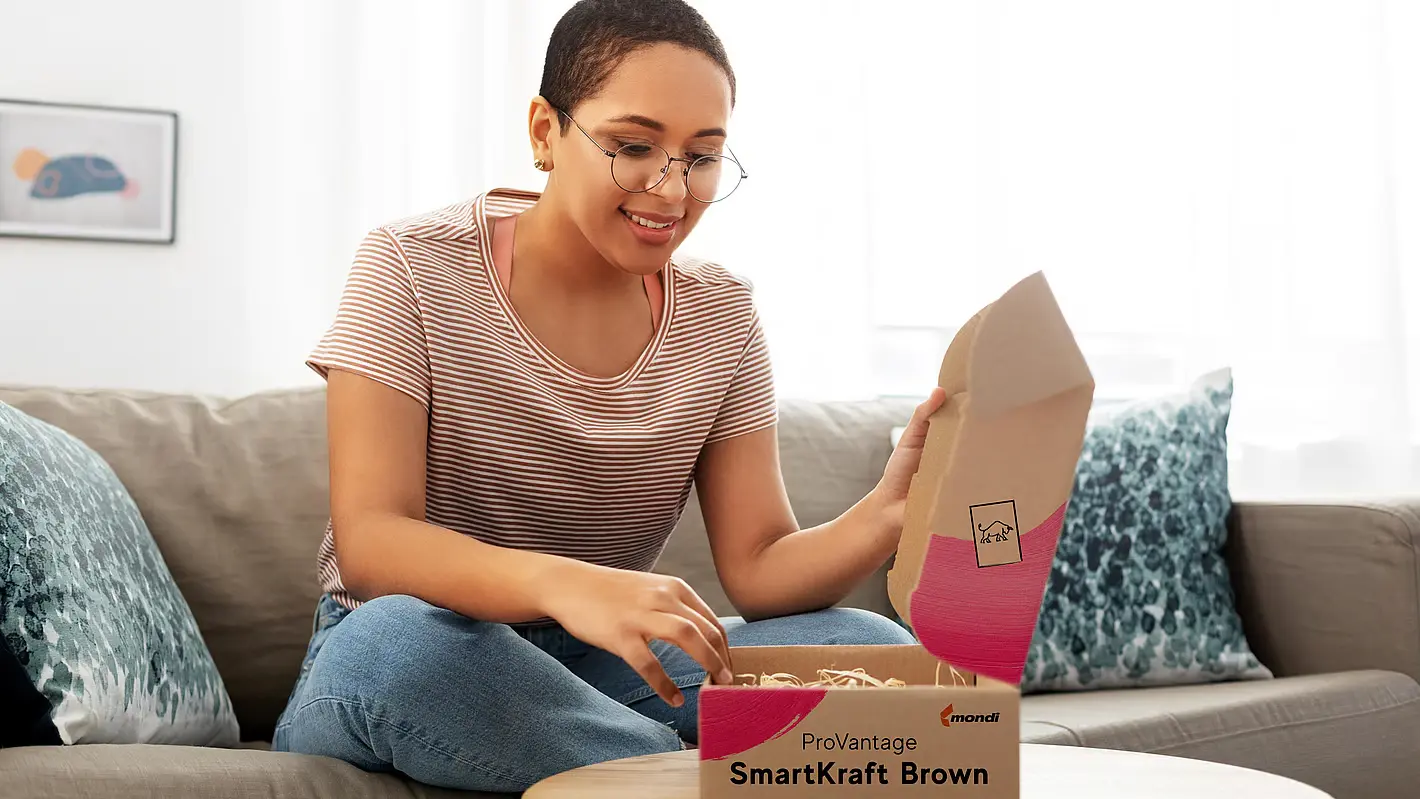
    Since the project’s completion in June, Mondi Świecie has also expanded its ProVantage SmartKraft Brown portfolio with a broader range of grammage options. Offering exceptional strength and enhanced runnability, the brown Kraftliner product meets diverse packaging demands while championing environmental responsibility.

    “The completion of this project marks a milestone for Mondi Świecie, enabling us to advance our operations and deliver even higher-quality paper to our customers. I am proud of our team’s exceptional skills and commitment, which were crucial in achieving these goals,” said Tomasz Katewicz, Managing Director of Mondi Świecie.

    The completion of the investment further underscores Mondi’s commitment to operating efficiently and its progress in fulfilling the commitments set out in its Mondi Action Plan 2030 (MAP 2030) sustainability framework. It also reflects the Group’s strong commitment to the region, by providing competitive, high-quality employment and potential to further contribute to the area’s economic prosperity.

  • UPM Specialty Papers and Unipaco create heat-sealable salad pot wrapper, using paper + PE to replace traditional plastic packaging

    UPM Specialty Papers and Unipaco create heat-sealable salad pot wrapper, using paper + PE to replace traditional plastic packaging

    UPM Specialty Papers continues to work with partners across the food packaging value network, co-creating innovative products that help to shape the future of sustainable packaging.

    A recent project undertaken with Unipaco S.A., a Polish converter in flexible packaging materials, has now resulted in a recyclable, heat sealable salad and herb pot wrapper that guarantees product safety. The structure also meets strict German 95/5 mono-material requirements, with single-component materials accounting for 95% of the packaging mass.

    Growing demand

    Brands worldwide are setting increasingly ambitious sustainability targets, especially in terms of recyclability. At the same time, global regulations are becoming ever more stringent. No surprise, therefore, that the industry has seen an exponential growth in the demand for alternatives to flexible plastic packaging. UPM Specialty Papers and Unipaco teamed up to find an answer to the challenge in one specific area: wrapper for salad and herb pots.

    UPM Solide™ Lucent 78 g/m2 + 4 g/m2 PE coating

    The partnership has resulted in two versions of packaging that combine UPM papers and Unipaco coatings. The first is based on innovative barrier base paper UPM Solide™ Lucent 78 g/m2 with a 4 g/m2 PE coating. This strong and extremely versatile barrier base paper offers a unique natural look and feel. Proven to be particularly well suited to coating and lamination, UPM Solide™ Lucent provides a superior surface for further converting and printing, including rotogravure. The exceptionally thin 4 g/m2 PE layer delivers required moisture resistance and heat sealable properties.

    “By combining our papers with an extremely thin PE coating, we set out to create a packaging that helped our customers both to meet their recyclability goals and also comply with all relevant regulations,” explained Kirsi Lahtela, Senior Manager, Product Portfolio Management, UPM Specialty Papers. “The project provided Unipaco with their first opportunity to test our barrier base papers in addition to more familiar coated one side papers. We were delighted to see that UPM Solide Lucent performed perfectly on the coating equipment.”

    UPM FlexPack™ 80 g/m2 + 4 g/m2 PE coating

    The second version pairs UPM FlexPack™ 80 g/m2 with a 4 g/m2 PE coating. UPM’s coated one side UPM FlexPack™ papers are designed for a wide range of lamination processes and offer an unrivalled combination of strength and high-quality print results – especially on flexo printing. Again, the exceptionally thin and heat sealable 4 g/m2 PE layer guarantees heat-sealability and the correct level of moisture resistance.

    “With growing demand for recyclable materials, we decided to focus on lowering the grammage of our coating to develop a unique product. Our goal was to create as thin a coating as possible while also maintaining quality, barrier properties, and heat sealability. By combining this coating with UPM’s papers, we achieved astonishing results that can be easily transferred to a full-scale production. This solution is available on many other papers and for a numerous end-uses such as meat and cheese wrapping, flexible packaging and even sack production,” said Aleksander Borysow, CEO and Chairmen of the Board, Unipaco S.A.

    Safe for food contact and compliant with recyclability requirements, this innovative fibre-based salad and herb pot wrapper will be on display at UPM Specialty Papers’ on stand 241, Hall 3A at Fachpack, Nuremburg, Germany, September 24th-26th and at PACK EXPO, Chicago, USA, stand W-21110 — Containers and Materials Pavilion, November 3rd-6th.

  • Solenis and HEIDELBERG Collaborate To Develop Print-Applied, Eco-Friendly Barrier Coatings for Paper Packaging

    Solenis and HEIDELBERG Collaborate To Develop Print-Applied, Eco-Friendly Barrier Coatings for Paper Packaging

    Solenis, a leading producer of specialty chemicals, is collaborating with Heidelberger Druckmaschinen AG (HEIDELBERG), an innovative technology company with a leading position in the global printing industry, to advance a more cost-effective way of integrating barrier coatings for paper packaging directly within the existing flexographic printing process.

    Barrier coatings are used to repel hot and cold liquids, oils, greases, and water vapor in paper packaging.

    With this innovation, packaging producers can use the HEIDELBERG portfolio of flexographic machines to print-apply Solenis’ barrier coatings. This expands the possibilities for flat sheet paper and inline web-fed flexo applications with improved product performance and better production efficiency.

    Solenis’ specialized print-applied coatings include barrier coatings for board material, flexible packaging and cupstock production, as well as anti-slip technical coatings for industrial, shipping and container applications.

    For fresh food and e-commerce corrugated packaging, barrier coatings can be print-applied to avoid the use of traditional polyethylene (PE) lamination and paraffin wax, making the material easier to recycle.

    For cupstock production, flood-coating barrier protection on cold and hot cups can take place on current equipment and eliminates the need for PE lamination to improve efficiency. For a registered print approach, Solenis’ patented heat-sealing coating can be applied easily on conventional cup converting lines to reduce materials and lower costs.

    The collaboration addresses the growing demand for more sustainable paper packaging solutions that reduce the use of plastics through environmentally friendly alternatives with improved barrier functionality.

    “Packaging companies face increasing pressure to optimize processes while meeting ambitious sustainability goals,” said William Kuecker, Senior Director of Strategic Marketing at Solenis. “Our collaboration with HEIDELBERG pushes the boundary of what’s possible for packaging manufacturers. With this combination of cutting-edge printing technology and innovative, high-performance specialty coatings, packaging manufacturers can enhance operational efficiency and product performance while meeting the rising demand for sustainable products and processes.”

    “With our Boardmaster web flexo technology, we are expanding our reach into the high-volume flexible paper segment, targeting the food industry with solutions focused on efficiency and sustainability,” said Dr. David Schmedding, Member of the Management Board responsible for Technology and Sales at HEIDELBERG. “This collaboration with Solenis allows us to optimize application processes and technology together to better serve our customers.”

    Solenis offers a broad portfolio of barrier coatings, including environmentally friendly PFAS-free oil and grease resistance technology.

  • Tasowheel Announces Delivery of First Complete QCS

    Tasowheel Announces Delivery of First Complete QCS

    Tasowheel proudly announces the successful delivery of its first complete Quality Control System (QCS) from Tampere. The state-of-the-art system, slated for startup post-summer, marks a significant milestone in Tasowheel’s QCS growth strategy.

    The newly delivered QCS features a double-sided 1010 scanner equipped with advanced moisture (IR) and basis weight sensors, along with comprehensive Machine Direction (MD) and Cross Direction (CD) controls. Additionally, the system is integrated with an advanced dilution control system, optimizing basis weight CD uniformity for enhanced performance and precision.

    “This project highlights our proven expertise in delivering comprehensive Quality Control Systems (QCS), consistently meeting and surpassing industry standards,”

    The paper machine is dedicated to producing corrugated board at a speed of around 500 m/min, with a wire width close to 3000 mm. It is designed to handle a basis weight range of 80-200 g/m², with a primary focus on weights near 100 g/m².

  • Phoenix Paper Launches Innovative Phoenix Tag™ & Phoenix Ledger™ Products

    Phoenix Paper Launches Innovative Phoenix Tag™ & Phoenix Ledger™ Products

    Phoenix Paper is proud to announce the launch of two new product lines: Phoenix Tag™ and Phoenix Ledger™, expanding its portfolio of high-quality paper products designed to meet the diverse needs of the printing and packaging industries.

    Phoenix Tag™ is engineered to deliver exceptional durability and strength, making it ideal for a wide range of applications, including tags, labels, and specialty packaging. This robust paper product is designed to withstand the rigors of industrial use while maintaining excellent print quality and performance. Whether for retail tags, industrial labeling, or high-end packaging, Phoenix Tag™ offers the reliability and versatility that businesses demand.

    Phoenix Ledger™ is crafted with precision for applications that require superior surface smoothness and consistent performance. This premium product is perfect for financial records, certificates, and high-end printing tasks where quality cannot be compromised. Phoenix Ledger™ offers excellent opacity and smoothness, ensuring crisp and clear prints for professional-grade documents.

    “Phoenix Paper is committed to delivering innovative solutions that meet the evolving needs of our customers,” said Tom Umenhofer, Sales Director of Phoenix Paper. “With the introduction of Phoenix Tag™ and Phoenix Ledger™, we are enhancing our product offerings to provide businesses with high-quality, reliable, and sustainable paper solutions that drive value and efficiency.”

    Both Phoenix Tag™ and Phoenix Ledger™ are produced with a focus on sustainability, adhering to the strict environmental standards that Phoenix Paper is known for. The company’s dedication to responsible sourcing and production practices ensures that these new products not only meet the highest quality standards but also contribute to environmental stewardship.

    For more information about Phoenix Tag™ and Phoenix Ledger™ or to request samples, please visit www.phoenixpaper.com or contact our customer service team at customerservice@phoenixpaper.com.