Blog

  • Prem Engineering : We are very fortunate to have formed excellent partnerships with many of our clients.

    Prem Engineering : We are very fortunate to have formed excellent partnerships with many of our clients.

    An interview from Mr.Pryank Thukral, Managing Director of Prem Engineering

    Paper Market : Could you let us know the company profile of Prem Engineering?

    Pryank Thukral :

    • With the best in class team, and several efforts; we have obtained a name in Pulp & Paper Industry with full-dedication and quality assurance.
    • Now with the best state-of-art infrastructure, EOT Cranes and new generation machines, we upgraded us to a 1 lac. Sq. ft. covered area.
    • As of now, we have our clientele spreading abroad ; exporting machines to Nepal, Kenya and other parts of the world

    PM : What are Prem Engineering’s Mission & Vision?

    PT :

    • Prem Engineering mission is to develop engineering products that exceed client’s expectations in terms of quality and user-friendliness in operations.
    • Sheer dedication and commitment to quality from higher management is one the keys of Prem Engineering.
    • We assure quality in each product because of years in Designing, Manufacturing and Marketing engineering products in Global and Indian marketplace
    “Sheer dedication and commitment to quality from higher management is one the keys of Prem Engineering”

    PM : What is all the equipment you manufacture for the pulp & paper industry?

    PT : We manufacture Pulp mill and recovery equipments and provide Turnkey solutions for setting up pulp mill and recovery plant ranging from 25BDTPD to 300BDTPD.

    PM : Please let us know about your screw press and its merits?

    PT :

    1. Functionality:

    • Screw presses are used in the pulp and paper industry for dewatering pulp and paper sludges, separating liquids from solids.
    • They are particularly effective in applications where high solids content and efficient dewatering are required.

    2. Merits of Screw Presses:

    • Efficient Dewatering
    • Compact Design
    • Continuous Operation
    • Low Maintenance
    • Energy Efficiency
    • Versatility

    Screw presses play a crucial role in dewatering processes within the pulp and paper industry, offering efficient solids-liquid separation and other merits such as compact design, continuous operation, low maintenance, energy efficiency, and versatility. Their reliable performance contributes to improved process efficiency, reduced environmental impact, and cost savings for pulp and paper manufacturers.

    “Reliable performance contributes to improved process efficiency, reduced environmental impact, and cost savings for pulp and paper manufacturers”

    PM : How durable are your products and these products are supplied with specific warranty covers?

    PT : Its essential for customers to review the warranty terms and conditions provided by the manufacturer to understand the extent of coverage and any limitations or exclusions that may apply. Additionally, manufacturers often provide maintenance guidelines and recommendations to help customers maximize the lifespan and performance of their equipment beyond the warranty period.

    PM : How is the market for Indian manufacturers like yours compared to other overseas manufacturers around?

    PT : The competitiveness of Indian manufacturers compared to overseas manufacturers varies depending on factors such as industry sector, product quality, innovation capabilities, market access, and regulatory compliance. While Indian manufacturers have made significant strides in improving their global competitiveness, they continue to face challenges that require strategic planning, investment, and adaptation to succeed in international markets.

    PM : How important is QC for equipment manufacturing company and what parameters do you follow to assure the quality of your products?

    PT : The importance of quality in manufacturing goes beyond providing the consumer with a product they can trust. Yes, that’s a key tenet. But quality is a holistic endeavor that affects all parts of the business, including workplace compliance, risk management, product assurance, consistency, and even innovation.

    “Effective after-sales service ensures minimal disruption to production schedules, reduces repair costs, and extends the operational life of equipment”

    PM : How is your after-sales-service support plays an important role?

    PT : In the paper industry, where production processes are heavily reliant on sophisticated machinery and equipment, after-sales service is indispensable. The smooth operation of paper mills depends on the availability of skilled technicians for troubleshooting, preventive maintenance services, and rapid resolution of technical issues. Effective after-sales service ensures minimal disruption to production schedules, reduces repair costs, and extends the operational life of equipment. Moreover, it fosters customer loyalty and strengthens relationships between equipment manufacturers and paper producers.

    Effective after-sales service has a profound impact on customer satisfaction and loyalty in the paper industry. By providing prompt and reliable support, manufacturers demonstrate their commitment to customer success and build trust. Satisfied customers are more likely to recommend the manufacturer’s products to others and are more inclined to repurchase in the future. Furthermore, positive customer experiences contribute to the manufacturer’s reputation and competitive advantage in the market.

    Moreover, enhancing after-sales service can result in tangible business benefits, such as increased customer retention, higher service revenues, and improved profitability. By offering value-added services and establishing long-term relationships with customers, manufacturers can create a recurring revenue stream and differentiate themselves from competitors.

    PM :Could you explain us about your environmental management policies?

    PT : Environmental sustainability is a key focus area for pulp mill equipment manufacturers and paper producers alike. The industry faces scrutiny due to its significant water and energy consumption, as well as its potential for air and water pollution. In response, manufacturers are developing eco-friendly equipment with features such as closed-loop water systems, energy recovery mechanisms, and emissions control technologies. Moreover, the adoption of renewable energy sources and the use of recycled materials in equipment construction contribute to reducing the overall environmental footprint of pulp mill operations.

    “Innovations such as computerized process control systems, advanced sensors, and data analytics have enhanced the efficiency and precision of pulp production processes”

    PM : Being an equipment manufacturer to pulp & paper industry, what is your suggestion to the Industry to make the paper more sustainable?

    PT : As an equipment manufacturer serving the pulp and paper industry, I understand the critical role that both equipment and industry practices play in promoting sustainability. Here are some suggestions for the industry to make paper production more sustainable:

    1. Invest in Efficient Equipment
    2. Optimize Raw Material Usage
    3. Promote Recycling and Circular Economy
    4. Reduce Chemical Usage and Emissions
    5. Optimize Energy Consumption
    6. Adopt Sustainable Forest Management Practices
    7. Collaborate Across the Value Chain
    8. Educate and Engage Stakeholders

    PM : Being a pulp & paper industry equipment manufacturer, how do you see the technology advacncement of Indian paper industry in future?

    PT : In recent years, technological advancements have revolutionized pulp mill equipment manufacturing. Innovations such as computerized process control systems, advanced sensors, and data analytics have enhanced the efficiency and precision of pulp production processes. Modern equipment is capable of optimizing resource utilization, minimizing energy consumption, and reducing waste generation. For example, state-of-the-art digesters and refiners are designed to maximize pulp yield while minimizing chemical usage and environmental impact.

  • After 2017 approximately 75% of recycled papers were used in India which is made of recovered fibres : IRPTA

    After 2017 approximately 75% of recycled papers were used in India which is made of recovered fibres : IRPTA

    An interview from Mr.Naresh Singhal, President, IRPTA.

    Paper Market : Could you let us know the history of Indian Recovered Paper Traders Association (IRPTA)?

    Naresh Singhal : In India, during the 21st century, the recycling of papers has become increasingly prevalent, with usage ranging from 10 to 30 tonnes. The Indian Recovered Paper Traders Association was established in 2020 with the primary purpose of utilizing recycled papers for packaging. Building and maintaining strong relationships between paper mills and suppliers necessitates the formation of such associations. During the 1980s and 1990s, Uttar Pradesh and Punjab emerged as key hubs for recycling paper mills in the northern region. Subsequently, recognizing the importance of localized support, the Association of Waste Paper Merchants and Raw Materials Suppliers was established in Delhi to cater to waste paper suppliers serving packaging industries and paper mills.

    In the beginning if there is any issue between papers industries and suppliers regarding quality and payments the Associations will sort out the problems. In the year 2001 I was President in Association Of Waste Paper Merchant and Raw Materials Suppliers. We tried to sort out problems regarding paper mills and we took our problems to the vision of the government. In 2005 April the Government introduced VAT, we represented and worked on the Presentation for waste paper dealers, got exemption for ground source. From August 2005 to July 2017 there are no Taxes charged and whatever the problems raised in Delhi regarding Government new rules we sorted out that. In 2017 Goods Service Tax (GST) has implemented for waste paper also at the rate of 12% for the item code 4707 behalf of the dealers, our Association raised a voice to the Finance Minister and gave the presentation and made it from 12% to 5%. Now throughout the country it is 5%, this is how the Association supported the dealers.

    After 2017 approximately 75% of recycled papers were used in India which is made of recovered fibres. The growth of recovered fibre is very fast comparatively to the year 2000. Participation of recovered fibre or recycled paper was about 10% -15%, but now it is 75% of the total consumption of recycled papers are used which is made up of recovered fibre. In India we are not getting much fibre collection and the quality is also poor in the collection. So we are using 35% – 40% of imported waste paper and we dependent on imported papers.

    In the year 2019, India imported the dumping material of recovered paper in the name of mixed waste. These are types of mixed waste like plastic waste, medical waste sometimes moisture will be high in the dump in our domestic market, the moisture and the quality is poor due to this, the demand has increased.

    We formed an association All India Waste Paper Dealer Association in December 2000 in Delhi. In the mean time we took part in Paperex Exhibition and we utilized the opportunity to meet different people around the Country. In this expo we met south India Waste Paper Dealer Association before Covid in the month of April. All India Waste Paper meeting was held in Tamil Nadu and we Jointly Introduced the Association Called Indian Recovered Paper Traders Association (IRPTA) which connects overall Indian waste paper dealers. With the help of this Association we created associations in each and every state of India and which made the work easier. We were active on Social Media and created whatsapp Groups for State level and all India Level. By these Whatsapp groups our members can easily converse with each other and get updates on time to time basis. And we started discussing about the problems faced by us and discussed about the problem of mixed waste.

    In the Year 2019 we gave presentation to the Ministry of Commerce and we got support from the government like implementation of Dual Inspection Plan, and bought some more restriction like poor quality import waste has been stopped in January 2020, which automatically revert 5000 number of containers from Gujarat coast, which is not capable to use in recycling process, and this is our over all history.

    “We Jointly Introduced the Association Called Indian Recovered Paper Traders Association (IRPTA) which connects overall Indian waste paper dealers”

    PM : How many paper traders are your members in IRPTA and how do they co-operate with each other in business?

    NS : According to the state we have created 15 whatsapp groups. The number of members is about 30 to 100 members in each group. On whole we have 800 members in our association in Pan India group we have 200 members and in state wise different number of members. Basically we communicate in Whatsapp group and we are active on Facebook, we are interconnected in whatsapp because we live in different states, speak different languages and we face different problems. We communicate in both English and Hindi, normally in English. We share regional updates throughout India (North, South, Eastern and West ).

    “We are connected in whatsapp through which we take personal contacts and we develop communication between members”

    PM : Could you explain us about your association’s routine activities?

    NS : The paper industry has developed itself in 20 years where the growth has increased gradually. Before this we could find paper industries only in specific areas and it is not everywhere in the State. Now we can find the paper industry everywhere. The paper supplier and buyer are very less due to communication problem between the regions. As we are Association we came forward to update the requirements, market positions and pressure position to all the regions.

    Normally we are connected through whatsapp from there we take personal contacts and we develop communication between members. The person in Delhi knows the member in Mumbai and from Mumbai to Nagpur, Rajasthan to Kolkata and the member from Punjab can also buy materials from Hyderabad. Though whatsapp is very useful to know were the members are? How do they work? And what are their payment terms? Due to IRPTA we expanded the business in successful way. As we are connected with each other through whatsapp, the business has seen growth multiple times in the past four to five years.

    PM : How do you support your members to improve efficiency, productivity & profits?

    NS : As said earlier we are connected in whatsapp from which our members can directly deal with the dealers through which the productivity increased and the expenses for the mediators is decreased. The person who generates the material will directly connect with the buyer by which the profit is also increased.

    PM : Do you have any system which is followed by your members for uniform working pattern throughout the nation or region?

    NS : The waste paper system remains same throughout the country. It is covered in different segment like Domestic collection and Industrial collection.

    1. In Domestic collection where the paper is collected door to door, where the vendor by himself collect the papers or the member from Ministry Corporation comes for bin collection, who also collects waste papers. And more over there is Road collection, Railway collection, sweeping collection, Bus travelling collections. There is system setup for all collections, which is not directly connected to us.

    2. Industrial waste collection is collected during paper conversion, printing papers, making stationery, publishing magazines and manufacturing of boxes for packaging at every level where there is a wastage of about 10% – 12%, from which our vendor may directly visit the industry. It sets a pattern system. After collection, comes the segregation level, where we have different members in this process, and then finally the material is packed and sent to the market. The market person will trade them. Some materials goes for packaging, especially Newspapers, magazines and books are used for food packaging. It’s used to pack street food and it is disposable. And in some area they manufacture carry bags, envelop covers which is cheaper and popular in the market. And this is the set of pattern followed throughout India.

    “As our recovery is less, we seek for imported papers which is virgin quality 35-40% and need to sustain the quality in the industry”

    PM : How recovered paper imports are dominating the Indian paper trading business?

    NS : Imported paper is very important from the last 20 to 30 years. It is very important requirement of the country, as said earlier in India we get 75% of recycled papers. When one paper is manufactured we can recycle it up to 5 to 6 times, but it may lose its fibre in each cycle like 17 to 18%. We should add some new pulp to the recycle.

    As our recovery is less, we seek for imported papers which is virgin quality 35-40% and need to sustain the quality in the industry. When the newspaper is recycled to make the premium quality paper, virgin paper is needed, to fulfil the requirement. We need imported paper in India and more over there is no certain rules, regulations and policies for importing Papers as of now.

    PM : How recovered paper imports are dominating the Indian paper trading business?

    NS : Imported paper is very important from the last 20 to 30 years. It is very important requirement of the country, as said earlier in India we get 75% of recycled papers. When one paper is manufactured we can recycle it up to 5 to 6 times, but it may lose its fibre in each cycle like 17 to 18%. We should add some new pulp to the recycle. As our recovery is less, we seek for imported papers which is virgin quality 35-40% and need to sustain the quality in the industry. When the newspaper is recycled to make the premium quality paper, virgin paper is needed, to fulfil the requirement. We need imported paper in India and more over there is no certain rules, regulations and policies for importing Papers as of now.

    PM : Industry barriers or similar faced by your members?

    NS : We give different name for same product, as it differ from region to region. Uniformity is required for grades quality. The testing method differs from mill to mill. If the moisture differs then the testing method also differs for which the rejection method and criteria differs. As an association we would like to have the uniformity in the industry.

    All Paper mill should fix some criteria for the grades and quality which is acceptable and for rejection process. The testing parameters should be fixed in the paper mills for the grades and quality. When our members supply materials from one state to another, there he finds barriers as his state is accepting his materials but the other state is rejecting or it’s counted as poor quality.These are the challenges and Industrial barriers faced by our members.

    PM : What kind of support you are seeking from govt. authorities, which may help your trade?

    NS : Firstly we would like to thank Central Pulp & Paper Research Institute (CPPRI) and Indian Pulp & Paper Technical Association (IPPTA). We also attend meetings, seminars and conversation regularly which is organised by the other associations. We attend exhibition like Paperex and other paper related expo’s, to make our association recognise in the industry. We demand whatever the statement is released from the government should be released by our association but not through the other associations which is not related to waste paper.

    We want to declare the statement by ourselves and keep our demands in front of the government and industry. Government should have to declare IRPTA as an industry by which the benefits are directly utilized by the association members. As we are part of paper industry, we are supply chain for paper industry, we should also be identified as an industry to attract new trade, to bring new investors, new working hands and to do things better, to get identity and to get industry benefits directly to our vendors.

    PM : How Indian paper industry is growing in recent years?

    NS : Our Indian paper industry is growing very fast, as we have replaced the packing sector from plastic to paper which is bio-degradable and sustainable. The demand is increased in the market for the paper. The single usage plastic and wooden packaging has capacity, this is also the major reason for fluctuation of the price in the market. Indian paper industry is growing very smoothly.

    PM : What is your suggestion on sustainability of paper and how do you approach on this term being a paper trading association?

    NS : The recovered paper association will sustain in the market because the demand in the market for paper industry is good. As an association we would like to share this statement that, our Indian citizens should be aware of waste paper. Government of India should conduct the awareness of paper programs from school level, and let the children know how important paper is? And if we handle paper in proper way it can be recycled. Each and every single paper can be recycled and it can be a new paper. But we are using it and throwing it in dustbins, road side without handling it properly.

    If we handle every used paper carefully then it can be turned into a new paper. We have to teach and guide our children from school level to the secondary level. Government should conduct awareness program, not only the government but also other paper mill associations and industry people through social media and can upload videos in you tube related to this. The scarcity of Indian Recovered fibre can overcome by this way, we can increase up to 5 to 10% easily.

  • Mondi Unveils World’s First Skateboard Half Pipe Made Entirely from Containerboard

    Mondi Unveils World’s First Skateboard Half Pipe Made Entirely from Containerboard

    Mondi, a global leader in sustainable packaging, has built the world’s first skateboard half pipe from containerboard, showcasing the strength and durability of their materials while engaging the younger generation in eco-friendly values.

    This innovative project highlights the vast potential for creative and sustainable packaging solutions, inspiring a new generation of talent in the packaging and paper industry.

    In a remarkable feat of engineering and design, Mondi, the renowned packaging and paper company, has unveiled an innovative project that pushes the boundaries of sustainable packaging. On February 13, 2024, Mondi introduced the world’s first skateboard half pipe, constructed entirely from containerboard, a material commonly used in corrugated packaging.

    This pioneering initiative, developed in partnership with Olympian skateboarder Julia Brückler, aims to showcase the remarkable strength and durability of Mondi’s containerboard materials. By constructing a functional skateboard half pipe, Mondi demonstrates the vast potential for creative and eco-friendly packaging solutions that minimize environmental impact.

    A Collaborative Effort to Drive Sustainability

    The collaboration between Mondi and Julia Brückler serves a dual purpose. Not only does it highlight the capabilities of Mondi’s containerboard materials, but it also seeks to engage the younger generation in the values of paper packaging and the meticulous processes involved in perfecting paper grades.

    Brückler, an influential figure in the skateboarding community, played an instrumental role in the half pipe’s design and construction. Her expertise ensured that the final structure would meet the rigorous demands of professional skateboarding while remaining true to Mondi’s commitment to sustainability.
     

    Strength and Durability: The Hallmarks of Mondi’s Containerboard

    The skateboard half pipe, standing at an impressive height, is a testament to the strength and durability of Mondi’s containerboard materials. These properties are crucial in the world of packaging, where protecting goods during transport is paramount.

    Constructing the half pipe from containerboard required extensive research and development, as the material needed to withstand the weight and stress of skateboarding. Mondi’s team of engineers and designers worked tirelessly to develop a paper grade that could meet these demands.

    “The half pipe project presented a unique challenge, as it required us to rethink the traditional uses of our containerboard materials,” said Kurt self, Mondi’s Head of Innovation and Development. “We’re incredibly proud of the final result and believe it serves as a powerful example of what can be achieved with sustainable packaging.”

    Inspiring the Next Generation of Talent

    Mondi’s skateboard half pipe project is more than just a demonstration of its containerboard materials’ capabilities. It’s also an opportunity to engage and inspire the next generation of talent in the packaging and paper industry.

    “By showcasing the potential of sustainable packaging, we hope to attract young, innovative minds to our industry,” said self. “We believe that the future of packaging lies in eco-friendly solutions, and we’re committed to investing in the talent that will make this vision a reality.”

    As the world continues to grapple with the environmental challenges posed by traditional packaging materials, Mondi’s skateboard half pipe project serves as a beacon of hope. By demonstrating the strength, durability, and versatility of its containerboard materials, Mondi is not only redefining the possibilities of sustainable packaging but also inspiring a new generation of talent to join the movement towards a greener future.

    In a world where the need for eco-friendly solutions has never been more pressing, Mondi’s skateboard half pipe stands as a shining example of what can be achieved when innovation and sustainability come together.

    Key Takeaways:

    • Mondi, a global leader in sustainable packaging and paper, has built the world’s first skateboard half pipe from containerboard.
    • The project aims to showcase the strength and durability of Mondi’s containerboard materials and engage the younger generation in the values of paper packaging.
    • The skateboard half pipe demonstrates the vast potential for creative and eco-friendly packaging solutions that minimize environmental impact.
    • Mondi’s initiative serves as an inspiration for the next generation of talent in the packaging and paper industry, highlighting the importance of sustainable solutions in addressing environmental challenges.

  • First hybrid electric heating system for Yankee hood in tissue industry started up – a collaboration of Softys and ANDRITZ

    First hybrid electric heating system for Yankee hood in tissue industry started up – a collaboration of Softys and ANDRITZ

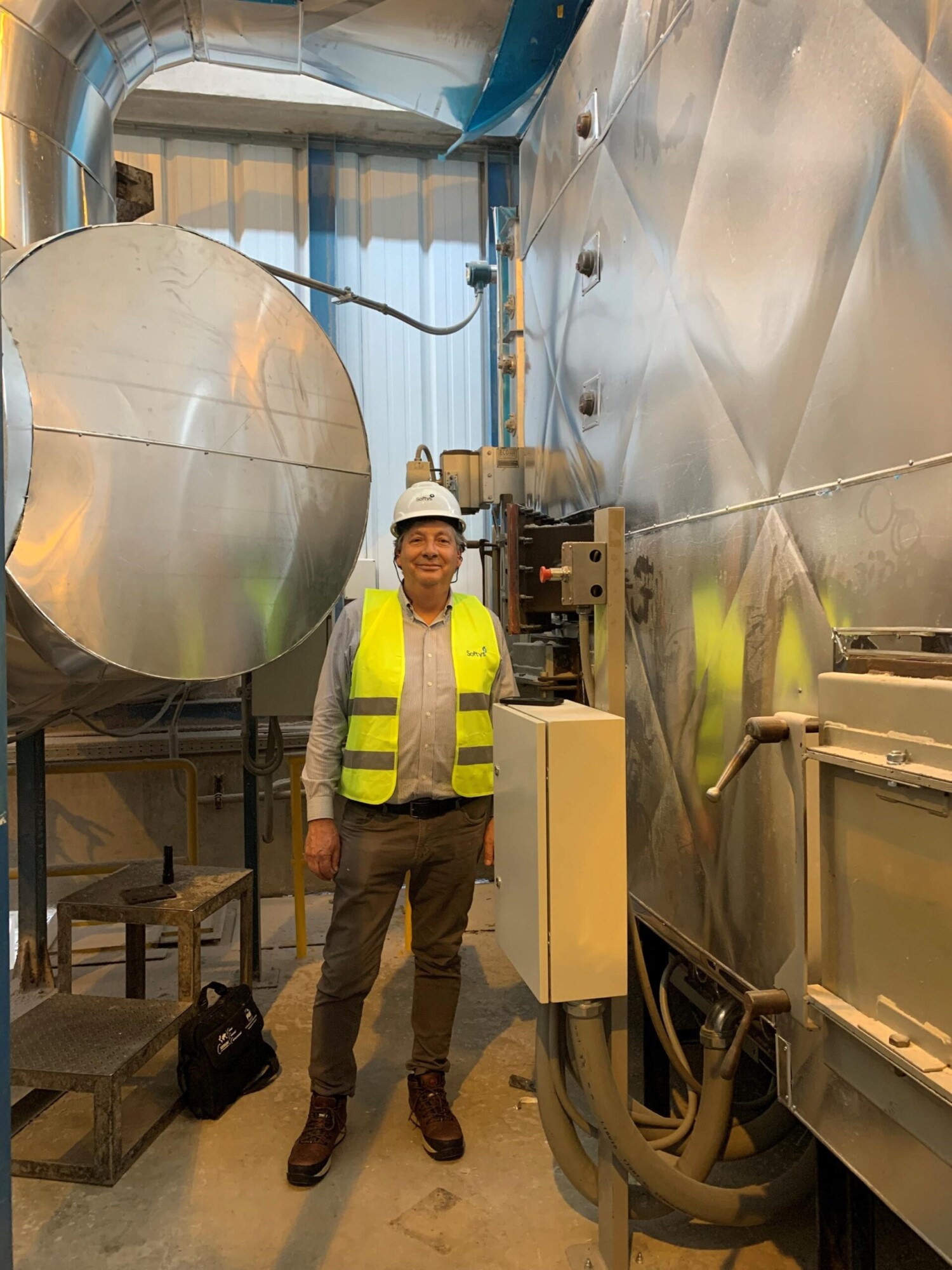
    International technology group ANDRITZ was selected by tissue producer Softys Peru as technology partner for a completey new kind of hybrid Yankee hood heating system.

    It is the industry’s first system that allows for a flexible combination of electric and natural gas heating. Installation and start-up of this innovative technology at Softys’s mill in Lima, was successfully completed in December 2023.

    The system uses a patented air mixing plenum that allows to combine heat sources depending on the mill’s specific needs. The customer can run the system either in 1) electric heating mode, using only the electric heater assembly, or 2) natural gas heating mode, using the burner, or 3) hybrid mode, with a freely adjustable portion of electric and natural gas heating. This provides Softys with maximum flexibility in choosing heat sources with a view to emissions reduction and energy cost optimization.

    The system has been installed in a tissue machine with a design speed up to 2,000 m/min and a paper width of 2.8 m. It is the result of a joint R&D project between Softys and ANDRITZ.

    Reinaldo Uribe, Director of Processes and Corporate Projects at Softys, and coinventor of the system, explains: “We invited ANDRITZ as a partner to develop this R&D project as part of our ESG strategy to reduce the greenhouse gas emissions from our tissue machines in Latin American, and we are happy to see that our efforts are now contributing to more sustainable mill operations. In George Nowakowski I found the perfect counterpart to implement  this project – from conjoint R&D works, up to the successful patent application and start-up.”George Nowakowski, Vice President Tissue Drying America, and -inventor of the system from ANDRITZ side, adds: “Collaborating with a partner like Softys gives us the great opportunity to use our mutual know-how in order to swiftly develop, extensively test and efficiently implement valuable innovations that are beneficial both for the environment and operational efficiency.” 

    Softys, part of the CMPC group, is one of South America’s largest tissue producers. The mill in Lima has an annual production capacity of approx. 100,000 tons of tissue.

  • Sustainable new bee packaging creates a buzz

    Sustainable new bee packaging creates a buzz

    New paper-based solution replaces previous plastic box

    Smurfit Kappa has created a sustainable packaging solution to transport bees for Biobest, a world leader in biological crop protection and pollination. 

    Biobest began back in 1987 when veterinarian Roland De Jonghe began breeding bumble bees in his garage to organically pollinate tomatoes. Tomato growers were quick to see the advantage of using bumble bees over chemical pesticides and the company flourished.

    Biobest approached the packaging giant to design an insulated and weather-resistant box to replace the EPS pack it was using to transport live bumble bees. It also had to be robust enough to withstand long periods outdoors as the boxes are used for outdoor pollination of fruit and vegetables.

    Smurfit Kappa looked to its Better Planet Packaging portfolio to create a solution which was made from water-resistant AquaStop paper and included hexacomb fitments inside to protect and insulate the insects. Tests were conducted to see if the new pack could survive outside for 6-8 weeks and it passed with flying colours, keeping the bees safe and ready to pollinate.  

    Peter van Leent, Sustainability Manager at Biobest, said: “As providers of organic pest control, sustainability is a core value for us. It was clear throughout our collaboration that Smurfit Kappa has the same deep commitment to sustainability and fully understood the brief. 

    “We wanted to get a fully recyclable solution to replace the Styrofoam box we were previously using but needed to ensure that it would perform on several fronts. We’re looking forward to rolling this out for use with other live insects and mites.”

    Arco Berkenbosch, Chief Innovation Officer at Smurfit Kappa, added: “We’re very aware of the crucial role that bees play in global food production and, indeed, have got beehives at many of our plants. We needed to come up with a pack that would protect this precious cargo both throughout the supply chain and when it reached its final destination.

    “Our AquaStop paper has performed very well across many sectors and one of its biggest selling points is the fact that the coating that makes it water-resistant doesn’t compromise its recyclability. At Smurfit Kappa, we have a broad range of 100% paper-based and recyclable solutions such as this pack which are the answer to the regulatory challenges that many of our customers are facing.”

  • Aiming for Emission-Free Pulping, Forest Industry and Scientific Community Join Forces

    Aiming for Emission-Free Pulping, Forest Industry and Scientific Community Join Forces

    Thanks to the strong support from the forest industry and public funding, 10 research organizations, universities, and companies are establishing a groundbreaking research program with around 20 full-time researchers. The Emission Free Pulping program aims to significantly reduce biomass burning and increase the product yield of wood material used for pulping from approximately 50% to around 70%. The program is projected to have a budget of around 15 million euros over the next five years.

    The forest industry, technology companies, research organizations, and universities have joined forces to revolutionize the traditional pulping processes under the joint leadership of VTT Technical Research Centre of Finland and RISE Research Institutes of Sweden. The Emission Free Pulping research program intends to find ways to improve energy efficiency, enhance the efficiency of wood usage and conversion to products, achieve emission-free pulping (especially carbon dioxide emissions), and significantly reduce water usage in the processes. 

    “Due to the limited nature of forest resources, the growth opportunities for the industry are constrained. Moreover, the burning of biomass in the pulping process results in the emission of biogenic CO2. To significantly enhance resource efficiency and increase the value added from wood, revising the chemical processes and unit operations used in the pulping process is essential,” says Atte Virtanen, Vice President of biomaterial processing and products at VTT.

    So far, five industrial companies have committed to the program, and they will bring in their knowledge about industrial relevance and operations as well as financial contribution. ANDRITZ, Arauco, Metsä Group, Stora Enso, and Valmet have committed to a five-year collaboration with the research organizations and universities for this program. The program has been granted substantial funding from Business Finland, amounting to over 5 million euros over a three-year period.

    “Long-term research cooperation between companies, research organizations, and universities is essential for solving major sustainability challenges. With the financing of this joint project, we want to speed up the renewal of the forest industry, which is of paramount importance for Finland’s competitiveness,” says Executive Director Timo Metsä-Tokila from Business Finland.

    “We are deeply committed to the vision of a thriving forest-based ecosystem that delivers the full value of Nordic wood. The key to achieving this lies in fostering innovation and coming together as an industry and as a research ecosystem. By combining our efforts, we can drive advancements that not only enhance efficiency but also uphold our commitment to environmental stewardship. It’s about creating a future where sustainable wood use and more resource-efficient pulping methods go hand in hand, ensuring the longevity and prosperity of our forests and the industries dependent on them,” says Katariina Kemppainen, SVP Group R&D at Metsä Group.

    The expertise and knowledge being developed will be internationally groundbreaking, and the program’s sought-after results are expected to have wide-ranging effects. 

    “We celebrate that other companies and universities share our view on the necessity to use science and joint research for enabling significant improvement of the material yields from pulping and thereby reducing emissions. Can we reach zero? Let’s see what academia and industry develop together, based on science, knowledge, and inclusion of industrial realities from start to end in the program,” says Mikael Hannus Senior Vice President, Group Innovation R&D, at Stora Enso.

    International collaboration across sectors 

    Strong commitment from leading universities in both Finland and Sweden creates the conditions for the success of the project. The project involves significant contributions from Aalto University, Chalmers University of Technology, KTH Royal Institute of Technology, LUT University, Mid Sweden University, University of Helsinki, University of Oulu, and Åbo Akademi University. 

    The Finnish public funding enables the hiring of the initial group of scientists that will be expanded with further funding from the companies involved. The goal is to form a group of 10-20 researchers focusing full-time on advancing the research agenda collectively agreed upon by the consortium. 

    Public funding is currently being sought also in Sweden, and doors are open to new corporate partners. 

    “The key to success lies in open collaboration. This is why we invite industry leaders and scientists from around the world to join our consortium, participating in spearheading research that aims to transform pulping processes for better energy and material efficiency,” says Per Tomani, Director of Research & Business Development at RISE Research Institutes of Sweden.

    “The challenge is common to the entire industry; no one can solve it alone. Technology plays one key role in the evolution of the pulp and paper industry. This transformation is not just about meeting industry standards; it’s about setting new benchmarks for environmental responsibility and operational excellence. The focus needs to remain on innovation and collaboration to drive this vital change in the industry,” concludes Johan Engström, CTO, ANDRITZ.

    Emission Free Pulping – in a nutshell

    • A 5-year international research program.
    • Consortium coordination VTT, scientific lead RISE.
    • Business Finland granted the program with a 3-year funding of 5.1 million euros.
    • The total budget is expected to exceed 15 million euros.
    • Companies involved: ANDRITZ, Arauco, Metsä Group, Stora Enso, Valmet.
    • Universities and research institutions involved: VTT, RISE, Aalto University, Chalmers University of Technology, KTH Royal Institute of Technology, LUT University, Mid Sweden University, University of Helsinki, University of Oulu, Åbo Akademi University.