Author: Paper Market

  • Communicating the sustainable story of Our Industry And Paper Products

    Communicating the sustainable story of Our Industry And Paper Products

    Love Paper® is a global campaign to explain the sustainable and attractive attributes of print, paper and paper-based packaging.

    Communicating the sustainable story of Our Industry And Paper Products

    Run by not-for-profit organisation, Two Sides, the campaign seeks to tell consumers across the world the positive messages about print, paper and paperbased packaging, from its environmental credentials to its ability to help with learning, enhance creativity and improve mental wellbeing. Paper is renewable, recyclable and the natural champion of new ideas and creativity.

    Love Paper presents the sustainable facts in a simple and consumer friendly way. Our key sustainability messages explain the high recycling rates of 71% for paper and 82% for paper packaging, the highest of any material in the world, and the fact that European forests are growing in size by the equivalent of 1,500 football pitches every day.

    How Should The Industry Support Love Paper?

    By using the Love Paper logo and encouraging your customers to use it too!

    The Love Paper logo is a great way to complement and enrich existing sustainability pledges and environmental labels, such as forest certification schemes and recycling symbols. By aligning with Love Paper, the industry and its customers can tap into a huge-reaching print and digital campaign, to help educate and inform consumers of print and papers’ sustainable attributes.

    The Love Paper logo can be used in a number of ways to best suit your company, such as on your communications, marketing materials, envelopes, paperbased packaging or on your website. By connecting with our national adverts and social media campaign, we encourage consumers to find out more about the sustainability of print, paper and paper packaging by visiting the Love Paper website for the facts.

    How To Use The Love Paper Logo

    The Love Paper logo, a registered trademark of Two Sides, demonstrates that an organisation uses natural and sustainable materials. The logo can only be used on paper-based products which are sourced from sustainably managed forests, or made of recycled fibre, and are fully recyclable.

    Members of Two Sides have full access to the Love Paper logo, along with the many tools and resources we create. 

  • INTERNATIONAL DAY OF FORESTS, Seven things you didn’t know have their roots in wood

    INTERNATIONAL DAY OF FORESTS, Seven things you didn’t know have their roots in wood

    Wood is the wonder fibre of the world. Multifunctional and renewable, when used sustainably, wood and its components are an indispensable part of the everyday life.

    “Biotechnology and innovation are helping the forest product sector to use sustainably farmed trees in ways we never imagined possible,” says Jane Molony, executive director of the Paper Manufacturers Association of South Africa (PAMSA).

    Wood is made up of cellulose, hemicellulose, lignin and an array of waxes, resins and sugars. The properties of these elements make them suitable ingredients in functional bio-products, not just in paper, cardboard, tissue or sawn timber.

    1. Cosmetics

    In cosmetics, the water-absorption capacity of cellulose enhances product texture, providing a smooth and creamy feel and thus a better application experience for the consumer. Cellulose can also be used as a film former in nail polish allowing for thin layer application, or an anti-caking agent for cosmetic foundations.

    1. Textiles

    Viscose, rayon and lyocell are three textiles that are made from a specialised form of cellulose. Also known as dissolving wood pulp, this purified form of cellulose is suitable for chemical conversion into a range of products – it is spun into textile fibres for use in fashion and decorating textiles, cast into a film or regenerated into a sponge.

    VIDEO – Watch how dissolving wood pulp made

    1. Vitamins and pharmaceuticals

    Don’t let the name scare you but carboxymethyl cellulose or microcrystalline cellulose (MCC) is a fine, food-safe and versatile powder that is a proven filler and stabiliser in capsules and tablets, helping to bind active medicinal ingredients into a palatable form.

    1. Animal feed

    Lignin, the “glue” of the natural world, is often removed from the wood during the paper manufacturing process and recovered from spent pulping liquors. A great example of the bioeconomy, lignin is multifunctional and finds application in the agriculture sector. It binds the nutritive ingredients and additives in the production of compound animal feeds.

    Sappi Southern Africa, a PAMSA member, recently achieved GMP+ Feed Safety Assurance (FSA) 2020 certification for Pelletin, one of its lignin-based products used as an additive in animal feed manufacturing.

    1. Dust suppressants

    Lignosulphonates are used in mining and road maintenance as a dust suppressant by binding the road surface particles together. Once sprayed onto the road, water evaporates from the lignosulphonate, and as it dries, the dust particles are trapped by the high-viscosity, naturally sticky material.

    VIDEO – Take a look at how lignosulphonates are made.

    1. Plasticiser for concrete

    Lignosulphonates is common admixtures for concrete that acts as a water-reducer or plasticisers to improve the flow of concrete, slow down the setting time and reduce the amount of mixing water required.

    1. Bio- oils and fertilisers

    A potential substitute for diesel, bio-oils are obtained by heating wood waste in an oxygen-free environment, in a process known as pyrolysis. The solid product generated (bio-char) can be used as an enriched growing medium for seedlings or converted into high-grade activated carbon.

    “Anything made from plastic or other fossil-fuel derived materials can be made from wood. By extracting more value from a tree, less goes to waste,” Molony says. “This opens our sector up to a world of innovation, and exciting career opportunities for young engineers.”

    “Two key advantages that commercially farmed trees bring are their renewability and their carbon storage,” explains Molony.

    Trees in plantations are essentially crops that are planted and replanted in rotations, with only about 9% of the total tree count being harvested in any given year. “This means that there are always trees growing, at different stages of maturity, and these trees are all absorbing carbon dioxide (CO2) and storing the carbon,” she says.

    With trees capturing more carbon from the atmosphere than any other biome, they offer a means to mitigate the impact of climate change.

  • Archroma launches Cartaseal® OGB F10, a superior PFAS-free barrier coating for oil and grease applications

    Archroma launches Cartaseal® OGB F10, a superior PFAS-free barrier coating for oil and grease applications

    Archroma, a global leader in specialty chemicals towards sustainable solutions, announces the launch of the latest innovation in their Cartaseal® portfolio, Cartaseal® OGB F10.

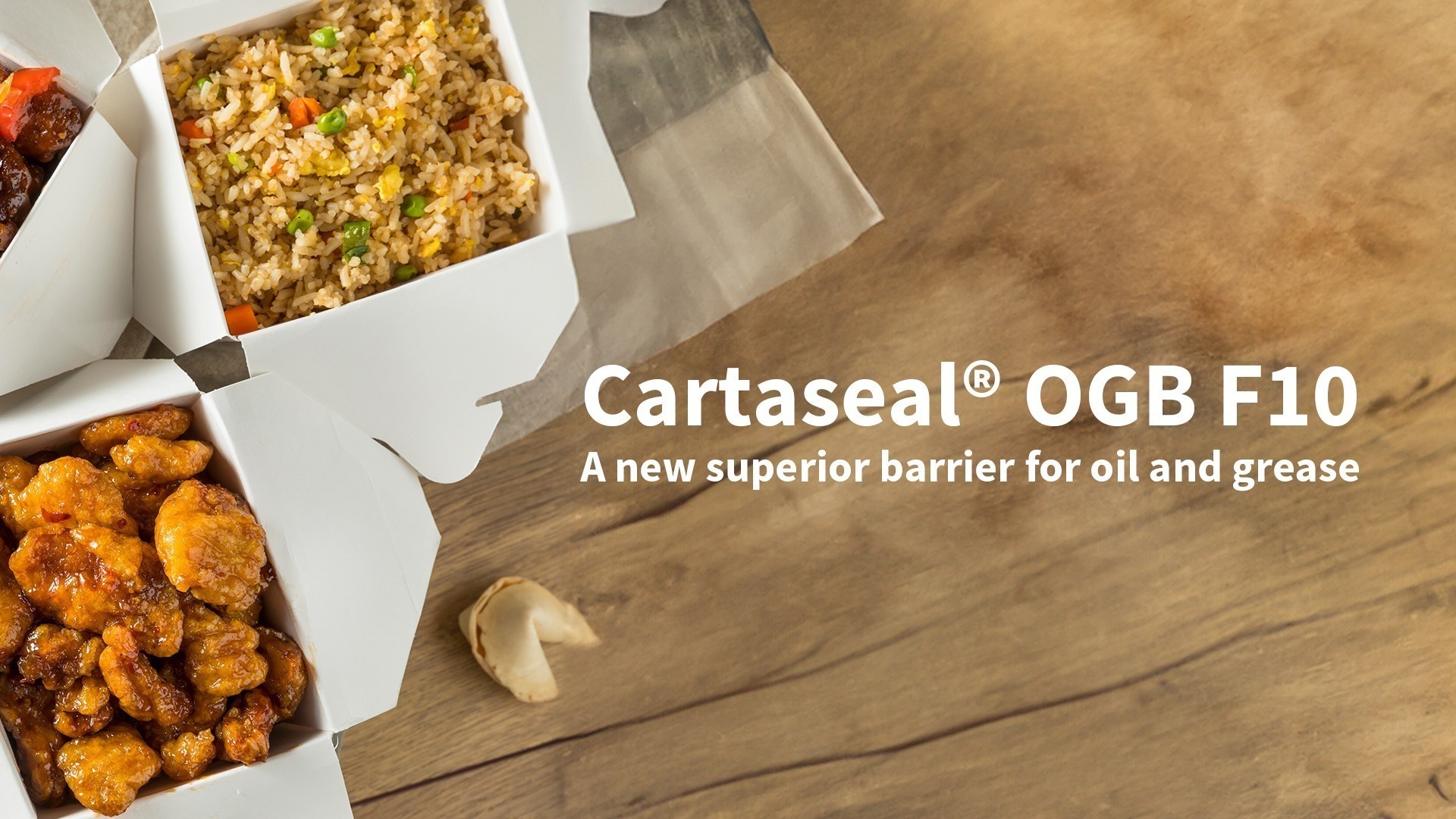
    Cartaseal® OGB F10 is a superior water-based oil and grease resistant barrier coating that enables papermakers to provide high-quality and sustainable packaging by replacing fluoro based substances and polyethylene with a recyclable and repulpable coating. It is FDA and BfR compliant, making it suitable for the manufacturing of paper and board for food and non-food contact.

    Key features and benefits of Cartaseal® OGB F10 include:

    • Superior oil and grease barrier: Offers unparalleled protection against oil and grease, ensuring the integrity and freshness of packaged goods. Its advanced formulation guarantees maximum resistance, providing peace of mind for both manufacturers and consumers.
    • Exceptional resistance even when folding: Provides superior oil and grease resistance (OGR) for folding box board and flexible paper packaging application, without compromising on performance.
    • Recyclable and repulpable: Facilitates easy recycling and repulping processes, contributing to a more sustainable packaging lifecycle. In addition, as it contains bio-based raw materials, Cartaseal® OGB F10 supports brands and papermakers in their journey towards sustainability by minimizing reliance on oil-based substances.

    “We are excited to introduce Cartaseal® OGB F10 to the market, our latest barrier solution that addresses key challenges in the packaging industry while upholding our commitment to sustainability,” said Sameer Singla, CEO PP&C at Archroma. “With its unmatched oil and grease resistance, exceptional foldability, and sustainability features, Cartaseal® OGB F10 represents a significant advancement in packaging technology, empowering businesses to meet evolving consumer demands while reducing their environmental footprint.”

    Cartaseal® OGB F10 sets a new standard for packaging excellence, offering a comprehensive solution that prioritizes functionality, sustainability, and performance.

    Archroma remains committed to driving innovation and sustainability across the value chain, empowering businesses to embrace greener practices and meet evolving consumer demands.

  • Smurfit Kappa achieves four of its Better Planet sustainability targets

    Smurfit Kappa achieves four of its Better Planet sustainability targets

    Sustainable Development Report demonstrates delivery across environmental and social targets

    Smurfit Kappa announced today that it has achieved four of its mid-term, Better Planet 2050 sustainability targets. The Better Planet 2050 targets quantify the company’s commitment to delivering a sustainable future through: low-carbon, circular packaging solutions; increasing support for the communities in which it operates; and further enhancing the lives of its employees. 

    According to its 17th Sustainable Development Report published today, Smurfit Kappa has achieved its targets on:

    • Waste: achieving a 35.8% reduction in waste sent to landfill, ahead of its 2025 target of 30% (24% in 2022)
    • Forestry: achieving 95.5% of packaging sold with Chain of Custody certification, ahead of its 2025 target of 95% (94.3% in 2022)
    • Communities: €25.6 million donated to support social, environmental and community initiatives, ahead of its 2025 target of €24 million (€18.4 million in 2022)
    • Diversity: 25.1% of management positions were held by women at the end of 2023, ahead of its 2024 target of 25% (23.5% in 2022).

    The comprehensive report, which covers January to December 2023, highlights the company’s progress through continued capital investment, ongoing operational improvements and collaboration with customers, suppliers and other key stakeholders. 

    Dynamically and sustainably delivering 

    In addition to reaching its key sustainability targets, several landmark achievements are noted in the report, including:

    • Becoming an early adopter of the Taskforce for Nature-related Financial Disclosures (‘TNFD’), one of only 180 companies globally
    • The installation of 12,000 solar panels at its Sangüesa paper mill in Spain, adding to similar green energy initiatives at plants in Spain, Colombia, Mexico and most recently, in a new facility in Morocco
    • The completion of a €27 million investment in a new waste management and recovery facility at the Nervión paper mill in Iurreta, Spain, removing over 70,000 tonnes of material that was previously sent to landfill
    • Inauguration of a pioneering purification and wastewater treatment plant in Belgrade, Serbia, the first of its kind in the country
    • Continued progress in its US$100 million biomass project in Colombia, which will be the largest decarbonisation project in the Group’s history and is scheduled to start up in 2025
    • Publication of the Group’s second Green Bond Impact Report
    • Sustainability leadership recognised by Morningstar Sustainalytics who acknowledged Smurfit Kappa as the number one performer in the paper packaging sector, building on its strong performance in MSCI and ISS ESG and its recent improved A- score in CDP across climate, water and forestry.

    Commenting on the release of the report, Tony Smurfit, Group CEO, said: “I am immensely proud of the significant progress made towards our sustainability goals during 2023. I am particularly proud that we have already achieved four of our Better Planet 2050 targets. This not only reflects the dedication of our people and the effectiveness of our investment programmes, but it shows our unwavering commitment to supporting our local communities, creating a better planet and delivering a low carbon, circular future.”

    Garrett Quinn, Chief Sustainability Officer at Smurfit Kappa, continued: “Our latest Sustainable Development Report highlights several landmark achievements that are delivering today across our sustainability commitments. In addition to the performance in 2023, Smurfit Kappa continues to take action now to deliver on a more sustainable future through areas such as: collaborative projects on decarbonisation; the early adoption of the TNFD; and the focus of all our employees on delivering a manufacturing process that is as sustainable as our product.” 

  • Paper: Growth with Sustainability

    Paper: Growth with Sustainability

    Paper is an integral part of the daily lives of people. Paper is one of the most environmentally sustainable products as it is biodegradable, recyclable and is produced from sources which are renewable and sustainable. Paper can be recycled up to 6-7 times, making it one of the most recycled products in the world.

    Paperboard / packaging is crucial for almost all goods, especially all kinds of essential goods, FMCG, pharmaceuticals, food products, soaps, milk cartons, hygiene products, textiles, etc. Tissue paper helps in improving the hygienic conditions and is used in all health-conscious institutions / areas like hospitals, hospitality, etc. Similarly, writing & printing paper is essential not only for education and offices, but also for labels, pharmaceutical inserts, etc. Newsprint is required for printing newspapers.

    The key drivers for growth in paper consumption in India are many. Greater emphasis on education and literacy by the government coupled with growth in organised retail and demand for better quality paper are the major drivers for writing and printing paper. Demand for better quality and environment-friendly packaging of FMCG products marketed through organised retail, booming e-commerce, rising healthcare spends, over-the-counter medicines and increasing preference for ready-to-eat foods are the key demand drivers for paperboard / packaging paper.

    India’s Paper Industry has been closely associated with the national objectives of literacy, greening India, rural employment, and usage of sustainable resources, besides meeting paper needs of the Indian consumers.

    Around 75% of the total paper produced in India is from recovered fibre, that is paper recovered post-consumer use. The rest 25% is from virgin fibre, primarily wood which is grown by farmers as any other crop and sold to paper mills after harvesting it. India’s Paper Industry is agro / farm forestry based and substantial amounts have been spent by the Paper Industry on plantation R&D, production of high-quality clonal saplings with lesser rotation period, technical extension services to improve agro / farm forestry services, hand holding of marginal farmers over a gestation period of 4-5 years. This has generated significant employment opportunities for the local community, especially in the rural areas, with more than 5 lakh farmers engaged in raising plantations.

    The industry has been encouraging the growing of trees at a faster pace by the farmers for sourcing wood. Paper Industry’s plantation promoting activity has led to more than 12 lakh hectares of mainly marginal land in the country coming under green cover. This, apart from supplementing farm incomes and promoting rural employment, has helped significantly in carbon sequestration and other environmental benefits, and improved the sustainability of the industry.

    Contrary to the perception, paper is green, and it is never too early to switch to paper-based alternatives for the larger good of the environment. Two of the foremost global environmental issues are the disposal of single-use plastic and e-waste. Both these issues are addressed to a large extent by the use of paper as an alternative.

    Paper mills in India have been working towards better energy efficiency, green energy, employing a range of innovations and technologies, and thereby moving up the sustainability curve by reducing resource intensity and curbing its environmental footprint. Paper mills have also undertaken significant upgradation of process technology to comply with stringent environmental norms / standards to reduce freshwater consumption and effluent and emission generation. Specific water and energy consumption is being reduced continuously to lessen the carbon footprint. The industry is moving rapidly up the technology and sustainability curves matching with the world’s best.

    The Paper Industry in the last 15 years has taken some landmark initiatives. Be it creation of a robust and renewable raw material sourcing base, offering innovative, eco-friendly alternatives to single-use plastic or incorporation of process technologies with least environmental footprint, Paper Industry has come a long way.

    The industry has taken significant leaps in the last few years in technological upgradation, process-optimisation and introduction of best practices. The industry has worked hard on reducing specific energy consumption. Under the PAT (Perform Achieve Trade) scheme of the Government for promoting energy efficiency, the Paper Industry has been one of the top performing sectors and has over-exceeded the mandated stiff targets.

    In fact, the industry has managed to bring down its energy consumption by about 20% in the last five years. Integrated paper mills in India generate over 40% of the power they use by utilising the biomass (renewable energy) from the pulping process.

    Till a few years ago, the industry used to consume 200 cubic metres of water to produce a tonne of paper. Now, the integrated mills have reduced that to under 50 cubic metres.

    Paper is being recognised globally as an environmentally friendly product promoting circular economy and not as an environment harming one as has been wrongly projected and propagated for years by vested interests.

    The negativities attached to the Paper Industry have been giving way to better appreciation of the industry’ efforts towards sustainability in government and policy making circles.

    All stakeholders need to support the industry that has strong backward linkages with the farming community, generates employment in rural areas, and significantly contributes to the national objective of bringing 33% of land mass in India under tree cover, apart from also significantly contributing towards the national objectives of education and literacy. Use more paper to save the environment!

    Article by Mr.Rohit Pandit, Secretary General, Indian Paper Manufacturers Association (IPMA)

  • South Africans are urged to improve their recycling habits ahead of Global Recycling Day

    South Africans are urged to improve their recycling habits ahead of Global Recycling Day

    Global Recycling Day takes place annually on 18 March. While South Africa recycles an average 1.1 million tonnes of paper and paper packaging each year, a significant amount is lost when it is discarded with wet waste, lost to the environment as litter or stored up in homes and businesses as documents and paper packaging.

    Available statistics[i] indicate that South Africans generate roughly 122 million tonnes of waste per year of which 90% is landfilled or dumped illegally. Around 10% is recycled or recovered for other uses.

    “Recycling or separation-at-source is one of the simplest ways to commence a waste reduction journey,” says Samantha Choles, communications manager for Paper Manufacturers Association of South Africa (PAMSA), advising that paper recycling is a good place to start.

    “By putting certain items aside for recycling collectors and participating in dedicated recycling programmes, we can all make a big difference to our planet, another person’s livelihood and our personal waste footprint.”

    Recycling saves landfill space

    It is estimated that one tonne of paper products collected for recycling saves around three cubic metres of landfill space. This means that 3.3 million cubic metres of space is not filled with the very useful commodity of paper and paper packaging but goes back into the manufacturing loop.

    For South African paper packaging and tissue producers, recycled paper is an alternative fibre and key raw material for corrugated boxes and paper bags, newspapers, tissue products, kitchen and industrial paper toweling, cereal boxes, and moulded paper products like egg boxes and cup carriers.

    But it doesn’t save trees

    Recycling paper is often coupled with the rationale of “saving trees”, but this notion is misguided as the trees used in papermaking are farmed sustainably.

    Trees are planted, and the wood is harvested and converted to pulp, paper, or timber products. Only 10% of the total plantation area is harvested over a course of a year, and this same area is replanted within 12 months. This makes paper and wood a renewable resource.

    Although paper fibres can be recycled anywhere between 6-25 times[ii], they are not infinitely recyclable. Virgin or fresh fibre will always be required to keep the paper cycle going.

    Recycling reduces emissions

    When paper is mixed with wet waste, it becomes contaminated and starts to degrade, adding to greenhouse gas emissions. When we keep paper clean and dry for recycling, we ensure that the carbon that is stored in paper stays locked up for longer.

    Recycling supports the economy

    On any given day, recycling collectors weave through cities and suburbs for recyclable items that they can resell at a buy-back centre.

    “Collectors are a vital cog in the recycling system, especially where mandatory separation and recycling programmes do not exist,” says Choles.

    Larger recycling businesses and paper mills also contribute to society and the economy by providing employment – from sorting and baling, managing recycling processes, all the way through converting paper into new products. “Let’s not forget the people in the background such as finance, human resources, engineers, maintenance crews and everyone who keeps the process flowing,” notes Choles.

    Recycling has that feel-good factor

    Every person uses paper in one way or another every day, from cereal boxes to milk cartons, from documents to school reports, and the ever-essential toilet roll core and common cardboard box.

    Separate your paper recycling into a dedicated bag or box for collectors to keep it clean and save them time and from digging through your rotting, smelly waste. Recyclable paper products should be kept clean and dry to ensure that the collector earns maximum value.

    Some items are still recyclable even if they are not taken by a recycling collector who prefers higher value items that are neither too light (polystyrene) or too heavy (glass).

    Know your paper recyclables – from the bathroom to the kitchen sink

    It’s not just white paper and cardboard boxes that are recyclable, says Choles adding that there are several products that can be recycled.

    “We suggest placing paper recycling bins in common areas of your home or where you have the space. This makes recycling a lot easier.”

     Kitchen:

    • Grocery delivery bags and takeaway bags
    • Paper packaging from cereal, tea, sugar, pasta, doggy treats and other dry goods
    • Milk or juice cartons* – no liquids please.
    • Pizza boxes – no leftover pizza please!
    • Egg cartons and take-away cup holders
    • Tubing from kitchen towel rolls
    • Paper cups* (minus the lid – this made of polystyrene but can be recycled via other means)

    Bathroom and bedroom:

    • Cardboard tubes from toilet paper rolls
    • Boxes galore from shoes, facial tissue, toothpaste, soap, cosmetics and medicine, etc.

    Office/study:

    • Copy and printing paper, notebooks (minus wire binding and non-recyclable covers)
    • Paperback books – donate old books to a library or community centre but for those that are well-worn, a new life awaits through recycling.

    Front door:

    • Post – if you still get any, including envelopes, postcards and advertising mail
    • Magazines
    • Newspapers
    • Cardboard boxes from your online shopping

    Separation of the different waste streams – paper, cardboard, glass, tin, plastic, and e-waste – is critical to ensure that we reduce recyclables going to landfill, reduce pollution and create a culture of ‘green thinking’.

  • Optimisation of paperboard can cut the carbon footprint of pharmaceutical packaging by 60%, based on life cycle assessment

    Optimisation of paperboard can cut the carbon footprint of pharmaceutical packaging by 60%, based on life cycle assessment

    Pharmaceutical product packaging accounts for a large part of manufacturers’ Scope 3 emissions, which consider, for example raw material production, manufacturing, and end-of-life disposal. According to Metsä Board studies, fresh fibre paperboard can notably reduce the carbon footprint of pharmaceutical packaging by optimising the paperboard in use.  

    Assessments* conducted by Metsä Board demonstrate the significant carbon footprint reductions that pharmaceutical manufacturers can achieve by switching from commonly used grades to Metsä Board fresh fibre paperboards. Switching from a solid bleached board (SBB) to Metsä Board folding boxboard can reduce the carbon footprint of packaging by over 50%, and replacing white lined chipboard (WLC) with Metsä Board folding boxboard can result in a 60% reduction or even higher. These assessments have been verified by IVL Swedish Environmental Research Institute. The technical background report and the verification statement are available on Metsä Board’s website.

    The lower carbon footprint of Metsä Board’s folding boxboards, compared to the above mentioned boards, is due to the use of fossil free energy in their production and their lighter weight. However, despite the lighter weight, Metsä Board’s folding boxboards still retain the durability and functional properties of traditional heavier grades.

    “As a responsible materials supplier it is our job to provide pharma brand owners with transparent, unbiased information that helps them evaluate packaging materials to make better-informed and sustainable choices to reduce their carbon footprint,” says Anne Uusitalo, Product Safety and Sustainability Director at Metsä Board. Metsä Board provides accurate information about the carbon footprint of its paperboard products and can also provide full life cycle assessments to its customers.

    *) Assessments follow procedural and methodological requirements of ISO 14025 and are consistent with ISO 14040 and 14044 standards. The selected system boundary for the study was cradle-to-gate + end-of-life and selected climate change impact methodology was EF3.1 Climate Change – total. Climate change impacts for competing materials utilises data from Sphera LCA for Packaging which seeks to represent general products in the European market. The technical background report and the verification statement are available on Metsä Board’s website.

    About Metsa Board

    Metsä Board is a producer of lightweight and high-quality folding boxboards, food service boards and white kraftliners. The pure fresh fibres we use in our products are a safe, renewable and recyclable resource, that can be traced back to northern forests. We aim to have completely fossil free mills and raw materials by the end of 2030. We promote a culture of diversity, equality and inclusion.

    Metsä Board is listed on the Nasdaq Helsinki. In 2023 our sales totalled EUR 1.9 billion, and we have around 2,300 employees. Metsä Board is part of Metsä Group, whose parent company Metsäliitto Cooperation is owned by over 90,000 Finnish forest owners. The sales of the whole Metsä Group were EUR 6.1 billion.

  • KraFit Bag, Lecta’s new paper for bags

    KraFit Bag, Lecta’s new paper for bags

    For carrying the trend with style and responsibility. 
    In their commitment to providing innovative, more sustainable solutions for the flexible packaging market, Lecta has developed a comprehensive, versatile range for carrier bag applications.

    KraFit Bag: ​is the new, brown option for the bags. It is a kraft paper made of 100% unbleached eucalyptus fiber with good resistance properties, designed for shopping and supermarket bags, e-commerce and other flexible packaging applications.

    Coral Bag: uncoated white paper, with high printability and mechanical resistance properties, aimed to be used in carrier bags and flexible packaging applications that demand higher printing quality such as sepiolite sacks, etc.

    Creaset Bag: one-side coated white paper, with high physical resistance to breakage and tearing, aimed to be used in bags and flexible packaging applications. It is a paper solution that allows the printed design on the surface to stand out due to its gloss effect.

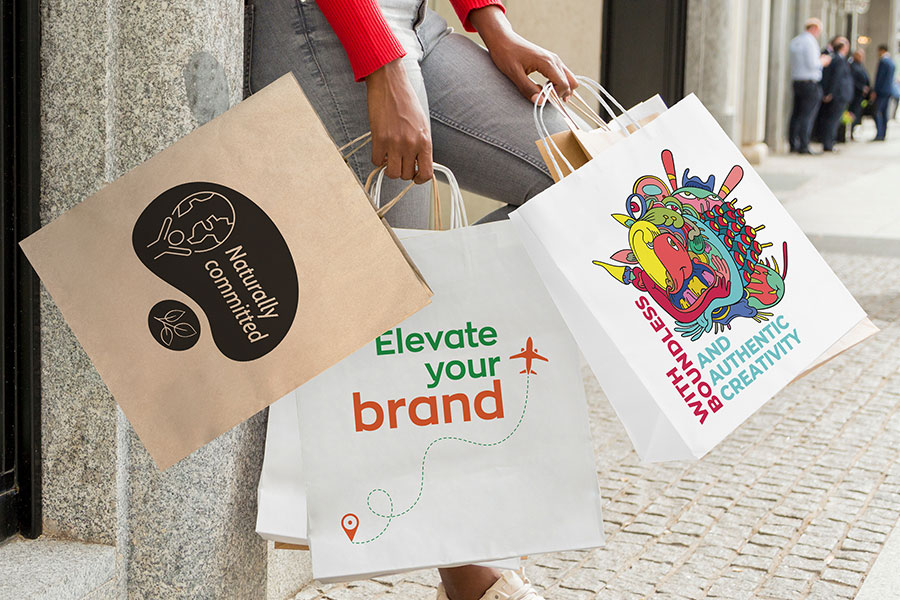
    Lecta’s functional, resistant papers for bags are designed to adapt to any style and printing need, showcasing your brand’s boundless and authentic creativity.

    The entire KraFit, Coral and Creaset ranges are manufactured according to Good Manufacturing Practice (GMP) standards, in compliance with ISO 14001 and EMAS environmental management, ISO 50001 energy efficiency, ISO 9001 quality and ISO 45001 occupational health and safety standards. They are also available upon request with PEFC or FSC® C011032 Chain of Custody forestry certifications.

    By choosing Lecta’s biodegradable, natural and fully committed to sustainability materials for carrier bags, brands not only stay on top of the latest trends, but make a positive contribution to a cleaner, more conscious future. Carry the trend with style and responsibility!

  • Closing the loop with paper carrier bags

    Closing the loop with paper carrier bags

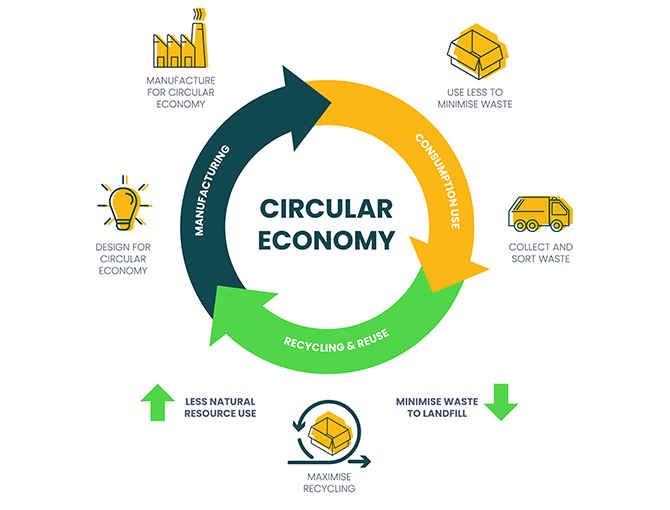
    Less raw material, less waste, fewer emissions – the circular economy is at the top of the agenda.

    Choosing fibre-based packaging such as paper carrier bags is one piece of the puzzle that retailers and brand owners can complete to take the next step in contributing to the bio-based circular economy. Paper carrier bags are a welcome resource in the paper recycling mix. A member of the initiative “The Paper Bag” explains how paper carrier bags are recycled into new fibre-based products. An infographic shows the cycle of paper carrier bags.

    A study has found that fibre-based packaging can be recycled more than 25 times. It concluded that the number of possible recycling cycles is limited mainly due to losses that occur during the cleaning of the fibre material and the collection rate. In Europe, the recycling rate for paper and cardboard packaging is already very high at 82.5% in 2021. The 4evergreen alliance set thegoal to reach 90% for fibre-based packaging by 2030.

    “Paper carrier bags are a valuable part of the paper recycling mix,” knows Matías Cowper Coles, Business Development Manager at the Spanish paper producer and paper recycler Alier. Alier is one of the members of the initiative “The Paper Bag” that recycles paper carrier bags and produces new fibre-based products from the fibres – among them paper carrier bags. But how does this work in practice?

    Paper collection

    When a paper carrier bag is no longer good for another reuse, it should be placed in the paper and cardboard recycling bin. In Europe, different paper grades are collected in the same container. After being picked up by the designated facilities, the paper is separated into different qualities. This is important because for some products, high-quality fibres must be used. Paper carrier bags, as other kraft paper products, can be sorted into different qualities, depending on the demand and the quality. Usually, they are mixed together with OCC – old corrugated cardboard.

    Recycling paper carrier bags

    When the raw material arrives at the paper factory, samples of the material are tested to classify them according to different parameters that are important for the papermaking process and the qualities that will be produced at the mill. “For each of our paper grades, we need a special material mix. The stronger recycled kraft paper we want to produce, the longer the fibres have to be in the mix,” explains Cowper Coles. “The kraft paper for paper carrier bags is one example where we use material with long, strong fibres.” For the recycling process, the selected paper mix is put into a pulper. The resulting pulp is filtered several times and cleaned of impurities. It is then collected in silos and stocked before it enters the paper machine, where it is manufactured into new paper that can be used in carrier bags, paper sacks, test liners or fluting.

    The paper bag fibre cycle

    The Spanish organisation La Bolsa De Papel has produced an infographic that demonstrates the fibre cycle for paper carrier bags – from the sourcing of the raw materials, the production of the paper and the paper bags via the distribution at retail sites, the use and reuse from consumers to the collection and the recycling process.

    “Reusing and recycling paper carrier bags replaces new raw materials

    This saves natural resources and reduces green-house gas emissions since the CO2 will keep stored in the paper products for a longer period,” explains Elin Gordon, Secretary General of CEPI Eurokraft. “Therefore, we want to encourage retailers to support the circular economy. They can do so by offering paper carrier bags to their customers and motivating them to reuse their bags for as long as possible before placing them in the recycling bins for paper and cardboard to recycle the fibres.”

  • IGT Systems : In many companies, the IGT printability tester is often used for one test method only. This is a waste of resources because on most of our testers many more tests can be performed.

    IGT Systems : In many companies, the IGT printability tester is often used for one test method only. This is a waste of resources because on most of our testers many more tests can be performed.

    An Interview from Mr.Anne Van Baardewijk, Commercial Director, IGT Systems.

    “We are here to support R&D and monitoring of quality aspects in order to avoid unnecessary consumption of raw materials and waste”

    Paper Market : Could you let us know about IGT System’s profile?

    Anne Van Baardewijk : Research, development and production of print-ability testing equipment and tack testing instruments for the paper, ink, graphic, electronics, security, plastics, paints, and coatings industry worldwide.

    PM : What are your vision & mission for paper industry?

    AV : Mission :

    • Serving the paper, ink and graphic industry worldwide with high quality, innovative printability testers and related products and/or services
    • To support R&D and monitoring of quality aspects in order to avoid unnecessary consumption of raw materials and waste

    Vision :

    • Continuously developing new test methods and innovative, inventive printability testers that contribute to higher quality and less waste
    • Serving the market from IGT’s own offices together with agents or direct customer groups
    • With products and services that securely analyse, report, qualify and exchange data with other quality systems in the area of printability
    • Our goal is to achieve optimal synergy with our colleagues, agents, customers and suppliers

    Values :

    • Dedicated
    • Competent
    • Reliable
    • Innovative
    • Respect

    PM : What are all the equipment you manufacture for the pulp & paper industry?

    AV : IGT Amsterdam multi-purpose printability tester along with High Speed Inking Unit, IGT LintView tester to be able to test paper for tendency of loose fibres during production, IGT SizeOscope to determine the sizing of paper, board, and barrier coatings.

    PM : How special are your fully automated printability testers?

    AV : Configurations, that are focused on R&D, with a set of different test methods, as well as instruments intended for Quality Control. The extensive, automated test methods prevent the user from making mistakes and variations in results therefore are minimized.

    PM : Any of your Amsterdam printability testers are enabled to do online analysis to meet ISO 3783 standards?

    AV : Installed base of AIC2-5T2000 and the next generation Amsterdam family.

    PM : IGT offers any Cobb testers for light structured thin material to thick paper board combined?

    AV : A range from EasyCobb with handgrip to Cobb Tester SFT 03t standard or Cobb Tester SFT 03t 22 up to 22 mm.

    “The extensive, automated test methods prevent the user from making mistakes and variations in results therefore are minimized”

    PM : Do you manufacture any device for bank notes testing?

    AV : We offer IGT TackOscope to measure the tack of paste ink or varnish, NBS Crumpling device consists of an apparatus for rolling the paper sample and a device in which the rolled paper is crumpled under a fixed pressure, NBS Automated to eliminate the variation in applied pressure. Moreover, various test methods for IGT Amsterdam e.g. Intaglio printing.

    PM : How important is QC for equipment manufacturing company and what parameters do you follow to assure the quality of your products?

    AV : After assembly IGT testers are functionally assessed, calibrated, and laboratory approved.

    “We work with 72 representatives around the world with many of them authorized to perform maintenance and calibration”

    PM : Challenges or similar you face in Indian Market?

    AV : Copycats, inferior cheaper alternatives

    PM : Could you explain us about your environmental management policies?

    AV : Under development: Solar power, energy saving e.g powering off laboratory air conditioning during weekends, less (plane) travelling etc.

    PM : Your goal in the industry?

    AV : Our target is to have an IGT Printability Tester in every Paper mill, Ink factory, and Graphical industry.

    PM : How are your after-sales-service networks in various parts of the country?

    AV : We work with 72 representatives around the world with many of them authorized to perform maintenance and calibration.

    In India our Sole Representative is

    ELOF HANSSON (INDIA) PVT.LTD

    ASHOK TOWERS , 2nd FLOOR, No. 45, K.B.DASAN ROAD, TEYNAMPET, CHENNAI 600018, INDIA

    PM : What is special about your maintenance & calibration?

    AV : As most advanced technical equipment also IGT testers need regular maintenance. Some testers also need calibration to be in conformance with the different standards.

    If you would like to receive more information on this, please be informed to forward us the serialnumbers of your IGT equipment.

    IGT provides different types of maintenance services.

    In Almere, The Netherlands, in the local IGT branch offices in the USA, Singapore and Japan, all maintenance work can be done. Some testers will however have to come to Amsterdam for some special work for which there are special tools required. 

    Many things can be done also on site with the customer, calibration, preventive maintenance and small repairs. This is preferably done in combination with a number of customers to reduce costs and increase efficiency.

    PM : Do you have maintenance plans?

    AV : We offer a range of maintenance plans to meet your needs:

    Contract Service : An annual charge provides for all parts and labour needed to keep your IGT equipment in excellent working condition. Both on-site and depot contracts are available.

    If available in your area, it is also possible to take part in an IGT Service Tour. This way the traveling costs will be kept to a minimum as it will be borne by more than one customer. These service tours are already taking place in The Netherlands, Belgium, Germany, Italy, United Kingdom, Czech Republic, Switzerland, Greece, Morocco, Poland, Turkey and the USA.

    Time and Materials Service : Calibration, regular maintenance and/or repairs, either on-site or in depot. All time and materials are for the account of the customer. and/or repairs, either on-site or in depot. All time and materials are for the account of the customer.

    PM : Being an equipment manufacturer to pulp & paper industry, what is your suggestion to the Industry to make the paper more sustainable?

    AV : The way to operate more sustainable is to use IGT Testing Systems in R&D and QC in order to avoid unnecessary consumption of raw materials and waste

    PM : Being an overseas company, how do you see the growth of Indian paper industry in future?

    AV : We have seen a steady growth over the years, with increasing consumption of e.g. tissue and packaging the future is bright together with our partner Elof Hansson.

    PM : Any other news you want to share with us?

    AV : We have visually updated our corporate identity and launched our brand-new website, to show that IGT Testing Systems is future proof.

    While our technology consistently evolves, we introduce IGT Connect,

    The online platform to which every new generation of IGT Printability testers can be connected, with the aim of one management and service Dashboard for:

    • Central management of users assigned with roles and custom permissions, streamline settings and management of profiles. Eliminate manual export of analysis data of tests performed. Real-time signalling system to manager. End-to-end fleet connection with sites in a group, safely through intranet Information exchange between linked devices, send commands remotely from your computer.
    • Report of individually performed tests, analyse tests performed on different devises and visualize results sourced from multiple sites
    • Remote support has time and money saving advantages, for Calibration – monitor status of calibration. Receive software updates for new features and bug fixes for optimal device performance!
    • Connection with external Customer Relation Management system
    “The online platform to which every new generation of IGT Printability testers can be connected, with the aim of one management and service Dashboard”